Anyone running a 3D printing workspace knows the Core XY architecture reshaped what a desktop machine can do. The belt-driven gantry moves both X and Y axes through a fixed frame, which means the print head travels with more authority and less wobble than older Cartesian designs. That structure shows up in cleaner corners, faster travel moves, and tighter dimensional accuracy, the things that actually decide whether a print feels professional or homemade.
This list covers eight current Core XY options worth your attention, from full machines built for high-volume output to a couple of aftermarket build plates that solve real adhesion headaches on existing Core XY beds. Every pick here was chosen because it earns its place in a specific workflow, not because it sounds impressive on a feature list.
An Overview Of The Picks

Henaiser 330x330mm Double-Sided PEI Build Plate
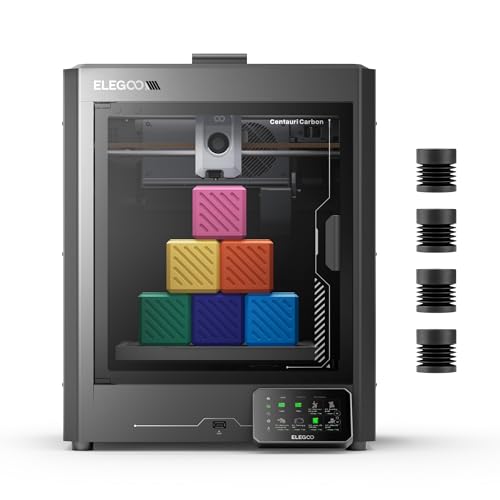
ELEGOO Centauri Carbon CoreXY 3D Printer

FLASHFORGE Adventurer 5M CoreXY 3D Printer

G-Hubble 330x330mm Double-Sided Textured PEI Sheet
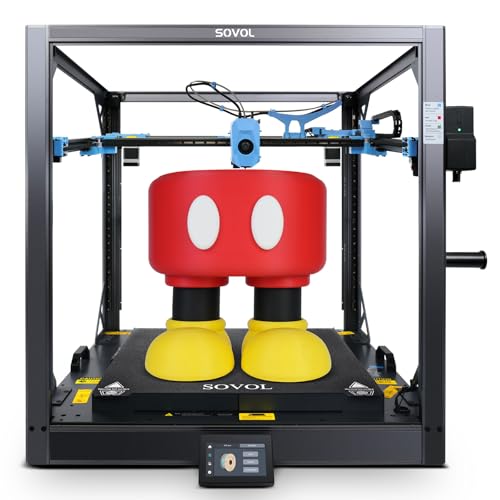
Sovol SV08 MAX CoreXY 3D Printer

FLASHFORGE AD5M Pro CoreXY 3D Printer

FLASHFORGE AD5X Multi-Material 3D Printer
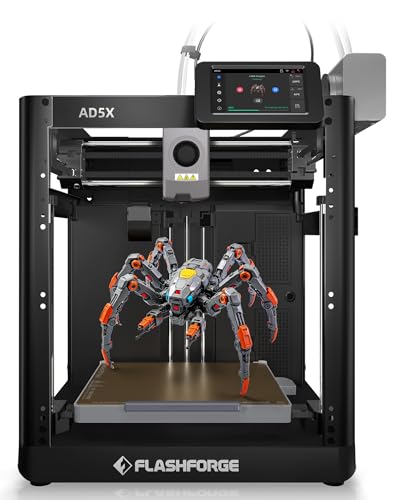
FLASHFORGE AD5X 3D Printer 220x220x220 mm
What Each Pick Brings To The Table
For owners of machines like the Elegoo Neptune 3 Plus, Tronxy X3S, or Flsn Core XY frames, the bed surface matters as much as the hot end. This Henaiser plate is a 330×330mm double-sided sheet that ships without a magnetic base, designed to retrofit directly onto existing heated beds. One side is textured PEI, a polyetherimide coating that grips the underside of a print during the first layer, and the other side is smooth PEI for projects where you want a glassy bottom finish.
What I appreciate is the flexibility. Flip the plate depending on the filament: matte texture for PLA and PETG, smooth for ABS and ASA when you want clean reflective surfaces. Spring steel gives the sheet enough flex to pop prints off without a spatula, which matters during long batch runs.
Noteworthy Benefits
- Two usable adhesion surfaces on one plate, reducing the need to swap sheets mid-project.
- Spring-steel flex means most prints release with a simple bend, sparing scrapers and finished bottoms.
- Direct fit across popular 330mm Core XY beds, so retrofitting is usually a drop-in step.
- PEI handles a wide filament range, so you can switch materials without changing the plate.
Points To Keep In Mind
- No magnetic base included, so you need an existing magnetic surface or adhesive to mount it.
- Textured PEI slowly loses grip as oils accumulate, and owners commonly clean it with hot water and dish soap every few prints to keep adhesion consistent.
Who Will Love This
Existing Core XY owners who want to refresh or replace a worn print surface without buying a whole new machine.
Swap It Out When
Shoppers who do not yet own a Core XY printer should jump to the ELEGOO Centauri Carbon, which is a complete machine rather than a bed accessory.
The Centauri Carbon lands as a fully assembled Core XY machine, which is a meaningful shift from older kits that demanded a weekend of build time. Auto bed leveling, a 320°C nozzle, and a built-in camera come together in a 256×256×256mm cube of workspace, enough for most functional parts and cosplay-scale props. Compared to the Henaiser plate from pick 1, this is the full printer that plate was designed to fit.
Travel speeds around 500mm/s let this machine push through longer prints in less time, which matters once you start running overnight batches. The onboard camera is more than a gimmick; it lets you peek at progress remotely and catch spaghetti failures before they waste a spool.
The Value In It
- Arrives pre-assembled and pre-calibrated, so the first print is minutes away, not hours.
- 320°C nozzle unlocks engineering filaments like PA-CF and PETG-CF without hot-end swaps.
- Built-in camera makes remote monitoring practical, especially for long jobs.
- Auto-leveling sensor removes the most common first-day frustration for new owners.
Small Caveats
- 256mm cube build volume runs small next to the Sovol SV08 MAX in pick 5, so very large prints are out of reach.
- Firmware tuning at high speeds takes patience; for most users the default profiles are fine, but the system exposes deeper controls than a beginner might need.
Quick Facts
Right Fit For
Buyers who want a turnkey Core XY experience with engineering-filament headroom and minimal setup friction.
A Better Fit Elsewhere
Creators who need oversized prints should look at the Sovol SV08 MAX, which trades footprint for raw build volume.
The Adventurer 5M sits in a smart middle ground for first-time Core XY owners. The fully automatic leveling system takes a manual chore that frustrates new users and turns it into a single tap. A quick-detach 280°C nozzle adds convenience for anyone who wants to swap nozzle sizes without tools. The Core XY structure gives the gantry the rigidity that the Elegoo Centauri Carbon in pick 2 also benefits from, but in a more approachable package.
Top speeds around 600mm/s help when a beginner is iterating quickly, because shorter print cycles mean faster feedback on whether a design needs adjustments. For most people, the included auto-calibration and quick-detach nozzle are the features that make this machine feel less intimidating than older Core XY models.
Where It Helps
- One-click leveling means no manual Z-offset guesswork on day one.
- 600mm/s travel speed shortens the time between design changes.
- Quick-detach nozzle simplifies swaps between fine-detail and fast-draft printing.
- Core XY gantry keeps motion stable, which helps new users get cleaner first layers.
Some Limits To Know
- 280°C nozzle maxes out below the 320°C figure on the Centauri Carbon, so the toughest engineering filaments are off the table.
- The enclosed design trades repair access for stability; routine maintenance can feel tight for tinkerers.
Made For
First-time Core XY shoppers who want a forgiving first machine with a low setup learning curve.
Look Elsewhere When
Engineers running high-temp materials like PA-CF will be better served by the ELEGOO Centauri Carbon and its 320°C hot end.
Like the Henaiser plate from pick 1, this G-Hubble sheet is a 330×330mm double-sided textured PEI surface, but the design focus here is the matte texture. Textured PEI grips the first layer through mechanical interlock rather than just chemical adhesion, which is why the matte side handles PLA and PETG especially well. The stainless steel base adds enough flex for the snap-release trick where you bend the sheet and the print pops free.
For shops running daily multi-material jobs, the texture trades a bit of bottom-surface shine for reliable bed adhesion. The trade-off shows up in the visible finish: prints come off with a slightly rough underside, which is fine for functional parts but matters if you want mirror-smooth first layers.
Where It Delivers
- Matte texture grips the first layer more aggressively than smooth PEI, which helps stubborn filaments like PETG stick.
- Stainless steel base lets you pop prints off by flexing, sparing the bed and the print finish.
- Direct compatibility with the same Core XY bed lineup as the Henaiser plate in pick 1.
Practical Considerations
- Matte finish transfers to the print bottom, so projects that need a glossy first layer should use the smooth side.
- Textured surfaces collect dust and oils in the micro-pores, and the surface tends to need an isopropyl wipe between long runs to keep adhesion consistent.
Feature Snapshot
Best Suited To
Daily printers who want reliable bed adhesion across a rotating mix of filaments and value low-fuss print removal.
Where Another Pick Suits Better
Anyone looking for a full printer should consider the FLASHFORGE Adventurer 5M, which is a complete Core XY system rather than a bed upgrade.
The SV08 MAX is the workhorse pick. It is built around an open-source Voron 2.4 design language, runs on full XYZ linear rails, and pushes travel speeds up to 700mm/s. A 500×500×500mm build volume puts it in a class of its own in this list, dwarfing the Centauri Carbon’s 256mm cube. Eddy current sensor leveling handles the bed mesh without physical probing, which preserves the surface over time.
For shops prototyping industrial parts or printing oversized props, the build volume is the headline feature. Linear rails also tend to hold their precision longer than traditional V-slot wheels under heavy travel cycles. The camera, while not the focus, is useful for catching long overnight prints that wander off course.
Where It Excels
- 500mm cube build volume is large enough for furniture-scale prototypes and full props.
- Voron-style open-source design invites community modifications and upgrades.
- Eddy current leveling avoids nozzle contact, extending bed surface life.
- Full linear rails keep dimensional accuracy stable across long print runs.
- 700mm/s top speed and 40,000mm/s² acceleration rival much pricier machines.
Factors To Consider
- Large footprint demands serious bench space and structural rigidity from the surface underneath.
- Open-source ecosystem means more tuning is expected; in most workshops this is a feature, not a flaw, but it raises the learning curve.
- Sensor leveling can be sensitive to bed flatness on very large plates, so first-time setup may need a few calibration passes.
Core Details
Whose Shelf It Belongs On
Workshops that prototype large industrial parts, props, or batch components and want a machine that can scale with production.
Reach For A Different Pick When
Beginners with limited bench space will find the FLASHFORGE Adventurer 5M far more approachable and easier to live with day to day.
The AD5M Pro is a quiet operator. With a fully enclosed chamber and auxiliary cooling, it runs under 50dB in standard mode, which puts it in the same noise range as a soft conversation. The 0.4mm and 0.6mm nozzle bundle in the box lets you pick between fine detail and faster extrusion without buying extras. Compared to the open-frame Sovol SV08 MAX in pick 5, this machine prioritizes quiet containment over raw scale.
For home offices, shared apartments, or anyone running prints during meetings, the noise reduction alone can be the deciding factor. The Core XY motion system keeps the gantry stable, and the enclosed design helps with temperature-sensitive filaments like ABS and ASA.
Well-Handled Touches
- Under 50dB operation makes it livable in shared spaces and home offices.
- Enclosed chamber holds ambient heat for better ABS and ASA results.
- 0.4mm and 0.6mm nozzles included, covering detail and draft jobs from day one.
- Full-auto calibration removes the manual leveling chore.
- Onboard camera adds remote monitoring for long overnight jobs.
Things To Weigh Up
- Build volume is smaller than the Sovol SV08 MAX, so oversized projects remain off the table.
- Fully enclosed design can trap heat, which is great for ABS but may require ventilation tweaks for PLA users in warm rooms.
Right Fit For
Home office and small-studio users who need quiet operation and a contained footprint without sacrificing Core XY precision.
A Better Fit Elsewhere
Workshops printing oversized parts will be better matched with the Sovol SV08 MAX and its 500mm build cube.
The AD5X multi-material model is where Core XY speed meets color flexibility. The Intelligent Filament System supports up to four colors and can run DIY IFS configurations, which lets makers experiment with custom material pairings. Up to 600mm/s travel and 20,000mm/s² acceleration keep pace with the Adventurer 5M from pick 3, while adding the multi-color workflow.
For designers and small-batch product developers, four-color printing without manual filament swaps is a real time-saver. The filament backup function adds a safety net by loading a secondary spool when the primary runs dry, so a long job does not fail just because a spool emptied mid-print.
Useful Highlights
- 4-color printing from a single machine, no manual filament swaps between colors.
- Intelligent Filament System supports DIY IFS setups for advanced material combinations.
- Filament backup auto-loads a second spool to prevent failed long jobs.
- 600mm/s travel keeps multi-color prints fast enough for production thinking.
Where It Is Less Suited
- Multi-material setups introduce more purge and tuning variables, and depending on your project, the color changes can leave visible seams on sharp transitions.
- Higher upfront complexity than single-color Core XY machines, so beginners may face a steeper first month.
Built With In Mind
Designers and small-batch makers who want multi-color output without committing to a manual filament-swap workflow.
Consider Something Else When
Single-material workshops focused purely on speed should look at the Sovol SV08 MAX for sheer throughput over color flexibility.
The compact AD5X in this slot trades some build volume for filament flexibility. It targets PLA-CF and PETG-CF, two carbon-fiber reinforced filaments that demand a tougher extruder and a hot end rated for the job. The 220×220×220mm cube is the smallest in this roundup, but for desk-side printing of small functional parts, that footprint is a feature, not a compromise.
For hobbyists and engineers who want to print small carbon-fiber brackets, gears, or jigs without dedicating a full workbench, this machine hits a sweet spot. Compared to the multi-material AD5X in pick 7, this version keeps the Core XY motion and carbon-fiber capability while trading color for compactness.
A Strong Showing
- Engineered for carbon-fiber composites, which opens doors to stiffer finished parts.
- Compact 220mm cube footprint fits on a workbench or shared desk.
- Core XY structure keeps prints precise even at the smaller scale.
Honest Caveats
- Smaller build volume rules out larger props, brackets, and batch runs in a single piece.
- Carbon-fiber filaments are abrasive, so nozzles tend to wear faster than on standard PLA setups; for most users this means budgeting for replacement hardened nozzles over time.
Perfect Match For
Compact workspaces and engineers printing small carbon-fiber reinforced parts where footprint matters more than raw volume.
Skip It When
Printers who need multi-color output should step up to the FLASHFORGE AD5X multi-material model in pick 7 instead.
Picking The Right Core XY Setup For Your Workshop
The Core XY category splits into a few honest decision points. Build volume comes first: a 220mm cube is fine for desk-side prototypes, but the moment a project grows into props or industrial brackets, the gap to a 500mm cube changes how you work. Print speed tells a similar story, since the difference between 500mm/s and 700mm/s shows up across batch runs, not single prints.
Filament compatibility narrows the field further. A 280°C nozzle handles PLA, PETG, and TPU without issue, while engineering filaments like PA-CF, PC, and PEKK demand 300°C and above. Carbon-fiber blends also call for hardened nozzles, because standard brass wears fast against the abrasive fibers. Enclosure design is the quieter factor, but it controls whether you can reliably print ABS, ASA, and other temperature-sensitive materials.
Finally, think about workflow features. Auto bed leveling, onboard cameras, filament backup, and quick-detach nozzles all reduce the daily friction of running prints. They rarely show up in the headline specs but shape whether the machine gets used or gathers dust.
Key Considerations Across These Picks
Common Shopping Slip Ups
Buyers often fixate on top travel speed without checking acceleration, which is the figure that determines how fast a printer can actually change direction. A machine that lists 700mm/s but low acceleration will run slower on real prints than a 500mm/s model with strong acceleration. Another common miss is overlooking the build chamber, since enclosed machines handle ABS and ASA in ways open frames cannot.
Where The Extra Money Goes
Higher-tier Core XY machines earn their cost through stiffer linear rails, larger heated beds, eddy current sensors, and faster stepper drivers. For shops printing every day, those upgrades add up in saved calibration time and longer service intervals. For occasional hobbyists, a mid-tier machine usually delivers the meaningful experience gains without the diminishing returns at the top.
Frequently Asked Questions
What Is A Core XY 3D Printer?
A Core XY 3D printer uses a belt-driven gantry where both X and Y axes move through a fixed frame, which reduces moving mass on the print head and improves stability at high speeds. The design produces cleaner corners, faster travel moves, and tighter dimensional accuracy than older Cartesian setups.
Are Core XY Printers Good For Beginners?
Several Core XY models ship fully assembled with auto bed leveling and pre-tuned profiles, so beginners can start printing on day one. The Centauri Carbon and Adventurer 5M in this list are both strong fits for first-time users who do not want to build a kit.
What Filaments Work Best With Core XY Machines?
PLA, PETG, and TPU print reliably on most Core XY hardware. Engineering filaments like ABS, ASA, PC, PA-CF, and PE-CF need higher nozzle temperatures, often above 300°C, and benefit from enclosed chambers. Carbon-fiber blends also require hardened nozzles to handle the abrasive fibers.
How Important Is Build Volume For A Core XY Printer?
Build volume sets the ceiling for what you can print in one piece. A 220mm cube handles small parts and prototypes, while a 500mm cube opens up oversized props and batch runs. Match the build volume to the largest realistic print on your roadmap, not the maximum possible size you can imagine.
Do Core XY Printers Need Enclosures?
Enclosures help with temperature-sensitive filaments like ABS and ASA by holding ambient heat around the print. PLA and PETG print fine on open frames. If you plan to work with engineering materials regularly, an enclosed Core XY machine is the more practical choice.
The Takeaway
The Core XY category in 2026 spans everything from quiet desk-side machines to industrial-scale workhorses, and the right pick depends on what you actually plan to print. For most beginners, the Centauri Carbon and Adventurer 5M offer the cleanest on-ramp. For larger shops, the Sovol SV08 MAX and AD5M Pro bring serious capability with the right trade-offs. Match the machine to your workspace, your filament mix, and your print size, and the rest tends to fall into place.