Soldering irons, breadboards, and GPIO pins all share a quiet dependency: rows of little metal teeth that bridge one circuit to another. The right header pin jumper turns a loose Arduino clone, a Pi Zero, or a custom PCB into something that actually connects to the world. I’ve spent enough late nights staring at half-populated breakout boards to know that the difference between a smooth project and a frustrating one often comes down to whether the pins match your pitch, your length, and your quantity needs. This lineup covers male, female, double-row, single-row, and breakaway strips at common 2.54mm and 2.0mm pitches, so hobbyists, students, and makers can find a kit that fits the way they build.
A Closer Look At The Lineup
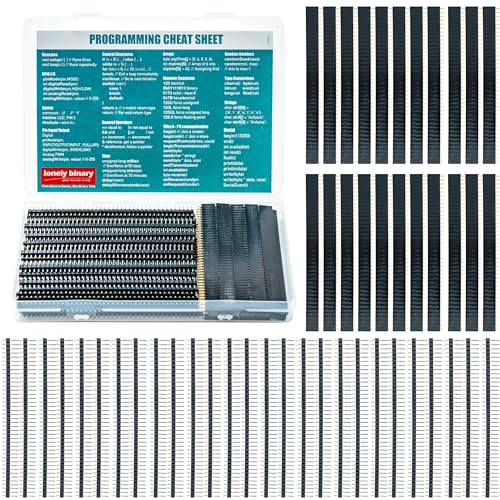
Lonely Binary 75-Piece 2.54mm Pin Header Kit

uxcell 2.54mm Pitch 40-Pin Double Row Header

uxcell 30Pcs 2.54mm Pitch 40-Pin Single Row Header
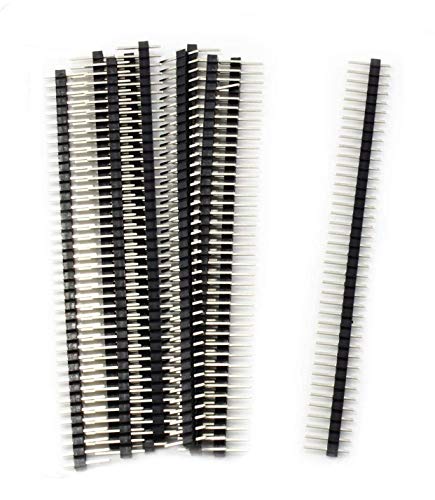
MCIGICM 10pcs 40-Pin Male Header Strip

uxcell 18 Pcs 2mm 40-Pin Male Header Strip

Break-Away 0.1″ 2×20-pin GPIO Male Header
The Picks, Examined More Closely
Most maker benches end up mixing male and female headers across projects, and that’s exactly where this Lonely Binary kit earns its place. It bundles 20 female 40-pin rows with 55 male 40-pin rows, all sharing the standard 2.54mm pitch (the gap between pin centers, matching nearly every Arduino, Raspberry Pi, ESP32, and standard breadboard).
The 11mm pin length snaps cleanly by hand or scores with a flush cutter, so you can build a 6-pin strip for a sensor and a 16-pin strip for an LCD from the same kit. Compared to the smaller single-purpose kits below, this one carries more variety per dollar.
Real Benefits
- 75 strips total, mixing 20 female and 55 male rows for a wide project range.
- Standard 2.54mm pitch lines up with Arduino, Raspberry Pi, ESP32, and breadboards.
- 11mm pin posts snap to custom lengths without special tools.
- Useful for IoT builds that bridge sensor boards and microcontroller GPIO pins.
Worth Noting
- The kit ships loose in a bag, so sorting by length on a messy bench takes a moment.
- Tin plating can oxidize over many months of storage in humid workspaces.
Key Specs
Who Should Grab It
Anyone running mixed Arduino, Raspberry Pi, or ESP32 prototypes who wants one kit instead of three separate orders.
Swap It Out When
Builders working exclusively with Raspberry Pi Zero GPIO soldering should look at the Break-Away 0.1″ 2×20-pin GPIO Male Header instead.
Shield-style boards usually need a double-row strip so both rows of through-holes get populated at once. This uxcell pack delivers five double-row straight headers at 2.54mm pitch with 19mm pins, which is a comfortable working length for standard Arduino Uno shields and similar prototyping PCBs (printed circuit boards, the green or blue plates your components solder into).
Compared to the single-row uxcell 30-piece below, this one trades quantity for the doubled-up form factor, making it the right call when your shield stack needs matched male pins on both sides of a 40-pin block.
What Works In Its Favor
- Double-row layout covers both rows of a 40-pin shield footprint in one strip.
- 19mm pins give enough length to seat a shield without bottoming out.
- Plastic body is keyed straight, so strips sit flat against the PCB during soldering.
Trade Offs
- Only five strips in the pack, which can run short for multi-shield projects.
- 19mm pins may need trimming for low-profile enclosures.
Built With In Mind
Hobbyists soldering Arduino-style shields and prototyping boards that demand a matched double-row male header.
Reach For A Different Pick When
High-volume single-row prototyping is a better match for the uxcell 30Pcs 2.54mm Pitch 40-Pin Single Row Header.
When a project calls for a long row of single pins, the math gets easy fast. Thirty straight single-row strips at 2.54mm pitch and 20mm length land in this uxcell pack, which gives a maker enough strips to break off pieces for many breadboard and breakout jobs.
The 20mm pins stand a touch taller than the Lonely Binary 11mm option above, so they fit enclosures with extra clearance. For a bench running mostly single-row Arduino and breadboard work, this pack covers more ground per shipment.
The Practical Payoff
- 30 strips cover a high count of small projects or several long ones.
- 20mm pin length clears typical Arduino and breadboard stack heights.
- Single-row format breaks cleanly into any pin count you need.
Small Caveats
- No double-row strips in this pack, so shield-style work needs a separate buy.
- Straight-mount only, which rules out right-angle installations without modification.
Made For
Bench builders running breadboard prototypes and Arduino clones who just need a deep stack of single-row pins.
A Better Fit Elsewhere
Shield stacking calls for the uxcell 2.54mm Pitch 40-Pin Double Row Header, which has the matching double-row geometry.
Sometimes ten strips is exactly the right amount, especially for an Arduino-focused workbench that just needs a steady refill. The MCIGICM pack ships ten 40-pin male strips at 2.54mm pitch, totaling around 202mm of usable length per strip and a black plastic body with tin plating.
It’s a sensible middle ground between the Lonely Binary 75-piece variety above and the larger 30-piece uxcell single-row pack, which is why it lands well as a workshop staple rather than a one-time project buy.
Useful Highlights
- 10 strips hits a manageable count for one or two medium projects.
- Tin plating supports clean solder joints on standard Arduino headers.
- Single-row strip breaks apart easily to match common sensor pinouts.
Points To Keep In Mind
- No female headers included, so mixed-gender builds need a separate kit.
- Plastic housing can soften slightly during very long soldering sessions if the iron sits in place.
Right Fit For
Makers maintaining a steady Arduino workflow who want a compact, refillable strip count without overstocking.
Consider Something Else When
Anyone building mixed male/female sensor projects should reach for the Lonely Binary 75-Piece 2.54mm Pin Header Kit instead.
Most maker boards use 2.54mm pitch, but a handful of compact designs step down to 2.0mm. That pitch difference is the whole reason this uxcell pack exists: 18 single-row male strips with 2.0mm spacing, 9mm pin length, and an 80mm total length per strip. If your PCB footprint calls for tighter pin centers, no 2.54mm strip will line up correctly, and this pack fills that niche.
It’s the most specialized pick in the lineup, so it only earns its place for builders working with 2.0mm-spec hardware. For everyone else, the 2.54mm options above are the right call.
Bright Spots
- 2.0mm pitch fits compact PCBs that won’t accept standard 2.54mm headers.
- 9mm pin length is short enough for low-profile board mounting.
- 18 strips give enough stock for several small 2.0mm projects.
Honest Caveats
- Will not fit standard Arduino, Raspberry Pi, or breadboard layouts, so it has limited crossover use.
- No female strips in the pack, so any 2.0mm socket needs a separate purchase.
Whose Shelf It Belongs On
Engineers or hobbyists building or repairing compact PCBs that specifically use the 2.0mm pin standard.
Look Elsewhere When
Standard Arduino and Raspberry Pi work belongs with the uxcell 30Pcs 2.54mm Pitch 40-Pin Single Row Header instead.
Raspberry Pi Zero, Zero W, and Zero 2W ship without soldered GPIO pins, which is why a dedicated 2×20 dual-row male header exists for them. This breakaway strip uses the standard 0.1″ (2.54mm) spacing on a 40-pin dual-row layout that drops straight onto a Pi Zero footprint, and the pack of 10 covers multiple Pi builds plus spares for HAT soldering (HATs are add-on boards that stack on top of the Pi’s GPIO pins).
Unlike the single-row and mixed strips earlier in the lineup, this one is purpose-built for Pi GPIO work, which is exactly the use case where generic strips often leave awkward gaps.
The Helpful Details
- 2×20 dual-row layout matches Raspberry Pi Zero GPIO footprints directly.
- Standard 0.1″ (2.54mm) spacing works with Pi HATs and standard jumper wires.
- Breakaway design trims to smaller pin counts for compact Pi derivatives.
- Pack of 10 covers multiple Pi projects without reordering.
Factors To Consider
- Headers arrive unsoldered, so proper soldering tools and a steady hand are required.
- Plastic spacers between pins can melt if the soldering iron rests too long on one joint.
Best Suited To
Makers building Pi Zero, Zero W, or Zero 2W projects who need a clean GPIO header and matching HAT compatibility.
Skip It When
General Arduino or breadboard prototyping is a better match for the Lonely Binary 75-Piece 2.54mm Pin Header Kit.
Picking The Right Header Pin Jumpers For Your Build
Pitch Is The First Filter
The gap between pin centers, called pitch, decides whether a strip fits your board at all. Most Arduino, Raspberry Pi, and breadboard footprints use 2.54mm (sometimes printed as 0.1″), so the standard picks above cover the majority of hobbyist work. Specialty compact PCBs use 2.0mm pitch, and that’s the only place the uxcell 2mm pack fits. For Pi Zero GPIO soldering, a 2×20 dual-row header is the only correct layout.
Pin Length And Breakability
Pin length affects how tall the finished stack sits. Shorter pins (around 9mm to 11mm) work well in low-profile enclosures and snap apart cleanly by hand or flush cutters. Longer pins (19mm to 20mm) give more clearance when stacking shields or HATs. For projects that need both, picking a longer strip and trimming it is often the simpler path.
Row Count And Gender
Single-row strips handle most breadboard and breakout work, while double-row strips line up with shield and HAT footprints. Male headers plug into female sockets, so gender choice matters once you start mixing Arduino shields with sensor modules. Bundles like the Lonely Binary 75-piece kit solve that problem by including both, which saves the second trip to the bench drawer.
Quantity And Project Scope
One short prototype can get by with five or ten strips, but anyone running multi-board projects quickly burns through that. Larger packs, like the 30-piece uxcell single-row or the 75-piece Lonely Binary mix, give headroom for the next idea without reordering. Matching pack size to how often you build is the simplest way to avoid running out mid-solder.
Quick Notes Before You Order
Common Shopping Slip Ups
The most frequent mistake is grabbing a 2.54mm strip for a board that actually uses 2.0mm spacing, and the misalignment only shows up at the soldering step. Another slip is underestimating quantity: ten strips sounds like plenty until a project splits into three sensor boards. Cross-check your board’s footprint, count your parallel projects, and you skip both traps.
Where The Extra Money Goes
Larger kits like the Lonely Binary 75-piece bundle cost more per order but include both male and female strips, so the per-project cost drops once you factor in the second kit you would have bought otherwise. Specialty options like the Pi GPIO dual-row pack cost more because the layout is purpose-built for one board family. The premium pays off when the strip fits the board on the first try and you don’t have to reorder.
Frequently Asked Questions
What Pitch Do Most Arduino And Raspberry Pi Projects Use?
Most Arduino, ESP32, and Raspberry Pi boards use the 2.54mm pitch, also labeled 0.1″ on older documentation. Only a handful of compact PCBs use the 2.0mm standard, so the 2.54mm options above cover the majority of hobbyist projects.
Can I Cut These Header Strips To A Custom Length?
Yes, the standard 40-pin strips break apart cleanly by hand at the plastic seams, and a flush cutter trims the pin posts to whatever length a project needs. The 11mm pins in the Lonely Binary kit score and snap with minimal fuss.
Do I Need Male And Female Headers In The Same Kit?
Mixed-gender projects, like Arduino shields with stacked sensor modules, do benefit from a kit that includes both. Single-purpose projects that only plug into one type of socket can stick with a male-only or female-only pack to save space.
Are These Headers Pre-Soldered?
No, every strip in this lineup ships unsoldered. Each strip is meant to be soldered into a PCB, breakout board, or Pi Zero footprint by the maker, which keeps the kit flexible for many project shapes.
What Is A Breakaway Header Strip?
A breakaway strip has scored seams between each pin position, so the maker can snap off any pin count from 1 to 40. That’s why the Break-Away 0.1″ 2×20-pin GPIO Male Header works for both full Pi GPIO soldering and smaller custom projects.
Closing Remarks
Header pin jumpers are small parts with an outsized impact on whether a project actually connects on the first try. Matching pitch, pin length, and quantity to the build at hand keeps the bench moving instead of pausing for a reorder. Pick the strip that fits your board, your project count, and your soldering setup, and the rest of the circuit tends to fall into place.