A desktop tower pulls in room air all day, and room air carries lint, pet hair, and fine dust straight onto fan blades and heatsinks. The right filter slows that down dramatically, extending the life of bearings and keeping thermals steadier during long renders or marathon gaming sessions. I’ve sorted through eight fan-filter kits that cover the standard case sizes (40mm, 60mm, 80mm, and 120mm), plus one magnetic 120×240mm option for radiators and PSU shrouds. Whether you live with shedding pets or just want quieter, cooler hardware, there’s a fit below.
The Lineup, Simplified

PATIKIL 120mm Fan Dust Filter 5 Pack

PATIKIL 80mm Fan Filter Grills 2 Pack

PATIKIL 80mm Fan Filter 8 Pack

PATIKIL 60mm Cooling Fan Filter 2 Pack

JAMHER 4Pack 120 x 120mm Fan Filter Grills
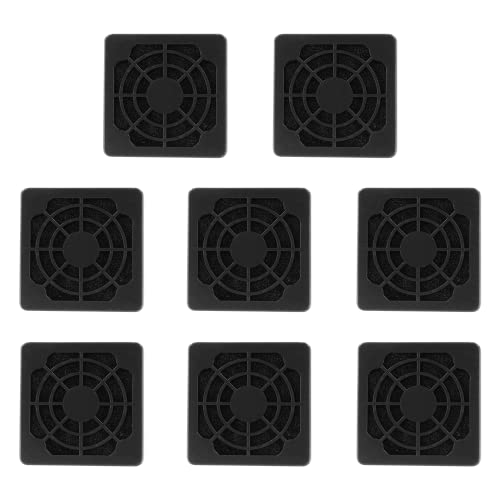
Unlorspy 8 Pcs 40mm Cooling Fan Filter

YIMATEECO Dust Filter PC 240mm 4 Pack

ELUTENG 40mm Fan Filter Dustproof Cover 2 Pack
What Each Pick Brings To The Table
The 120mm format is the workhorse of modern PC building, and this PATIKIL set matches it with a PVC mesh that stops short of choking airflow. The frame sits just 0.3mm thick, so it tucks against an intake fan without forcing you to shim anything inside the case.
For most ATX (standard full-size desktop tower) owners, five filters in one pack means every front intake plus a spare for a radiator. Screws ship in the box, which saves a panicked parts-bin search. I’ve seen these work well in households where vacuuming happens weekly rather than daily.
A Favorable Mix
- Five-pack covers an entire mid-tower with one to spare.
- 105mm mounting hole spacing matches the 120mm fan standard exactly.
- PVC mesh wipes clean with a dry cloth rather than needing water.
- Low profile at 0.3mm keeps clearance inside tight builds honest.
Points To Keep In Mind
- Mesh blocks larger debris but lets very fine dust through over months.
- White finish may yellow under UV light from case RGB over time.
Key Specs
Who It Suits Best
Anyone running a mainstream ATX tower with stock 120mm intake fans who wants a no-fuss refresh.
Where Another Pick Suits Better
Pet-heavy homes should consider the JAMHER 4Pack 120 x 120mm filter, since its tighter aperture targets hair more aggressively.
The aluminum frame on this PATIKIL set reads as the upgrade choice the moment you pick it up. Stainless steel mesh sits inside, which suggests the kind of longevity plastic frames struggle to match. At 84 x 84mm with 71mm parallel mounting, it lands squarely on the 80mm fan spec.
Rigorous builders who clean filters twice a year rather than every month will appreciate that this one rinses under a tap and dries fast. The 4.4mm screw holes fit standard PC case screws, so installation needs nothing exotic.
Strengths Worth Knowing
- Aluminum frame resists warping even after repeated wet cleanings.
- Stainless mesh blocks debris without measurable airflow loss in 80mm fans.
- Reusable after washing, extending service life over disposable options.
- Rigid construction holds shape during shipping and handling.
Worth Noting
- Only two filters in the pack, fewer spares than competing sets.
- Higher mass than plastic alternatives may matter in very lightweight builds.
- Aluminum edges can feel sharp before the first install.
Made For
Builders who set up a system and expect it to run cleanly for years with only seasonal filter rinses.
Swap It Out When
Someone building with many spare 80mm fans should reach for the PATIKIL 80mm 8 Pack instead, since the bulk pricing matters more there.
When a refresh calls for filtering every fan in a smaller case or a multi-PSU rig, eight filters in one box beats hunting for spares later. ABS (a hard, impact-resistant plastic) construction makes these light enough to mount without thinking twice about case flex.
Mounting sits at 70mm parallel spacing for the 80 x 80mm footprint, fitting the same fans as the heavier aluminum option above. For a budget refresh, the value math is hard to argue with, even if the frame feels less premium in hand.
Notable Upsides
- Eight pieces cover many fans or leave room for future spares.
- ABS plastic washes and dries quickly without rusting.
- Lightweight frame reduces stress on plastic fan housings.
- Standard 70mm mounting holes match common 80mm fan specs.
- Black color blends with most case interiors.
Trade Offs
- Plastic frame may not survive drops or rough handling as well as aluminum.
- Less rigidity means careful alignment matters during install.
Key Specs
Best Suited To
Budget builders refreshing older 80mm fan setups or anyone stocking spares for a multi-fan home server.
Not Your Match When
Those wanting a tougher build should look at the PATIKIL 80mm 2 Pack with aluminum frame instead.
The 60mm format shows up in compact SFF (small form factor) cases and CPU cooler auxiliaries, and this PATIKIL pair fits that niche cleanly. At 65 x 65mm overall with a 50mm parallel hole pattern, it sits over the standard 60mm spec without overhang.
The defining feature here is the sponge mid-layer, which catches finer particles than pure mesh grills typically manage. For SFF builders who don’t want to crack the case open monthly, that extra absorption is meaningful.
The Upside
- Sponge mid-layer traps fine dust that mesh alone would miss.
- ABS frame washes repeatedly without degrading.
- Includes screws, removing a common install friction point.
- Low 7mm profile suits tight SFF mounting scenarios.
Honest Caveats
- Sponge layer reduces airflow more than mesh-only designs.
- Two-pack quantity may run short for multi-fan SFF cases.
- Sponge needs replacement more often than rigid mesh.
Right Fit For
Small form factor builders and HTPC (home theater PC) enthusiasts who want extra fine-dust protection in tight spaces.
Reach For A Different Pick When
Anyone prioritizing maximum airflow should consider the Unlorspy 8 Pcs 40mm filter set, which uses a less restrictive mesh.
Pet owners know that hair finds its way into everything, and case fans are no exception. JAMHER leans into that with an ultra-fine aperture that targets pet hair before it reaches the blades. The 120 x 120mm sizing keeps it in mainstream territory for most mid-towers.
Cleaning stays gentle: a light wipe without bending keeps the mesh aligned, and a refresh every three months (or as dust loads) is the suggested cycle. Beyond PCs, the same filter reportedly works on speaker grills, extending its usefulness around a pet-friendly home.
Notable Gains
- Ultra-fine aperture targets pet hair specifically.
- Multi-purpose use across PC fans and speaker covers.
- Reusable with simple wipe-down maintenance.
- Four-pack covers a typical front intake array.
Where It May Fall Short
- Suggested three-month replacement cycle adds ongoing maintenance.
- No machine wash, so deep cleaning is limited.
Who Should Grab It
Households with shedding cats or dogs that need stronger hair filtering than standard mesh provides.
A Better Fit Elsewhere
Those in dust-heavy workshops might prefer the YIMATEECO 240mm magnetic filter, which removes easily for frequent cleaning.
Small fans show up in routers, mini-PC cases, AV receivers, and even some 3D printer controller boards. At 43 x 43mm with a 32mm hole-to-hole pattern, this Unlorspy set addresses that whole category in one purchase.
Eight pieces mean covering every intake on a small AV closet or keeping extras for the next project. The three-layer ABS frame plus internal filter design reportedly holds up across repeated cleanings, which matters more here than on larger filters because these get touched often.
The Value In It
- Eight pieces stock an entire small-fan setup with spares.
- Three-layer design balances dust capture with airflow.
- Compact 40mm size fits routers, mini-PCs, and AV gear.
- ABS frame tolerates routine cleaning well.
- Multi-use flexibility beyond just desktop PCs.
Small Caveats
- Size limits use to small electronics, not main towers.
- Tight mounting may require tweezers during install.
Feature Snapshot
Who Will Love This
Tinkerers with routers, mini-PCs, AV receivers, or 3D printers who want to standardize dust protection across small electronics.
Consider Something Else When
Those building a full-size desktop tower will get more use from the PATIKIL 120mm 5 Pack instead.
Radiators and PSU (power supply unit) shrouds rarely accept screw-on filters cleanly, and that’s where magnetic frames earn their keep. YIMATEECO uses a 120 x 240mm PVC frame with a single magnet, attaching without tools or permanent mounting.
The double-sided design reportedly resists warping at high temperatures, which matters when mounted over a hot radiator. Nano gel-mats ship in the box for situations where magnetic attachment isn’t possible, adding real flexibility.
Real-World Strengths
- Magnetic frame installs in seconds without screws.
- PVC material resists deformation under sustained heat.
- Fire-retardant construction adds a safety margin near PSU intakes.
- Four filters cover a 240mm radiator with extras for PSU and router.
Points To Note
- Magnetic attachment only works on steel surfaces, not aluminum cases.
- Larger 240mm size may exceed some compact case openings.
- Nano gel-mats lose tackiness after several applications.
Built With In Mind
Owners of mid-towers with 240mm radiators and steel cases who want tool-free filter swaps during cleaning.
Look Elsewhere When
Aluminum-case owners should consider the JAMHER 4Pack 120 x 120mm screws-in option for reliable mounting.
USB-powered auxiliary fans often show up on desks, AV cabinets, and gaming rigs where a whisper-quiet operation matters as much as airflow. ELUTENG’s nylon mesh claims up to 89% dust-proof efficiency while helping reduce fan noise, which is a useful combination for desk-adjacent setups.
The ABS resin frame is fireproof and heatproof, lending confidence when the filter sits close to hot-running electronics. A screwdriver ships in the box, though installers will reuse their existing screws. Recleaning works across many cycles without visible wear, in most setups.
Practical Advantages
- Nylon mesh reportedly captures up to 89% of dust.
- Fireproof and heatproof ABS resin frame.
- Reduces fan noise alongside blocking particles.
- Reusable across many cleaning cycles.
- Compatible with standard 40mm USB blower fans.
Things To Consider
- Screws not included, requiring reuse of existing fan hardware.
- Only two filters in the pack.
Perfect Match For
Owners of USB desk fans or quiet auxiliary cooling setups who want both dust filtering and noise reduction.
Skip It When
Those needing more pieces for a multi-fan setup should consider the Unlorspy 8 Pcs 40mm filter instead.
Getting The Right Filter For Your Build
Choosing the right laptop dust filter starts with knowing your fan sizes. Measure the side of any stock fan before ordering, because the difference between 80mm and 92mm mounting holes can wreck a clean install. For full-size towers, 120mm and 140mm filters dominate, while SFF cases lean toward 60mm and 80mm.
Material matters more than people expect. PVC mesh stays cheap and light, ABS frames add durability at the cost of a bit more weight, and aluminum with stainless mesh is the premium tier. Magnetic frames skip screws entirely but only stick to steel cases, a real limitation on aluminum enclosures.
Aperture size is where dust defense lives or dies. Tighter mesh catches more particles, including pet hair, but can nudge noise and temps up by restricting airflow. Looser mesh runs cooler but lets fine dust accumulate on heatsinks over months. Matching the aperture to your environment matters more than chasing the densest option available.
Finally, think about maintenance. Filters that wash under a tap last longer but require removal each time. Magnetic frames simplify swaps but still need periodic cleaning. Plan for how often you’ll actually open the case, and pick a mounting style that matches that reality.
Key Things To Weigh Before You Buy
Pitfalls Shoppers Hit
A common trap is grabbing a filter that physically fits but has the wrong hole spacing. A 120mm fan typically uses 105mm mounting holes, while some cheaper filters list the overall dimensions without confirming the screw pattern. Always cross-check the parallel hole distance in the specs before committing.
Another mistake is overlooking airflow trade-offs. Dense filters block more dust but also push fan curves harder, raising noise and temperatures. In hot climates or under heavy GPU loads, that trade-off can matter more than the dust itself.
Where The Extra Money Goes
Premium filters earn their keep through material upgrades. Aluminum frames resist warping, stainless mesh survives repeated washings, and magnetic mounts skip tools entirely. For someone who cleans filters twice a year, a $20 premium tier typically outlasts three $7 budget replacements, depending on conditions.
Higher pricing also buys tighter aperture consistency, meaning the filter performs the same way across the entire surface rather than thinning out at the edges. That consistency shows up most in pet-heavy homes, where uneven filtering means hair finds the gaps.
Frequently Asked Questions
Do laptop dust filters actually lower temperatures?
Indirectly, yes. By keeping dust off heatsinks and fan blades, filters help components shed heat the way the manufacturer intended. Over a year, an unfiltered build often runs several degrees warmer than one with clean filters in place.
How often should filters be cleaned?
For most home environments, a quick wipe every one to three months keeps filters effective. Homes with shedding pets or smokers may need monthly attention, especially on intake filters facing open airflow.
Can filters restrict airflow too much?
Dense filters can nudge fan noise up and temps slightly higher, especially on high-static-pressure radiators. Matching aperture density to your environment and cleaning cycle prevents most airflow complaints.
Are magnetic filters reliable on all cases?
Magnetic filters stick firmly to steel cases but slide off aluminum panels. Check your case material before relying on magnetic mounting, or use the included gel-mats as a backup adhesion method.
Do I need different filters for intake versus exhaust?
Intake filters matter most, since they directly affect dust entering the build. Exhaust filters catch less debris and serve mainly as a fine-mesh barrier; many builders skip them to keep airflow unrestricted.
Bottom Line
The right filter depends almost entirely on your case material, fan sizes, and how much dust your environment generates. For most ATX towers, a standard 120mm mesh like the PATIKIL 5 Pack covers the basics well. Pet owners and steel-case builders should look toward tighter apertures or magnetic mounts for stronger everyday protection.