A solid desktop under a tight budget has to pull double duty these days, whether that’s crushing frame rates after work, handling video calls without stuttering, or fitting into a small apartment without sounding like a jet engine. The category around $600 spans entry-level gaming towers, compact mini PCs with serious internals, and workhorses built for everyday productivity. I looked at eight current options that hit that range, comparing them on CPU generation, GPU tier, RAM headroom, storage, thermals, and physical footprint. My goal here is to help you match the right machine to your actual workload, not chase a spec sheet.
The Main Contenders
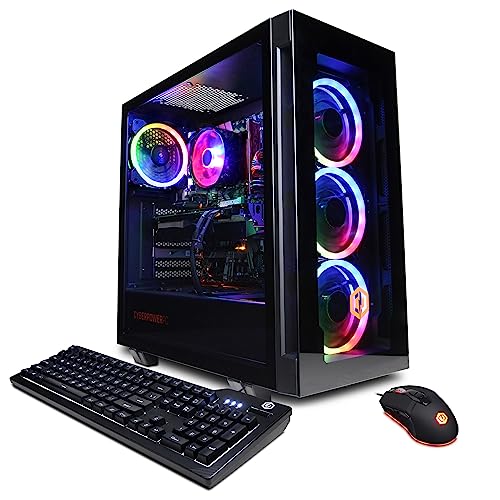
CYBERPOWERPC Gamer Master Gaming PC Ryzen 5 7600 RTX 4060 16GB DDR5

Horizon Autherium Dragon RGB I9 RTX Gaming PC 64GB 5TB
Getorli Mini PC Ryzen 7 6800H 32GB 1TB Triple 4K

BOSGAME E2 Plus Mini PC Ryzen 5 3501U 8GB 256GB

Getorli Mini PC Ryzen 5 6600H 32GB 1TB Triple 4K

Getorli Mini PC Ryzen 7 8745HS 16GB DDR5 500GB

Lenovo Legion Tower 5i Core Ultra 7 RTX 5070 Ti 32GB

BOSGAME P3 Lite Mini PC Ryzen 7 6800H 32GB 1TB
More On The Choices That Made The List
The Gamer Master GMA2700A is built for someone stepping into PC gaming for the first time. Inside that tempered-glass case sits an AMD Ryzen 5 7600 (six cores, twelve threads) paired with an RTX 4060, a combination that handles modern esports and most AAA games at 1080p without breaking a sweat. The 16GB of DDR5 keeps multitasking smooth, and the 500GB NVMe boot drive trims load times down to seconds.
For my money, this is the most honest entry point on the list. Compared to the Horizon tower further down, you trade raw horsepower for a friendlier learning curve and a chassis that ships ready to play. Owners commonly appreciate the front-panel custom RGB lighting and the included keyboard and mouse, which remove two extra purchases from your shopping list.
A Favorable Mix
- Ryzen 5 7600 with six physical cores handles gaming plus chat apps running side by side
- RTX 4060 supports DLSS (an AI-driven upscaling tool that boosts frame rates at minimal quality loss), extending the card’s lifespan in newer titles
- DDR5 memory means faster data transfer than older DDR4 systems at the same price tier
- Tempered-glass side panel lets you see the RGB setup without cracking open the case
Things To Consider
- 500GB fills up quickly once modern game installs start hitting 80 to 150GB each
- Bundled peripherals are functional but tend to feel light in the hand for long sessions
Built With In Mind
First-time builders and budget-conscious gamers who mostly play at 1080p and want everything in one box.
Reach For A Different Pick When
The Horizon Autherium Dragon makes more sense for streamers and creators who need 64GB of RAM and multi-terabyte storage out of the gate.
The Horizon Autherium Dragon is the heavyweight of this roundup. A Core i9 unlocked CPU (with its multiplier opened, meaning it can be pushed past stock speeds), 64GB of RAM, and a 1TB NVMe drive paired with a 4TB hard disk land it firmly in creator territory. The factory-overclocked RTX 5070 OC delivers smooth 1440p and even entry-level 4K gaming.
What sets it apart from the Cyberpower tower is scale. You may find the 360mm AIO liquid cooler and Windows 11 Pro configuration better suited to video editing and software development than casual play. The dual-band WiFi and front RGB keep the build feeling current rather than utilitarian.
Where It Excels
- 5TB of combined storage handles large project files without external drives
- 64GB RAM keeps dozens of browser tabs, IDEs, and editing timelines in memory
- Factory-overclocked GPU squeezes extra frames from demanding releases
- Windows 11 Pro adds BitLocker encryption and remote desktop for working on the road
Worth Noting
- A larger mid-tower footprint means you’ll want a dedicated desk space for it
- Unlocked CPUs run warm under sustained loads, so airflow placement matters more than with a sealed mini PC
Feature Snapshot
Who Should Grab It
Content creators, streamers, and software developers who need storage headroom and CPU headroom more than a tiny footprint.
Swap It Out When
The Lenovo Legion Tower 5i is a smarter fit for shoppers who’d rather lean on Intel’s AI-assisted graphics features and prefer a brand-name warranty.
Getorli’s Ryzen 7 6800H mini PC is the right shape for a kitchen counter office or a trading-style triple-monitor setup. The 6800H mobile chip runs up to 4.7GHz with eight cores and integrated Radeon graphics strong enough for casual titles. Triple 4K output (running three displays at full ultra-high-definition resolution) means you can spread out spreadsheets, calls, and reference material without juggling windows.
Compare this to the larger towers above, and you trade raw thermal headroom for a box that disappears behind a monitor. Dual LAN ports, WiFi 6, and Bluetooth 5.3 cover modern connectivity, while 32GB of LPDDR5 (soldered, low-power RAM) keeps office apps responsive.
Where It Helps
- Triple 4K display support replaces a multi-port docking station for many users
- 32GB RAM is soldered, so there’s no upgrade path but no RAM failure either
- Dual LAN enables router or firewall setups without a USB adapter
- Compact footprint fits behind a VESA-mounted monitor (using standard mounting holes on the back of most displays)
Trade Offs
- Integrated Radeon graphics limit serious gaming to esports and older titles
- Fan noise under extended loads can be noticeable in a quiet bedroom
Made For
Remote professionals and home-office users who run multiple monitors and care more about desk space than peak GPU power.
Look Elsewhere When
The CYBERPOWERPC Gamer Master is a better match for shoppers prioritizing actual gaming performance in a tower form factor.
The E2 Plus is the smallest, simplest entry on this list. Its Ryzen 5 3501U is a four-core, eight-thread chip designed for productivity rather than play. Pair that with 8GB of RAM and a 256GB SSD, and you get a quiet little box that handles email, streaming, schoolwork, and light office multitasking without complaining.
The honest read is that this is the right tool for a specific job: a study desk, a kitchen browser, a basic office workstation. Where the Getorli 6800H offers triple 4K output, the E2 Plus sticks to a single 4K display, which is plenty for most non-gaming setups.
Everyday Advantages
- Low power draw keeps electricity use modest for an always-on household computer
- Compact case slips next to a router or behind a TV
- SSD boot means programs open in seconds rather than the minute-plus of older HDD systems
Small Caveats
- 256GB fills up fast if you keep photo libraries locally
- 8GB of RAM can bottleneck under heavy browser tab loads, depending on your workflow
Key Specs
Best Suited To
Students, retirees, and light office users who want a quiet, inexpensive box for browsing, video calls, and document work.
Where Another Pick Suits Better
The Getorli Ryzen 5 6600H mini PC delivers noticeably more speed and triple-display support for shoppers willing to spend a bit more.
Getorli’s Ryzen 5 6600H is the middle child between the budget E2 Plus and the higher-clocked 6800H above. Six cores, twelve threads, and a 4.5GHz boost give it enough headroom for office software, light gaming, and creative apps like Photoshop or DaVinci Resolve on smaller projects. The 32GB of LPDDR5 and 1TB NVMe make this a true no-compromise productivity machine in mini form.
For my workflow, this is the sweet spot of the Getorli lineup. Triple 4K display support, dual LAN, and WiFi 6 mean the box plays nicely with a standing-desk multi-monitor arrangement. It’s noticeably faster than the BOSGAME E2 Plus without crossing into gaming-tower territory.
Where It Delivers
- 6-core CPU punches well above its size for spreadsheet and code work
- 1TB SSD leaves room for a healthy media library plus productivity apps
- WiFi 6 (the latest mainstream Wi-Fi standard, faster and more stable than WiFi 5) future-proofs your home network connection
Points To Note
- Soldered RAM means no upgrade path later, so you must buy the configuration you plan to keep
- No dedicated GPU, so modern AAA games stay out of reach
Perfect Match For
Hybrid workers and students who want a fast, compact PC for documents, calls, and casual gaming in one tidy box.
Consider Something Else When
The CYBERPOWERPC Gamer Master is the better value for anyone whose priority is dedicated graphics and case-mounted RGB.
The Ryzen 7 8745HS mini PC is the most current-generation chip in this roundup. It’s a laptop-class processor with high boost clocks and strong multi-thread throughput, paired here with 16GB of DDR5 and a 500GB PCIe 4.0 NVMe SSD (the latest mainstream SSD interface, doubling the bandwidth of PCIe 3.0). For developers compiling code or researchers running local data scripts, that combo keeps wait times short.
Where the 6600H below it leans on efficiency, the 8745HS leans on speed. You may find the extra horsepower shows up mostly in compile times and video exports rather than in everyday browsing. The trade is the smaller storage tier and lower RAM ceiling compared to its siblings.
Bright Spots
- Latest-gen Zen 4 architecture (AMD’s modern CPU design) means better performance per watt than older Ryzens
- PCIe 4.0 SSD hits faster sequential read speeds, useful for large project loads
- Compact chassis keeps the desk clean for keyboard-and-monitor minimalists
Room For Improvement
- 500GB storage can run thin for users with large media collections
- 16GB of RAM is on the low side for sustained virtualization workloads
The Right Fit
Developers and prosumers who value CPU performance over storage size in a quiet mini form factor.
Skip It When
The BOSGAME P3 Lite brings the same Ryzen 7 6800H class with 32GB of RAM and 1TB of storage for shoppers needing more headroom.
The Lenovo Legion Tower 5i is the most traditional gaming desktop in this list. An Intel Core Ultra 7 265F sits beside an RTX 5070 Ti, a graphics card with enough VRAM for high-refresh 1440p and respectable 4K performance. The 32GB of memory and 1TB SSD cover modern game installs without forcing an immediate upgrade.
Compared to the Horizon Autherium Dragon, this tower swaps AMD’s i9 for Intel’s Core Ultra 7 and trades 64GB of RAM for half that, but adds DLSS-driven AI upscaling (a feature that reconstructs detail at higher frame rates) on a brand-name chassis with Legion Coldfront cooling. For shoppers who care about thermal headroom during long sessions, that’s a real consideration.
Good Reasons To Consider
- RTX 5070 Ti supports frame generation and AI-enhanced rendering in modern titles
- Legion Coldfront cooling keeps sustained loads quieter than many boutique builds
- 32GB DDR5 is comfortable headroom for both gaming and streaming software running together
Honest Caveats
- 1TB SSD is the only drive mentioned, so expect to add storage if your library grows
- Mid-tower footprint takes up more floor space than the mini PCs above
Feature Card
Whose Shelf It Belongs On
Gamers and streamers who want a brand-name tower with quiet thermals and current-generation graphics in a familiar mid-tower shape.
Not Your Match When
The Getorli Mini PC Ryzen 7 6800H makes more sense for anyone who wants a near-silent office computer over a dedicated gaming rig.
The BOSGAME P3 Lite wraps a Ryzen 7 6800H with 32GB of DDR5 RAM and a 1TB NVMe SSD into a small-footprint case aimed at home offices and remote workers. Integrated Radeon 680M graphics handle 4K video playback and light gaming without breaking a sweat, while eight cores and sixteen threads make multitasking across browsers, calls, and spreadsheets feel fluid.
What sets the P3 Lite apart from the Getorli 6800H is the memory ceiling, since the Getorli already uses 32GB of LPDDR5 here. Where the P3 Lite wins on configurability and price positioning, you get the same general productivity profile. For most users, the difference comes down to brand preference and port layout.
The Practical Payoff
- 32GB DDR5 leaves headroom for heavy browser sessions and multiple virtual desktops
- Ryzen 7 6800H with eight cores handles parallel workloads like a small workstation
- 1TB SSD holds a large project folder without external drives
- Compact form factor fits beside a monitor without dominating desk space
A Few Limitations
- Integrated graphics cap serious gaming to lighter titles and esports
- Limited internal expansion compared to a full tower case
Who It Suits Best
Remote workers, small studio owners, and households that need a fast, quiet daily driver without the footprint of a tower.
Where A Sibling Pick Shines
The CYBERPOWERPC Gamer Master is the better fit for users wanting real dedicated graphics in a tower instead of integrated Radeon output.
What Matters Most Before Choosing Pcs For 600
Matching CPU Generation To Your Workload
The CPU choice drives how the rest of the machine feels. AMD’s Ryzen 5 7600 and Ryzen 7 6800H sit on modern Zen 4 (AMD’s current microarchitecture for desktop and laptop chips), while Intel’s Core Ultra 7 265F brings hardware-accelerated AI features for compatible apps. For everyday browsing and office work, a six-core chip is usually plenty. Video editing, code compilation, and large data sets want eight cores minimum.
GPU: The Gaming And Rendering Lever
Integrated graphics have come a long way, but they still lose to dedicated cards in modern games. RTX 4060 and 5070-class GPUs add DLSS upscaling, which boosts frame rates by rendering at lower resolution then reconstructing detail. The CYBERPOWERPC Gamer Master and Lenovo Legion Tower 5i are the two picks here with real gaming graphics. The mini PCs in this list lean on integrated Radeon output, which is fine for esports and older titles.
RAM And Storage: Where Bottlenecks Hide
16GB of RAM is the modern floor for comfortable multitasking. The 32GB-equipped mini PCs in this roundup give meaningful headroom for heavy browser tabs, light editing, and virtualization. Storage matters too: a 256GB SSD works for a clean install but fills up quickly. Most folks benefit from at least 500GB to start.
Form Factor: Tower Versus Mini PC
Towers offer better thermals and easier upgrades. Mini PCs sacrifice both for a footprint you can hide behind a monitor. If you travel between desks or live in a small apartment, the mini form factor pays off. If you game for hours or want to swap parts later, a tower earns its space.
Key Considerations Across These Picks
Common Shopping Slip Ups
The biggest trap in this category is treating the CPU model number as the whole story. Two chips with similar names can sit on different architectures and behave very differently. Another common slip is underestimating storage needs, since modern game installs regularly exceed 80GB. Always check the SSD capacity, and remember that 500GB feels smaller than you expect once Windows and core apps are installed.
Where The Extra Money Goes
Stepping from a budget mini PC to a gaming tower buys you a dedicated GPU, better cooling, and a chassis with room to grow. That upgrade is worth it for anyone running modern games or doing GPU-accelerated work like video encoding. For pure office productivity, the leap from a Ryzen 5 to a Ryzen 7 mobile chip mostly shows up in compile times and heavy multitasking, so the value depends on how much you push the box day to day.
Frequently Asked Questions
Is $600 enough for a real gaming PC in 2026?
Yes, for 1080p gaming on most modern titles. The CYBERPOWERPC Gamer Master with its RTX 4060 handles esports at high refresh rates and AAA games at medium-to-high settings. For 1440p or 4K, you’d need to stretch the budget toward the Lenovo Legion Tower 5i or a higher-tier GPU.
Do mini PCs run as cool as full towers?
Not quite. Towers have more airflow and larger heatsinks, so they sustain heavy loads longer. Modern mini PCs like the Getorli 6800H and BOSGAME P3 Lite handle office work and light gaming fine, but they tend to throttle under prolonged multi-core stress.
How important is DDR5 versus DDR4?
DDR5 is the current standard, offering higher bandwidth and better power efficiency. DDR4 systems still work, but DDR5 extends the useful life of your purchase. Most picks in this roundup use DDR5 or LPDDR5.
Can I upgrade a mini PC later?
Usually not fully. RAM is often soldered, and GPU upgrades aren’t possible since there’s no PCIe slot for a dedicated card. Storage is typically the only upgrade path, and even that varies by model.
Is Windows 11 Pro worth having over Home?
Pro adds BitLocker encryption, Remote Desktop, and group policy controls. For most home users, Home is fine. Pro matters for remote work setups and anyone handling sensitive data on a portable drive.
The Takeaway
The right desktop around $600 comes down to your real workload: dedicated GPU gaming calls for the CYBERPOWERPC Gamer Master or Lenovo Legion Tower 5i, while office productivity in tight spaces points toward the Getorli or BOSGAME mini PCs. Match the form factor to your room, the GPU to your games, and the CPU to your software, and the rest tends to fall into place.