I started playing on a board that cost less than my weekly takeout, and I can tell you from experience that a tight budget doesn’t mean settling for tinny speakers and clacky plastic. Today’s affordable keyboards pack surprisingly capable sound engines, responsive keys, and learning features that would have looked premium a decade ago. The trick is matching the right instrument to your actual playing goals, not chasing the longest spec sheet.
I’ve narrowed the field to eight models that genuinely earn their place, weighing touch response, sound quality, portability, and built-in learning tools. Some lean toward total beginners, others give gigging hobbyists room to grow. Either way, none of them will ask you to remortgage the apartment.
The Essentials At A Glance

Casio CT-X700 61-Key Portable Keyboard (AiX)

Casio CT-S1 Casiotone 61-Key Portable Digital Keyboard

Casio Casiotone CT-S1 61-Key Portable Keyboard

Yamaha PSR-E473 61-Key Touch-Sensitive Portable Keyboard

Casio CT-S200RD EPA 61-Key Premium Keyboard Package (Red)

Yamaha YPT280 61-Key Portable Keyboard for Beginners
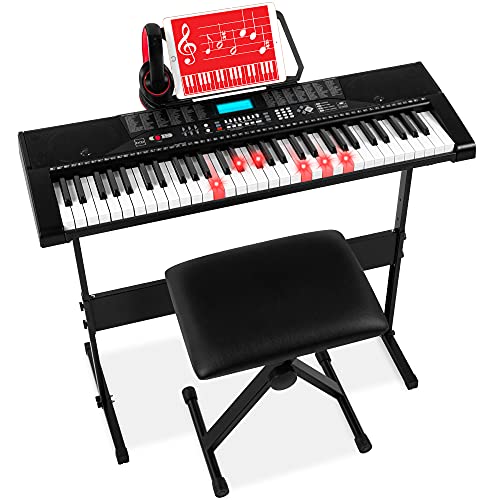
Best Choice Products 61-Key Electronic Keyboard Piano Set

RockJam RJ654 54 Key Keyboard Piano for Beginners
Inside Each Recommended Option
The Casio CT-X700 sits in that sweet spot where a keyboard stops sounding like a toy and starts sounding like an instrument. Power comes from Casio’s AiX sound engine, which uses higher sampling rates than older budget models. That means pianos have more weight, strings sound less reedy, and synth tones hold up when you stack them in a mix.
Six hundred built-in tones sounds excessive until you start exploring genres. One minute you’re playing a honky-tonk upright, the next you’re layering a marimba with a warm pad. For hobbyists who like to wander between styles, that variety keeps the practice sessions fresh. Compared to the simpler CT-S1 later in this list, the CT-X700 trades slim aesthetics for sonic depth.
Key Advantages
- 600 tones cover nearly any genre without needing extra sound libraries
- AiX engine delivers cleaner piano and brass samples than typical entry-level boards
- 195 rhythm patterns turn the keyboard into a one-person backing band
- 61 full-size keys give proper room for two-handed playing and proper sight-reading
- Built-in speakers are loud enough for bedroom practice without an external amp
Things To Consider
- Keys are not touch-sensitive, so every note plays at the same volume regardless of pressure
- Plastic body construction feels light, so you’ll want a stable stand for serious playing
Who It Suits Best
Intermediate hobbyists who want genuine sonic variety without stepping into premium territory.
Consider Something Else When
The Yamaha PSR-E473 is a stronger match for players who want touch-sensitive keys and groove-based performance features.
The CT-S1 looks like it wandered off a Scandinavian furniture catalog. Flat top, slim profile, a single rotary dial, and a finish that actually looks good leaning against a brick wall. That visual restraint is the whole pitch: a keyboard you don’t feel like hiding in a closet.
Underneath the minimalist shell sit 61 studio-quality tones. They’re stage-ready in the sense that they cut through a mix without needing much EQ. Touch sensitivity is present, so dynamics respond to how hard you strike the keys. For apartment players who care as much about the aesthetic as the sound, the CT-S1 removes the usual compromise. Where the CT-X700 leans into abundance, this one leans into focus.
Practical Advantages
- Slim, lightweight chassis fits on a desk or side table without dominating the room
- Touch-sensitive keys respond to playing dynamics for expressive performance
- Optional AA battery power frees the keyboard from outlet dependency
Honest Caveats
- Tone count is modest, so genre-hoppers may feel limited over time
- No bundled stand, so budget for a tabletop support if you want proper posture
- Minimalist button layout has a learning curve when accessing deeper functions
Feature Snapshot
Made For
Apartment dwellers and style-conscious players who want an instrument that looks as considered as it sounds.
A Better Fit Elsewhere
The Casio CT-X700 offers more tones and rhythms for hobbyists who prioritize sonic depth over visual minimalism.
This CT-S1 variant shares the same chassis DNA as the previous entry but ships as keyboard only. That distinction matters if you already own a stand or plan to play flat on a table. Same 61 touch-sensitive keys, same slim Casiotone body, same focus on portability through battery operation.
The advanced AiX sound source handles piano duties convincingly and offers enough tonal variety to keep things interesting. You won’t find the rhythm library of larger Casio boards, but for players who treat the keyboard as a writing tool rather than a full production station, that restraint feels intentional. Travelers hauling a keyboard on the subway will appreciate how easily it disappears into a backpack.
The Practical Payoff
- Battery-powered operation makes it genuinely portable for outdoor sessions
- Touch-sensitive action helps build proper dynamic control from the start
- Minimalist control scheme reduces clutter on the panel
- Compact footprint works on small desks and tight apartment corners
Worth Noting
- No bundled accessories means a stand and headphones are separate purchases
- Limited rhythm accompaniment compared to fuller-featured Casio models
Right Fit For
Mobile players and minimalists who already own their accessories and prioritize a clean, transportable rig.
Look Elsewhere When
The Casio CT-S200RD EPA package is the smarter pick for someone starting from scratch and needing a stand, headphones, and software included.
The PSR-E473 is the keyboard on this list that wants to grow with you. Yamaha packed in 820 instrument voices, 290 accompaniment styles, and DJ-style controls that let you scratch and trigger samples without needing a separate controller. Touch-sensitive keys mean the harder you press, the louder the note, just like an acoustic piano.
The Groove Creator feature lets you build beats on the fly by mixing drum parts, basslines, and melodic loops. It’s the kind of tool that turns noodling into actual songwriting. Where the CT-X700 offers breadth, the PSR-E473 offers creative depth, especially for players who lean toward electronic genres. Real-Time Performance Controls put filters, EQ, and effects right at your fingertips.
Strengths Worth Knowing
- 820 voices span orchestral, electronic, and world instruments
- Groove Creator turns the keyboard into a portable beat-making station
- Quick Sampling records external audio sources for instant remixing
- Touch-sensitive action supports nuanced dynamics for expressive playing
Trade Offs
- Higher complexity may overwhelm brand-new players
- Feature card requires time investment to learn menus and deeper functions
Feature Card
Best Suited To
Intermediate players exploring songwriting, beat production, and live performance beyond classical repertoire.
Not Your Match When
The Yamaha YPT280 is a friendlier starting point for absolute beginners who need simpler lesson-focused tools.
The CT-S200RD EPA solves the most annoying part of buying a first keyboard: the scavenger hunt for accessories. This package ships with headphones, an adjustable stand, a power supply, a USB cable, and eMedia instructional software. You open the box, set it up, and start playing.
The CT-S200 itself is a solid portable keyboard with 61 keys and battery operation, which Casio has refined across multiple generations. The red finish adds visual personality that the all-black siblings lack. For a parent buying for a child or an adult who’s never touched a keyboard before, this bundle removes the guesswork. Every additional piece you need arrives in the same shipment.
Useful Touches
- Complete bundle eliminates separate accessory purchases
- eMedia software provides structured lessons for self-taught players
- Headphones allow silent practice without disturbing roommates
- Adjustable stand supports proper playing posture from day one
- Battery-powered operation enables practice anywhere in the home
Points To Note
- Keys lack touch sensitivity, so dynamics stay flat compared to pricier boards
- eMedia lessons require subscription activation for full content access
Feature Rundown
Who Should Grab It
First-time players and gift buyers who want a complete starter setup without piecing together separate orders.
Skip It When
The Best Choice Products keyboard set is worth considering if lighted keys and a padded bench matter more than brand reputation.
The YPT280 is Yamaha’s pitch to absolute beginners, and the focus on learning tools shows. Built-in songs, a Quiz Mode that tests your note recognition, and a music rest included in the box all point toward practice as the primary use case. The interface is stripped down so the player isn’t drowning in menus before playing a single note.
You still get hundreds of voices spanning pianos, strings, brass, and synth sounds, which keeps things interesting after the first few weeks. For self-taught learners working without a teacher, the structured exercises build fundamentals faster than freewheeling improvisation. It lacks the touch sensitivity and groove tools of its sibling PSR-E473, but that simplicity is part of the appeal.
What Earns Its Place
- Quiz Mode gamifies note learning for faster progress
- Built-in songs give beginners something to play along with immediately
- Yamaha’s voice library covers more genres than typical starter boards
- Music rest included for proper sheet music reading posture
Possible Compromises
- No touch-sensitive keys means dynamics stay uniform regardless of pressure
- No headphones or stand in the box, so those are separate purchases
- Limited creative tools compared to higher-tier Yamaha models
Perfect Match For
Self-directed beginners who want Yamaha reliability with lesson-friendly features at the lowest entry point.
Reach For A Different Pick When
The Yamaha PSR-E473 is the stronger long-term investment for someone who wants to grow into performance features.
The Best Choice Products keyboard set comes with everything a household needs to turn a child into a musician, at least in theory. Lighted keys guide small fingers to the right notes, an LCD screen displays notation, and three teaching modes break learning into manageable steps. You also get a stand, bench, headphones, and note stickers in one box.
For parents buying a first instrument, the appeal is obvious: one purchase covers the full setup. The 255 timbres and rhythms won’t win any sound-quality awards, but for a kid learning Mary Had a Little Lamb, they sound perfectly fine. The padded bench and H-style stand make it feel like a real piano setup rather than a toy propped on a coffee table.
Useful Highlights
- Lighted keys accelerate note learning for visual learners
- Three teaching modes support different skill stages
- Complete accessory set eliminates guesswork for gift purchases
- Padded bench and H-style stand create a proper piano setup at home
- Note stickers help beginners map keys to notation from day one
- Headphones allow practice without waking the rest of the household
Points To Keep In Mind
- Sound quality is modest compared to Yamaha or Casio branded boards
- Build quality prioritizes affordability over long-term durability
- Limited upgrade path as the player’s skill develops
Quick Facts
Built With In Mind
Parents and grandparents shopping for a child’s first instrument who want a complete, gift-ready package under one purchase.
Swap It Out When
The Casio CT-S200RD EPA package offers better long-term sound quality for a similar all-in-one bundle format.
The RockJam RJ654 is the smallest keyboard on this list at 54 keys, and that’s not a weakness when the player is also small. Younger hands struggle to span the full octave ranges of 61-key boards, so a shorter layout actually fits their physiology. The full-size keys still teach proper finger spacing.
You get built-in tones, rhythms, demo songs, and note stickers to guide those first lessons. Battery or mains power means practice can happen in the kitchen, the bedroom, or even the car on long trips. For households watching every dollar, the RJ654 delivers a genuine keyboard experience without requiring a serious financial commitment.
A Favorable Mix
- 54-key layout suits younger players and smaller hands
- Note stickers and lesson access guide the first weeks of playing
- Battery or mains power supports practice anywhere
- Compact frame fits bedrooms, classrooms, and tight storage spaces
Small Caveats
- Fewer keys limit repertoire that requires the full piano range
- Sound engine is basic compared to Yamaha and Casio alternatives
- No touch sensitivity for developing dynamic playing
- Build quality prioritizes low cost over long-term durability
The Right Fit
Budget-conscious families introducing young children to piano without committing to a larger, more expensive instrument.
Where A Sibling Pick Shines
The Yamaha YPT280 offers more sounds and Yamaha reliability for beginners who can handle 61 full-size keys.
What Matters Most Before Choosing Piano Keyboards On A Budget
Number Of Keys And Key Action
Touch-sensitive keys respond to how hard you press, producing louder or softer notes based on pressure, which mirrors acoustic piano behavior. Non-touch keys play at a fixed volume regardless of force. Beginners often start on non-touch boards, but players who plan to transition to an acoustic piano benefit from practicing on touch-sensitive keys early. A 61-key layout covers most learning material and popular music without forcing transposition, while 54-key boards work fine for younger players or absolute beginners who won’t reach the extreme ranges yet.
Sound Engine Quality
The sound engine is the processor and sample library that generates each instrument’s tone. Older budget engines used low-resolution samples that sounded thin and artificial. Modern AiX-based boards from Casio and Yamaha’s PSR series use higher-resolution samples that sound noticeably more realistic. For piano specifically, listen for weight in the lower register and clarity in the treble, since that reveals sample quality more than flashy synth tones.
Built-In Learning Tools
Lesson features vary widely. Quiz modes test note recognition, lighted keys guide finger placement, and accompaniment styles play backing tracks so the student practices playing melody over rhythm. Absolute beginners benefit most from boards with structured lesson content, while hobbyists who already know basics can skip those features and prioritize tone variety.
Connectivity And Expansion
USB-MIDI support allows the keyboard to connect to computers and tablets for use with learning apps like Flowkey, Simply Piano, or GarageBand. Audio outputs let you plug into external speakers or mixers for louder performance. Headphone jacks enable silent practice during late-night sessions. These ports matter more than they seem, because they extend the keyboard’s usefulness well beyond standalone operation.
Key Considerations Across These Picks
Common Shopping Slip Ups
A frequent mistake is choosing a keyboard with too few keys to grow into. A 54-key board works for the first few months, but most method books assume access to the full piano range by month three or four. Another trap is overlooking the cost of accessories, since a keyboard without a stand and headphones often needs those purchases to feel like a real instrument. Finally, skipping sound quality research leads to disappointment when the board arrives sounding thin and toy-like compared to the demos.
Where The Extra Money Goes
Stepping up from budget to mid-tier keyboards typically buys three things: touch-sensitive keys for expressive dynamics, better sound engines with more realistic instrument samples, and expanded connectivity for app integration and external audio. These upgrades matter most for players who intend to stick with the instrument for years rather than months. For a true beginner testing the waters, a basic board is enough. For someone committed to long-term learning, those upgrades accelerate progress noticeably.
Frequently Asked Questions
How Many Keys Does A Beginner Actually Need?
A 61-key keyboard covers most learning material and provides room to grow. Younger players with smaller hands may find 54 keys more comfortable initially, but they’ll likely need to upgrade within a year. Full 88-key pianos suit serious classical students, though most beginner keyboards settle on 61 keys as the practical middle ground.
Are Cheap Keyboards Hard To Play?
Modern budget keyboards use full-size keys with reasonable action, so the physical playing experience is similar across price points. The biggest difference is sound quality and feature depth, not playability. Practicing finger strength and proper posture on any keyboard transfers directly to better instruments later.
Do I Need Touch-Sensitive Keys As A Beginner?
Not strictly required for the first few weeks, but touch sensitivity helps build proper dynamic control early. Players who plan to transition to an acoustic piano benefit from practicing with weighted, touch-sensitive keys from the start. Those content with synth and electronic music styles can manage without it longer.
What’s The Difference Between A Keyboard And A Digital Piano?
Keyboards prioritize portability, built-in speakers, rhythm features, and a wide range of sounds. Digital pianos focus on realistic piano feel and sound, often with weighted or hammer-action keys but fewer non-piano tones. Beginners who want to learn piano traditionally may prefer digital pianos, while those interested in songwriting and variety benefit more from keyboards.
Can I Connect A Budget Keyboard to My Tablet For Lessons?
Most modern keyboards with USB-MIDI support connect directly to iPads and tablets using a compatible adapter. Free and subscription apps like Flowkey, Simply Piano, and GarageBand recognize the keyboard input and provide interactive lessons. This pairing often delivers more structured learning than the keyboard’s built-in lessons alone.
Closing Remarks
Picking a budget keyboard comes down to honest answers about who will play it and what they want to play. A five-year-old exploring sound for the first time needs different features than a hobbyist returning to music after decades away. The picks above cover that range honestly, with clear strengths and real trade-offs noted. Trust the fit, not the spec sheet, and the right instrument will teach itself.