Picking the right PLA filament shapes every print that comes off your bed, and I have spent enough time watching hobbyists fight clogged nozzles and brittle models to know that cheap plastic costs more than it saves. PLA, short for polylactic acid, is the most beginner-friendly filament because it prints at lower temperatures, sticks well to a standard bed, and skips the harsh odors of ABS. The trick is matching the spool to your printer and your project style. This guide walks through seven solid options across single-spool starters, multi-color bundles, and high-speed formulations, so you can land on the right pick without sifting through endless listings.
The Picks In Brief

ELEGOO PLA Basic 3D Printer Filament 1.75mm Sunflower Yellow 1KG

Creality Hyper PLA Filament Bundle 2KG RFID High-Speed

OVERTURE PLA Filament 1.75mm 3D Printer Filament 1kg Green
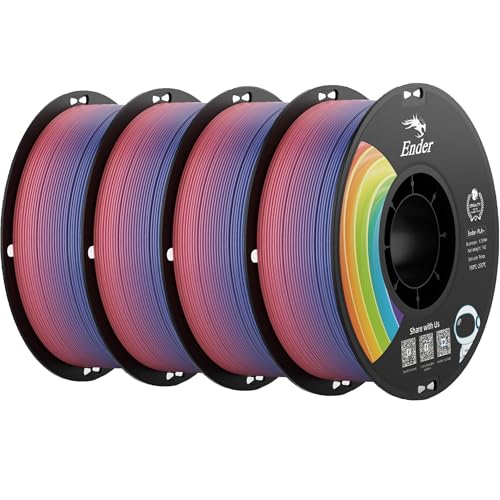
Creality PLA+ Filament 1.75mm Rainbow 4KG 4-Pack
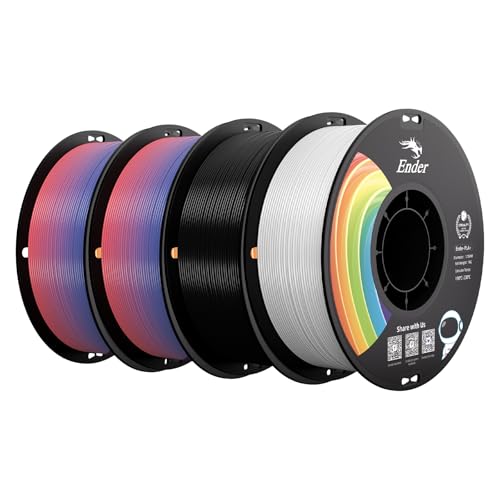
Creality PLA+ Filament 1.75mm 4KG Multi-Pack Black White Rainbow

Creality PLA+ Filament 1.75mm 4KG Multi-Pack White Rainbow

ANYCUBIC PLA Plus 3D Printer Filament 1.75mm Texture Gray 1KG
Inside Each Recommended Option
The ELEGOO PLA Basic in Sunflower Yellow is the kind of spool I would hand to someone printing their first benchy. It runs at a standard 1.75 mm diameter, fits any FDM (Fused Deposition Modeling) printer that accepts the common 1.75 format, and the bright yellow tone makes layer lines easy to spot during early calibration. For hobbyists learning slicer settings, that visibility turns into a teaching tool rather than an annoyance.
What sets this apart from a generic single-color spool is the reusable cartridge. Once the filament runs out, the spool stays on your shelf for the next refill, cutting down on the cardboard waste that piles up in a busy print room. It suits first-time users and casual makers who want a single bright color for test prints or display pieces.
Advantages To Know
- Standard 1.75 mm diameter fits nearly every consumer FDM printer on the market.
- Sunflower Yellow offers high visibility for spotting under-extrusion or first-layer issues during calibration.
- Reusable spool design reduces single-use plastic waste and keeps storage tidy.
- Light PLA formulation prints at lower bed and nozzle temperatures, which is gentler on entry-level printer hotends.
Points To Note
- A single 1 kg spool means you will reorder often on high-volume projects.
- Sunflower Yellow is a bold color choice and may not suit prints where a neutral finish matters.
Who It Suits Best
Beginners and hobbyists printing calibration models, gifts, or decorative pieces where bright color is a feature rather than a drawback.
Where Another Pick Suits Better
Users running a Creality CFS multi-material setup should consider the Creality Hyper PLA Filament Bundle 2KG RFID High-Speed for RFID auto-recognition.
The Creality Hyper PLA Filament Bundle is engineered for owners running newer high-speed CoreXY printers, where stock PLA tends to drag and lose detail at extreme feed rates. The filament is rated for print speeds from 30 mm/s up to 600 mm/s, which means it keeps up with the latest generation of fast machines without sacrificing surface finish. For anyone chasing throughput on a small farm, that matters.
The RFID chips embedded in each spool are the real headline. When paired with a Creality CFS (Creality Filament System) and compatible printers like the K2 Plus or K2 Pro, the printer reads the spool automatically and loads the right temperature and flow profile. That removes a layer of guesswork during multi-color jobs. It suits print-farm operators and serious hobbyists who already own compatible Creality hardware.
Practical Pluses
- Rated for high-speed printing up to 600 mm/s without losing detail, ideal for fast CoreXY machines.
- RFID auto-recognition with Creality CFS cuts setup time on multi-color prints.
- 2 kg bundle covers longer projects without mid-print spool swaps.
- 1.75 mm diameter maintains broad compatibility with most FDM printers.
Trade Offs
- RFID features only unlock on Creality CFS-compatible printers, so non-Creality owners lose that benefit.
- Black and White color split limits creative variety compared to a rainbow bundle.
- Owners commonly report that high-speed PLA formulations can run slightly noisier through the extruder at lower temps.
Feature Snapshot
Made For
Print-farm operators and advanced hobbyists running Creality CFS setups who want speed and auto-recognition in one package.
Consider Something Else When
Budget-focused beginners should look at the ELEGOO PLA Basic 3D Printer Filament 1.75mm Sunflower Yellow 1KG, which offers a simpler single-spool entry point.
OVERTURE has been on my radar for years as a steady mid-tier brand, and this green PLA continues that reputation. The headline feature is the closed-loop extrusion monitoring with a built-in CCD (charge-coupled device) camera, which checks the filament diameter in real time to maintain a tight ±0.02 mm tolerance. That kind of consistency translates into fewer mid-print flow adjustments and cleaner layer adhesion across long jobs.
For hobbyists who print a little of everything, from cosplay props to garden labels, the green color is a versatile outdoor-friendly tone that hides minor blemishes well. It fits most FDM printers and prints at standard PLA temperatures. It suits makers who prioritize dimensional consistency over flashy colors.
Why It Works Well
- Closed-loop diameter monitoring maintains ±0.02 mm tolerance, reducing extrusion surprises.
- Standard 1.75 mm size fits the vast majority of consumer FDM printers.
- Solid green color works well for outdoor-themed prints and prop builds.
- 1 kg spool offers a balanced size for typical hobbyist output.
Worth Noting
- Single-color offering means reordering the same shade once the spool runs out.
- Green tone may not match projects that need neutral or natural-looking parts.
Best Suited To
Hobbyists printing functional prototypes, props, and outdoor-themed models where dimensional accuracy matters more than color variety.
Skip It When
Color-flexibility seekers should consider the Creality PLA+ Filament 1.75mm Rainbow 4KG 4-Pack for multi-color projects.
The Creality PLA+ Rainbow 4-Pack is the upgrade many hobbyists make once they tire of swapping single-color spools. PLA+ is a modified formulation that trades a touch of stiffness for noticeably better toughness, meaning parts bend rather than snap when stressed. That single change opens up functional parts like brackets, clips, and wearable prototypes that a standard PLA would crack under load.
Each of the four 1 kg cardboard-spool rolls shifts through a rainbow gradient, so a single vase or figurine can carry a full color sweep without manual filament changes. The ±0.02 mm dimensional accuracy keeps the rainbow transitions smooth rather than blotchy. It suits creators, cosplayers, and small-shop owners who want a balance of strength and color variety.
Standout Benefits
- Improved toughness over standard PLA, which reduces part breakage during functional use.
- Rainbow gradient adds visual interest without manual color swaps during a single print.
- 4 kg total across four 1 kg spools supports larger batch jobs.
- ±0.02 mm accuracy keeps color transitions consistent across layers.
- Cardboard spools are widely accepted on most FDM printer holders.
Soft Spots
- Cardboard spools can degrade if stored in damp environments for long periods.
- Rainbow gradient limits color precision for projects needing exact hues.
Spec Overview
Perfect Match For
Creators and cosplayers printing functional parts and decorative pieces where strength and color variety go hand in hand.
Look Elsewhere When
Anyone running a Creality CFS should look at the Creality Hyper PLA Filament Bundle 2KG RFID High-Speed instead for RFID-driven multi-color workflows.
This Creality PLA+ bundle is the practical workhorse option in the lineup: two black spools, one white, and one rainbow spread across four kilograms of material. The mix covers most real-world jobs, from matte-black functional brackets to neutral-white display models and rainbow accent pieces. For a small shop or a serious hobbyist printing daily, that kind of palette variety avoids the weekly Amazon order.
Compared to the all-rainbow bundle above, this one trades one rainbow spool for an extra black, which is the color most high-volume users actually burn through. PLA+ toughness applies here too, so parts hold up to light mechanical stress. It suits users who print more functional parts than decorative pieces.
Everyday Wins
- Color mix covers most functional and decorative jobs without reordering.
- PLA+ toughness improves durability for brackets, jigs, and mechanical parts.
- 4 kg total supports high print volume across multiple projects.
- 1.75 mm diameter fits standard FDM printer hotends.
- Cardboard spools weigh less than plastic equivalents for shipping and storage.
Honest Caveats
- Cardboard spools can absorb moisture in humid print rooms, leading to occasional stringing.
- Only one rainbow spool means color-shift projects are more limited than the all-rainbow 4-pack.
Right Fit For
High-volume hobbyists and small shops printing a mix of functional parts and the occasional colorful accent piece.
A Better Fit Elsewhere
Pure color-variety seekers may prefer the Creality PLA+ Filament 1.75mm Rainbow 4KG 4-Pack, which dedicates more spools to the rainbow gradient.
The White-and-Rainbow variant sits between the all-rainbow and the black-heavy bundles. Two white spools cover most paintable projects, prototypes that get primed, and clean display models, while two rainbow spools keep color-shift prints well-fed. For hobbyists who prime or paint finished prints, white PLA+ is a better starting canvas than gray or black.
The PLA+ toughness upgrade carries the same benefits as the other Creality bundles in this list, so brackets and clips can flex without snapping. The 1.75 mm diameter and standard tolerances make this a drop-in for most FDM printers. It suits painters, prototype designers, and anyone whose workflow ends with a coat of primer.
A Few Highlights
- Two white spools provide an ideal base for painting and priming projects.
- Two rainbow spools cover color-shift decorative prints.
- PLA+ formulation offers better impact resistance than standard PLA.
- 4 kg total suits hobbyists running multiple print jobs per week.
Possible Compromises
- No dedicated black or gray spools, which are useful for technical parts.
- White PLA can show every imperfection, so calibration matters more than with darker colors.
Who Should Grab It
Painters, prop makers, and prototype designers who prime finished prints and want both neutral and color-splash options on hand.
Swap It Out When
Users printing mostly mechanical or hidden parts should reach for the Creality PLA+ Filament 1.75mm 4KG Multi-Pack Black White Rainbow for a more functional color spread.
ANYCUBIC’s PLA Plus rounds out the list as a single-spool option for anyone running a mixed-brand print room. The Texture Gray tone is forgiving, hiding layer lines well and looking professional straight off the bed without painting. PLA Plus gives the same toughness boost as the Creality PLA+ formulations, so functional parts hold up to bending forces that would crack standard PLA.
The reusable spool is a small but appreciated touch, since it stays useful after the filament runs out. With ±0.02 mm dimensional accuracy and broad FDM compatibility, this spool fits into almost any workflow. It suits makers who want one reliable, neutral-toned filament as their daily driver.
Bright Spots
- Texture Gray hides minor layer-line imperfections for a clean printed look.
- PLA Plus formulation improves toughness over standard PLA.
- Reusable spool reduces long-term plastic waste and storage clutter.
- ±0.02 mm accuracy keeps extrusion consistent across long prints.
- Works with most FDM printers on the market, regardless of brand.
Where It May Fall Short
- Single 1 kg spool means more frequent reordering than 4 kg bundles.
- Neutral gray lacks the visual flair of rainbow or bright single-color options.
Quick Facts
Whose Shelf It Belongs On
Hobbyists who want one neutral, reliable filament that handles functional parts and display prints equally well.
Reach For A Different Pick When
Users needing larger print volume should consider the Creality PLA+ Filament 1.75mm 4KG Multi-Pack Black White Rainbow for a four-kilogram value option.
Choosing the Right PLA Filament for Your Workflow
Match the Filament Type to Your Project Goals
Standard PLA prints at lower temperatures and produces minimal odor, making it the safest starting point for most home printers. PLA+, like the Creality and ANYCUBIC formulations above, adds impact resistance and layer bonding strength, which matters for functional parts that get handled or stressed. High-speed PLA, like the Creality Hyper, is engineered for newer fast printers and only earns its keep if your machine actually pushes past 200 mm/s. Pick standard PLA for learning, PLA+ for daily functional work, and high-speed only when your printer demands it.
Check Diameter Tolerance and Spool Format
Almost every consumer printer accepts 1.75 mm filament, but tolerance varies. A ±0.02 mm spec, common across the picks in this list, keeps extrusion consistent enough that layer shifts stay rare. Spool format matters too: cardboard spools are lighter and recyclable, while reusable plastic spools like the ANYCUBIC and ELEGOO designs cut down on single-use waste but may not fit every printer’s spool holder. Always check your printer’s spool width before buying a 4 kg bundle, since some external roll holders only fit standard 1 kg widths.
Color and Bundle Size for Your Print Volume
A single bright spool like the ELEGOO Sunflower Yellow is great for calibration and learning, but high-volume users burn through a kilogram faster than expected. The 4 kg Creality bundles exist for exactly that reason, and the color split (rainbow-heavy, black-heavy, or white-heavy) shapes what you can print without reordering. Match the bundle to your typical color demand: rainbow for display pieces, black and white for functional and paintable parts.
Storage and Humidity Matter More Than Most Buyers Expect
PLA absorbs moisture over time, and humid storage leads to stringing, popping, and weakened layer adhesion. Owners commonly report that spools stored in garages or basements need resealing in dry bags or a dedicated dry box. Cardboard spools in particular can warp or degrade in damp rooms, so consider a sealed plastic bin with desiccant packs if your print space runs humid.
Key Considerations Across These Picks
Where Shoppers Go Wrong
The most common slip is buying cheap off-brand PLA without checking diameter tolerance. A loose ±0.05 mm spec sounds harmless until the filament jams mid-print and ruins a six-hour job. Another trap is grabbing a rainbow spool for a project that needs an exact color match, then finding the gradient lands in the wrong hue halfway through. Match the filament type and color profile to your actual project before checking out, not after.
What Separates Premium From Basic
Higher-tier PLA earns its place through tighter diameter tolerances, embedded tech like RFID, and tougher modified formulations. The Creality Hyper PLA includes RFID chips that auto-load profiles on CFS printers, which removes a real source of setup error. PLA+ variants cost slightly more per kilogram but reduce breakage on functional parts, which saves material in the long run. Pay more when your workflow depends on consistency, and save when you just need a basic spool for occasional prints.
Frequently Asked Questions
What does PLA stand for in 3D printing?
PLA stands for polylactic acid, a biodegradable thermoplastic made from renewable resources like corn starch. It is the most beginner-friendly filament because it prints at lower temperatures and produces minimal odor compared to ABS.
Can any 3D printer use PLA filament?
Nearly all FDM (Fused Deposition Modeling) printers accept PLA, since it prints at the lowest common temperature range. The 1.75 mm diameter covered in this list is the most widely supported size across consumer printers.
What is the difference between PLA and PLA+?
PLA+ is a modified formulation that adds impact resistance and layer bonding strength. Standard PLA is fine for decorative prints, while PLA+ handles functional parts that get stressed or handled regularly.
Does filament color affect print quality?
Color itself does not change print behavior, but darker or specialty pigments can sometimes require minor temperature tweaks. Neutral tones like gray and white are the most forgiving for first-layer calibration.
How should I store PLA filament when not in use?
Keep PLA in a sealed bag or dry box with desiccant packs to block moisture absorption. Humid storage is the leading cause of stringing, popping, and weakened layer adhesion in stored spools.
Closing Remarks
The right PLA spool depends less on marketing claims and more on your printer’s speed, your project’s toughness needs, and how often you print. Start with a single spool to learn your slicer settings, then graduate to a multi-pack once color and volume become real needs. Any of the seven picks above will serve a hobbyist well, and matching the filament to your workflow matters more than chasing the newest formulation on the shelf.