I spent weeks comparing spools, speeds, and color stories, and these six cover the most common situations most makers actually run into. From PLA basics that just behave on a hobby printer to translucent gradients and pre-dried tough blends, this list trims the noise. It’s built for hobbyists, classroom printers, and anyone tired of inconsistent 1.75mm filament showing up at the print bed.
The Shortlist At A Glance

ELEGOO PLA Basic 1.75mm Sunflower Yellow 1KG

Creality Hyper PLA Filament Bundle 2KG (Black & White)

OVERTURE PLA Filament 1.75mm 1KG (Green)

OVV3D Translucent PLA Sunset Gradient 1KG

OVV3D Transparent PLA Blue-Green-Purple Gradient 1KG
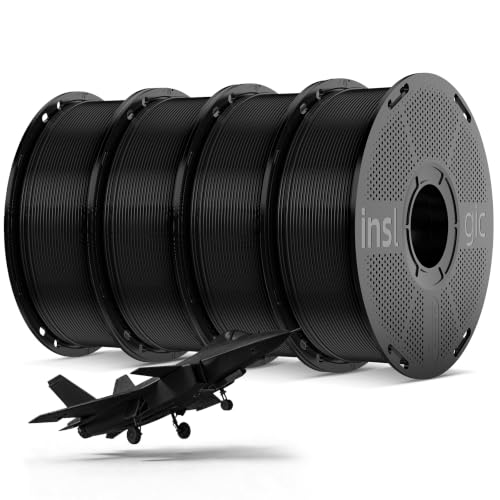
Inslogic Pre-Dried Black PLA Pro 4KG (4-Pack)
The Details Behind The Selections
ELEGOO’s PLA Basic sits in that comfortable middle ground where hobbyists keep coming back to refill. The 1.75mm PLA is tuned for predictable extrusion and steady layer bonding, which matters when a first-time printer is still learning retraction settings and bed leveling. Sunflower Yellow is a cheerful, opaque color that hides small layer lines on figurines and desk props.
Compared with the Creality Hyper PLA reviewed next, this spool is aimed at standard-speed machines rather than 600 mm/s workflows. For a typical 60 mm/s hobby printer in a home office or classroom, that is exactly the right speed window.
A Strong Showing
- 1.75mm PLA diameter suits the vast majority of FDM printers on the market.
- 1KG spool keeps a steady backstock for several weeks of typical hobby printing.
- Opaque yellow hides minor layer artifacts on cosplay helmets and display prints.
- Reusable spool design reduces single-use plastic waste in a home workshop.
- Broad color palette makes it easy to coordinate multi-color projects later on.
Honest Caveats
- Standard PLA, so it lacks the heat resistance and toughness of PLA Pro blends like the Inslogic pick.
- Yellow filament can discolor slightly under prolonged UV exposure near a sunny window.
- Owners commonly report the included desiccant should be swapped every few weeks in humid climates.
At A Glance
Made For
Beginners and hobbyists who want a forgiving PLA that prints cleanly on a stock Ender-style or Neptune-style machine without aggressive tuning.
Skip It When
You print functional parts that need higher heat resistance, in which case the Inslogic Pre-Dried Black PLA Pro 4KG bundle is the stronger match.
Creality’s Hyper PLA is built around speed. The 1.75mm filament holds detail across a 30 to 600 mm/s range, so it behaves on a slow first-gen machine and really opens up on a K2 Plus or Hi series. RFID tagging is the quiet feature here: when paired with a Creality CFS (Creality Filament System, a multi-material enclosure), the printer recognizes the spool and applies tuned settings automatically.
The 2KG twin-spool format, one black and one white, suits anyone running a dual-color workflow or stocking a small print farm. Compared with ELEGOO’s Sunflower Yellow, this is firmly in the prosumer lane.
Points In Its Favor
- Maintains fine detail at speeds up to 600 mm/s on compatible CoreXY machines.
- RFID chip auto-loads material profiles into Creality CFS-enabled printers.
- Black and white twin pack covers the two most-used contrast colors for prototypes.
- Wide 30 mm/s minimum speed window works on older, slower extruders too.
Things To Consider
- RFID auto-detection only helps inside the Creality ecosystem; on third-party printers it is just regular PLA.
- High-speed flow demands a hardened nozzle for abrasive-filled color runs over time.
Whose Shelf It Belongs On
Creality K2 Plus, K2 Pro, and Hi series owners who want auto-recognizing, high-flow PLA for multi-color CFS prints.
Another Choice May Suit
Casual hobbyists on a single-color setup will get better value out of the OVERTURE PLA Filament 1KG in Green instead.
OVERTURE has carved out a quiet following for one reason: the 1.75mm PLA is monitored for tight diameter consistency during extrusion. Closed-loop CCD inspection keeps the actual filament diameter close to the spec line, which reduces under- and over-extrusion on hobby printers with weaker feeders. The green shade is deep enough to read well on social-media product shots.
Where the Creality Hyper PLA leans on speed, this spool leans on steadiness. It is a calm, predictable filament that rewards careful slicer profiles rather than raw flow rate.
Practical Pluses
- Tight diameter tolerance keeps small nozzles fed without sudden flow changes.
- Vacuum-sealed packaging with desiccant reduces the risk of wet filament popping.
- Standard 1KG format fits every common spool holder and AMS-style feeder.
- Green tone photographs cleanly for Etsy and makerspace listings.
Small Caveats
- PLA only, with no ABS-like toughness for functional brackets like the Inslogic Pro spool.
- Owners commonly report needing a fresh desiccant pack after the spool has been open for a month.
Key Specs
Best Suited To
Home hobbyists and classroom printers who run a single spool most of the time and value consistency over raw speed.
Reach For A Different Pick When
You need to print translucent lampshades or color-shift art pieces, in which case the OVV3D Sunset Gradient Translucent PLA is the stronger creative match.
The Sunset Gradient spool is the most decorative item in this roundup. Translucent PLA lets light pass through the layers, and the red-orange-yellow color shift reads like a real sunset under a small LED puck. Vases, lampshades, and ghost-effect display models are the obvious targets.
It still behaves like a 1.75mm PLA in the slicer, so owners coming from the ELEGOO Sunflower Yellow spool will not need a new profile. Translucent runs demand slightly thicker walls to read well, which is the main thing to remember.
Where It Delivers
- Color gradient runs the full spool, so a single print pulls the warm palette without manual color changes.
- Translucent base diffuses LED light beautifully in lamp and shade projects.
- Standard 1.75mm size fits the same extruders as every other pick on this list.
Points To Keep In Mind
- Translucent filaments show layer lines more than opaque PLA, so thicker walls and careful orientation help.
- Decorative colorway means leftover material is harder to use on neutral prototypes.
Perfect Match For
Makers printing gift vases, lampshades, or holiday decor where warm sunset tones carry the look on their own.
Where Another Pick Suits Better
Makers wanting cooler tones should reach for the OVV3D Transparent PLA Blue-Green-Purple Gradient instead.
The cool-toned sibling of the Sunset spool trades red and yellow for blue, green, and purple. It is the same translucent PLA recipe, so the light behavior is identical, but the gradient lands in a moodier palette. Cosplay props, Halloween decor, and aquarium-themed display pieces come out of this spool looking intentional rather than busy.
Same caveat as the Sunset pick: expect to bump wall thickness and slow the cooling fan a touch to keep the translucent effect even across the print.
Where It Helps
- Blue-to-purple gradient suits fantasy and cosplay props where warm tones would clash.
- Translucent base lights up evenly with single-color LED strips inside hollow prints.
- Standard 1.75mm diameter drops into the same AMS and bowden setups as the other items here.
Worth Noting
- Cool gradient hides color breaks less predictably than the warmer Sunset spool.
- Translucent recipes scratch more visibly than the opaque ELEGOO Sunflower Yellow filament.
Built With In Mind
Makers building display pieces, fantasy props, or seasonal decorations where cooler tones set the mood without extra painting.
A Better Fit Elsewhere
Printers that need opaque, durable functional parts are better served by the Inslogic Pre-Dried Black PLA Pro 4KG bundle.
Inslogic’s PLA Pro is the workhorse of the roundup. Each spool is factory pre-dried for six hours before sealing, which directly reduces the bubbles and popping that ruin first-layer adhesion on regular PLA. The 4KG four-pack format covers long production runs and small print farms without mid-week spool swaps.
Compared with the ELEGOO PLA Basic earlier in this list, this is a tougher, more impact-resistant material that handles brackets, jigs, and functional prototypes better. Speed support up to 300 mm/s also keeps it in the conversation with the Creality Hyper PLA.
Good Reasons To Consider
- Factory pre-drying cuts down on steam pops during the first layer.
- ABS-like toughness helps brackets and jigs survive repeated handling.
- 300 mm/s speed window keeps pace with modern CoreXY printers.
- 4KG bulk pack reduces per-spool cost for high-volume users.
Honest Caveats
- Single black colorway limits decorative projects versus the OVV3D gradient spools.
- Four-pack format requires shelf space for four sealed spools at once.
- PLA Pro is tougher than basic PLA but still falls short of true ABS or polycarbonate for high-heat parts.
Feature Snapshot
Right Fit For
Workshops and small print farms producing functional black parts that need better toughness and layer bonding than basic PLA offers.
Look Elsewhere When
Makers focused on decorative color and translucent art prints will be happier with the OVV3D Sunset or Blue-Green-Purple gradient spools.
Choosing Quality 3D Filaments Without Regret
Diameter Tolerance Is The Quiet Hero
A 1.75mm filament labeled with ±0.02 mm sounds like marketing until you watch a clogged nozzle eat forty minutes of print time. Tight diameter consistency means the extruder feeds a predictable volume every second, which is what clean walls and clean curves rely on. For most home printers, anything tighter than ±0.03 mm is a meaningful upgrade over loose budget spools.
Match Speed Rating To Your Printer
High-speed filaments like the Creality Hyper PLA only pay off when the hot end, motion system, and cooling fan can actually keep up. A stock hobby printer running 60 mm/s will not feel the difference between Hyper PLA and standard PLA. Owners of modern CoreXY machines can lean into 300 mm/s and beyond, while everyone else gets cleaner results at moderate speeds.
Material Matters More Than Color
Opaque PLA prints predictably and warps very little, which is why it dominates the hobbyist space. PLA Pro blends like Inslogic’s Tough Plus add impact resistance for functional parts, while translucent recipes prioritize light behavior over toughness. Picking the right base material for the job beats chasing a pretty colorway that fights the slicer profile.
Storage And Dryness Decide Long-Term Results
Even premium filament absorbs moisture over weeks, especially in humid basements and garage workshops. Storing spools in sealed bags with fresh desiccant, or in a dedicated dry box, prevents the popping and stringing that look like bad filament but are really just wet filament. Pre-dried spools buy time, not immunity.
Picking Considerations Worth Knowing
Pitfalls Shoppers Hit
Chasing a vivid gradient spool for a project that needs functional strength is the most common mismatch. Translucent and color-shift PLA look amazing, but they are not tougher than basic PLA, and they show layer lines more readily. Match the material to the job first, then the color story, and most disappointment disappears.
Where The Extra Money Goes
Premium spools typically fund tighter diameter control, factory pre-drying, and tougher base resins. That translates to fewer failed prints, less time wasted on first-layer troubleshooting, and stronger finished parts. For a hobby printer running a few spools a month, that is usually worth a modest price bump over the cheapest option on the shelf.
Frequently Asked Questions
What Diameter Filament Should I Buy?
Most FDM printers use 1.75mm filament, which is the standard across every pick in this roundup. Always confirm your printer’s spec sheet, since a few older or industrial machines still expect 2.85mm or 3mm.
Is PLA Good Enough For Functional Parts?
Standard PLA handles display models and light-use brackets comfortably. For jigs, clips, or anything that needs to survive drops or sustained load, a tougher PLA Pro blend like the Inslogic pick is a smarter choice.
Do I Really Need Pre-Dried Filament?
In dry climates, basic storage with desiccant is usually enough. In humid basements, garages, or coastal workshops, pre-dried spools or a heated dry box prevent the steam pops that ruin first layers.
Can Translucent PLA Hold Up To Layer Lines?
Translucent PLA shows layer lines more than opaque PLA because light passes through every wall. Bumping wall thickness to three or four perimeters and slowing the part-cooling fan keeps the effect even.
How Should I Store Opened Spools?
Keep them in a sealed bag or dry box with fresh silica gel, away from direct sunlight. UV exposure slowly degrades PLA and can shift colors, especially on bright yellows and translucent blends.
Wrap Up
Pick the spool that matches the job first, then let color and speed follow. A steady PLA like the ELEGOO Basic or OVERTURE Green serves everyday printing, the Creality Hyper PLA opens up fast CoreXY workflows, the OVV3D gradients unlock decorative pieces, and the Inslogic PLA Pro handles the tough functional runs. Match the material to the project, and the rest of the workflow gets noticeably calmer.