I built this roundup for listeners chasing that classic tube warmth without sorting through a hundred near-identical listings. The seven picks below span home hi-fi phono stages, headphone amps, and instrument amp heads, so whether you’re spinning vinyl at midnight or dialing in a bass rig, there’s a match waiting.
A Closer Look At The Lineup

Douk Audio T9 Vacuum Tube Phono Preamp

JOYO 50W Bass Amp Head Hybrid Tube Preamp
AMPAPA A1 Vacuum Tube Phono Preamp

Fosi Audio P3 Tube Preamp Headphone Amplifier
Fosi Audio MC331 Tube Integrated Amplifier with DAC

JOYO 20W Guitar Amp Head Tweedy

JOYO 20W Guitar Amp Head Meteor II
The Picks, Examined More Closely
The Douk Audio T9 lands as the most flexible phono stage in this roundup, covering both MM (moving magnet) and MC (moving coil) cartridges from a single chassis. In a typical living-room setup, that means swapping between a vintage Shure and a low-output Ortofon without buying a second preamp. The visible 6E2 magic-eye tubes double as a signal-level meter, which makes level-matching between sources easy on the eyes during late-night sessions.
Treble and bass knobs on the front let me dial the sound toward warmer jazz or crisper acoustic recordings, and the headphone output adds late-night listening without waking the household. Owners commonly appreciate that the tube glow can shift between cool green and warm orange backlights to match the room.
The Case For It
- MM/MC switching expands cartridge options, great for anyone who likes to experiment with different styli.
- Front-panel treble and bass knobs shape the sound without forcing a deep menu dive.
- Headphone output turns the T9 into a quiet-listening hub for apartments and shared walls.
- The magic-eye tubes provide a real-time signal meter, a small touch that feels delightfully retro.
Worth Noting
- The unit runs warm at idle, which is normal for tube gear but worth planning shelf ventilation around.
- MM/MC gain steps vary by cartridge, so very low-output MC styli may need extra volume from the connected amp.
- Tubes can hum slightly when the chassis sits near unshielded power cables.
Key Specs
Who Will Love This
Vinyl collectors running a mixed MM/MC shelf who want a single preamp with tone shaping and headphone support.
Where Another Pick Suits Better
Listeners chasing a tighter headphone-only desktop rig with Bluetooth streaming should consider the Fosi Audio P3 instead.
JOYO’s BADASS is purpose-built for bass players who want tube character without hauling a vintage combo to rehearsal. It’s a head-only unit, meaning it needs an external speaker cabinet (sold separately) rated 4 ohms or higher to make sound. Once paired, the 12AX7 preamp tube adds the gentle compression and growl that flat solid-state circuits rarely deliver.
The onboard compressor tames slap-pop peaks, while the 3-band EQ (bass, mid, treble) lets me carve space for a picked fingerstyle line or a growling reggae groove. Bluetooth input is a thoughtful add for practicing along with tracks, and the headphone output mutes the cab automatically for silent practice sessions. Relative to a phono stage like the Douk T9, this is a completely different animal built for stage use.
Where It Delivers
- The 12AX7 tube in the preamp section adds warmth and natural compression that solid-state bass amps often lack.
- Built-in compressor evens out slap and pop dynamics without a rack unit.
- Bluetooth streaming means less cable clutter during practice.
- FX loop lets you patch in favorite drive or modulation pedals downstream of the preamp.
Trade Offs
- Requires a separate bass cabinet rated 4 ohms or higher, adding to the overall cost.
- The 50-watt rating is plenty for small gigs but may feel tight in loud, unmiked bar sets.
- Tubes benefit from a warm-up period before gigs to stabilize tone.
Made For
Bassists who want tube grit in a portable head for small gigs, home studios, and bedroom practice.
Skip It When
Anyone without an external bass cabinet on hand should look at a combo amp or the JOYO Tweedy for guitar instead.
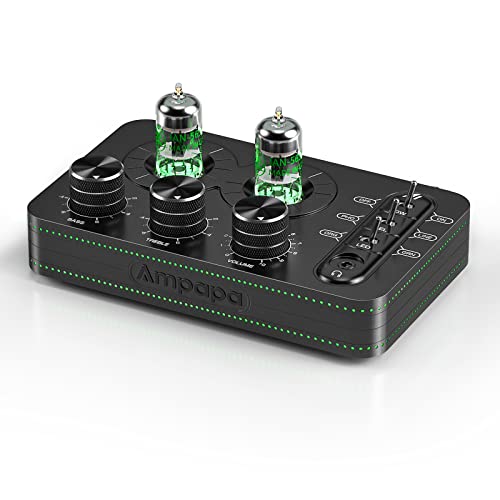
The AMPAPA A1 is the entry-level doorway into tube phono sound, aimed at MM cartridge owners on a real-world budget. It’s the kind of unit that lives happily on a small shelf next to a Debut Carbon turntable, boosting the low-level phono signal while adding that subtle tube color.
A built-in headphone amp rounds out the package for late-night vinyl sessions, and tone controls let me nudge the response toward warmer vocals or tighter bass. Compared with the Douk T9, this unit focuses purely on MM cartridges and skips the MC stage, which keeps the layout simple for newcomers.
Key Advantages
- MM phono input lifts the signal cleanly into a line-level amp or powered speakers.
- Integrated tone controls shape the sound without forcing extra equipment into the rack.
- Headphone output doubles the A1 as a desk-friendly monitor stage.
- Tubes lend a warm, organic voicing favored by jazz and classic rock fans.
Small Caveats
- MM-only support leaves low-output MC cartridges unsupported, narrowing future cartridge choices.
- The compact chassis can pick up floor vibrations on shared apartment shelving.
- Tone knobs have a fairly narrow sweet spot, so small adjustments travel far.
Right Fit For
First-time vinyl owners building a starter system around an MM cartridge and powered monitors.
A Better Fit Elsewhere
Collectors planning to step up to an MC stylus in the future should pivot to the Douk Audio T9 for that flexibility.
Fosi Audio’s P3 is the smallest unit on this list by a clear margin, aimed at desktop listeners who run active speakers and headphones from the same source. The vacuum tubes glow softly through a front-windowed panel, and the unit ships with protective copper rings around the tubes that owners remove before first use for the cleanest signal path.
Bluetooth with aptX LL (low-latency) and HD codecs makes wireless streaming from a laptop or phone feel responsive enough for video. Bass and treble tone knobs let me lean into a warmer podcast voice or a brighter music mix. The amp section drives most mid-impedance headphones comfortably, a step up from the A1’s more limited output.
Notable Gains
- Mini footprint fits cluttered desks where a full-size amp would never land.
- Bluetooth aptX support keeps wireless audio close to wired quality.
- Dedicated headphone amplifier delivers enough power for full-size over-ear cans.
- Tone controls tune the response without forcing software EQ adjustments.
Points To Note
- Limited rear-panel inputs mean complex multi-source rigs may need a switcher.
- The small chassis runs warm under sustained load, so airflow matters on a crowded desk.
Perfect Match For
Apartment dwellers and remote workers who want one compact box for headphones and active speakers.
Consider Something Else When
Listeners needing multiple digital inputs alongside the DAC should look at the Fosi Audio MC331.
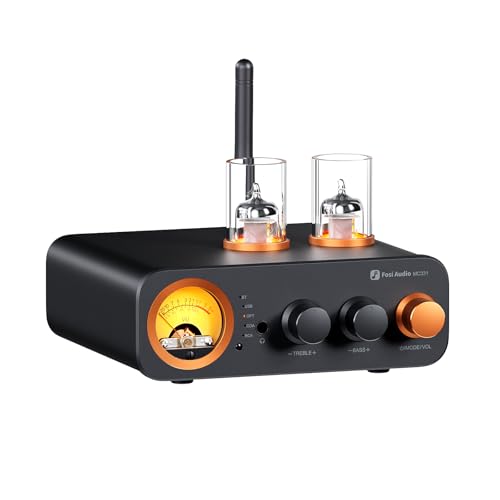
The MC331 is Fosi’s most ambitious desktop unit, merging a DAC (digital-to-analog converter), integrated amplifier, and headphone output into a single chassis. A vintage-style VU meter flanks the 5725W vacuum tubes, giving the front panel a warm, classic hi-fi look. USB, optical, coaxial, RCA, and Bluetooth inputs cover nearly every modern source without external adapters.
Driving a pair of bookshelf speakers, the unit pulls double duty as both preamp and power amp, which simplifies cable runs. Remote control switching between sources makes it easy to swap from a turntable to a streaming session without leaving the couch. For shoppers comparing this to the Fosi P3, the MC331 trades pure compactness for more inputs and a built-in DAC stage.
Points In Its Favor
- Built-in DAC eliminates the need for a separate digital converter in modest setups.
- Multiple digital and analog inputs reduce cable swapping throughout the week.
- VU meter and tube glow give the unit a centerpiece-quality visual character.
- Headphone output handles casual late-night listening without re-routing cables.
Some Limits To Know
- The integrated power section favors efficient bookshelf speakers over power-hungry floorstanders.
- More inputs mean more setup choices, which may overwhelm absolute beginners.
Feature Snapshot
Best Suited To
Hybrid listeners juggling a turntable, streaming box, and computer audio through one tidy hub.
Look Elsewhere When
Bass players looking for stage power should stay with the JOYO BADASS instead.
The Tweedy leans into American vintage clean tones, a sound that traces back to mid-century tweed-era combos. This is a head-only unit that needs an external 8-ohm guitar cabinet to project sound, so shoppers should plan on a matching cab to complete the rig.
Dual channels cover clean and light breakup settings, while the 12AX7 preamp tube adds the gentle compression that flat digital modelers struggle to mimic. Bluetooth streaming lets me play along with backing tracks for practice, and the headphone output mutes the cab automatically for apartment-friendly sessions. Compared with the JOYO Meteor II, the Tweedy sits on the cleaner, jangly side of the spectrum.
Useful Touches
- 12AX7 tube preamp colors the tone with classic warmth even at bedroom volumes.
- Voice mid control shapes how the amp sits in a mix during practice sessions.
- FX loop accommodates time-based pedals like delay and reverb downstream.
- Bluetooth streaming simplifies practice-along setups without extra cables.
Honest Caveats
- Requires an external 8-ohm guitar cabinet sold separately, adding to the budget.
- 20 watts is enough for home practice but may fall short at louder jam nights.
Made For
Beginner guitarists and intermediate players chasing vintage clean tones for practice sessions.
Reach For A Different Pick When
Players wanting heavier high-gain tones should consider the JOYO Meteor II instead.
The Meteor II pushes the JOYO BanTamp series toward higher-gain territory, aimed at rock and metal players who want aggressive breakup from a small head. Like the Tweedy, this is a head-only unit that needs an external 8-ohm cabinet to project sound, so a cab purchase is part of the deal.
Dual channels handle clean and high-gain distortion settings with shared EQ, while the 12AX7 tube preamp adds the touch-sensitive response that solid-state circuits often miss. Built-in cab emulation in the headphone output keeps late-night practice realistic without waking neighbors. For shoppers comparing it to the Tweedy, the Meteor II trades vintage sparkle for modern grind.
Practical Pluses
- High-gain channel covers classic rock crunch through modern metal tones in one box.
- Tube preamp response feels touch-sensitive under pick attack.
- Headphone output with cab emulation simulates a mic’d speaker for silent practice.
- FX loop allows time-based and modulation pedals to sit behind the preamp color.
Points To Keep In Mind
- Needs an external 8-ohm cab sold separately, doubling the gear count.
- Single shared EQ means clean and dirty tones use the same tone stack.
- High-gain tones depend on the speaker cab for full character, so cabinet choice matters.
Built With In Mind
Lead guitarists playing rock, hard rock, or metal styles who want tube character in a compact head.
Swap It Out When
Players focused on cleaner, jangly tones should pivot to the JOYO Tweedy for a vintage character.
What To Weigh Before Choosing Tube Preamplifiers
Tube preamplifiers split into two clear camps: home audio and instrument. Home units boost a turntable’s low-level phono signal into something a regular amplifier accepts, while instrument units shape the signal running into a guitar or bass cabinet. Mixing the two leads to impedance mismatches and thin sound, so matching the preamp to the source matters from day one.
Cartridge type shapes the home-audio decision. Moving magnet (MM) cartridges put out a stronger signal that simpler preamps handle, while moving coil (MC) cartridges produce a quieter signal that benefits from a dedicated MC stage or switchable preamp like the Douk Audio T9. Listeners planning a long-term cartridge upgrade should buy accordingly.
Instrument buyers should think hard about the cabinet. Every JOYO head here needs an external cabinet to project sound, and the cabinet’s impedance rating must match the head’s requirement (4 ohms for the BADASS, 8 ohms for the Tweedy and Meteor II). Skipping this detail leads to a silent rig on arrival.
Bluetooth has quietly become a near-universal feature across this category. The Fosi Audio P3 and MC331 lean hardest into wireless streaming, while JOYO units use it as a practice tool. Listeners who stream from a phone regularly should prioritize codec support and ease of pairing.
Key Considerations Across These Picks
Where Shoppers Go Wrong
The most common slip-up in this category is buying an instrument amp head expecting it to play through home speakers. Amp heads need a matching speaker cabinet, not a hi-fi bookshelf pair, and the impedance numbers matter. Before checkout, confirm whether the unit is a combo (amp plus speaker) or a head-only design.
A second trap is treating all tube preamps as warm-sounding. Tube color varies widely by circuit, with some designs leaning toward clean headroom and others toward obvious breakup. Reading about the specific tube types, like the 6E2 magic-eye tubes in the Douk T9, helps predict how colored the signal will be.
Where The Extra Money Goes
Higher-tier tube preamps typically add better shielding, more robust power supplies, and support for both MM and MC cartridges in one box. The Douk T9 is a good example: the extra flexibility over an MM-only unit like the AMPAPA A1 comes from added gain stages and switchable impedance networks.
In the instrument world, paying more often brings dual-channel designs, FX loops, and cab-emulated headphone outputs that cheaper heads skip. The JOYO Meteor II uses its higher price tag to add high-gain voicing and cab simulation, while the Tweedy sits at a simpler, vintage-flavored price point.
Frequently Asked Questions
What does a tube preamplifier actually do?
A tube preamplifier boosts a low-level audio signal (like a turntable phono output or electric guitar pickup) using vacuum tubes to add warmth and harmonic character before sending it to a power amplifier or speaker.
Do I need a separate power amp with these units?
Home-audio picks like the Douk T9, AMPAPA A1, and Fosi P3 output line-level signal and need a power amp or active speakers. The Fosi MC331 is an integrated amp with built-in power. JOYO heads need an external speaker cabinet, not a separate power amp.
Can I use a guitar amp head for home music listening?
No. Guitar amp heads are built to drive instrument speaker cabinets at guitar-friendly impedance levels, not hi-fi speakers. Using one with home speakers risks damaging both the amp and the speakers.
How long do the vacuum tubes last?
Vacuum tubes commonly last several years in normal home use, with preamp tubes typically outlasting power tubes. Owners often swap tubes as a tuning exercise rather than waiting for outright failure.
Is Bluetooth quality good enough for serious listening?
For casual listening, Bluetooth with aptX HD or LDAC (high-quality wireless audio codecs) is close enough to wired for most ears. Critical listeners usually prefer a wired connection for the cleanest signal path.
Wrap Up
A tube preamp earns its keep by adding personality that flat digital circuits rarely match. Match the unit to the source: a phono stage for vinyl, an instrument head for guitar or bass. Plan for any required cabinets or power amps, and the right pick here should keep its tone for years.