Setting up a proper home or small-office workstation starts with the furniture underneath your monitors, not the gear on top of it. The right desk or riser shapes how long you can sit comfortably, how much gear fits, and whether your back survives a full workday. I’ve gone through seven of the most practical options for 2026 and matched each one to a real working scenario.
A Quick View Of The Lineup

STLWR Cubicle Desk with Privacy Partitions

VERSADESK PowerPro 40 Inch Electric Standing Desk Converter

VERSADESK PowerPro 36 Inch Electric Standing Desk Converter
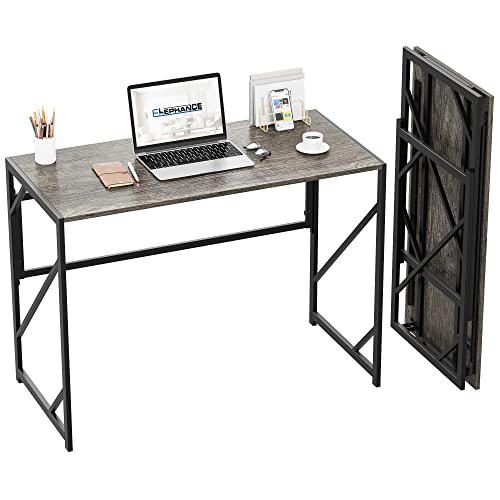
Elephance Folding Desk for Home Office

VERSADESK PowerPro 48 Inch Electric Standing Desk Converter

IBF 47-Inch Computer Desk, Rustic Brown

Aquzee Computer Desk with Shelves and Hutch
The Details Behind The Selections
The STLWR cubicle isn’t a desk you set up in a guest bedroom; it’s a workstation built for a small team that needs enclosure without permanent walls. The 47.2-inch wide surface gives one person enough room for a monitor, laptop dock, and paperwork tray, while the side and back panels reduce visual noise from neighboring stations.
I think of it as the most office-ready pick on this list. Owners weighing it for a call-center pod or training room should note that the reinforced metal frame is the main selling point, since multiple users mean more daily wear.
Useful Highlights
- Privacy panels create a calmer focus zone in shared rooms
- Wide 47.2-inch platform fits a dual-screen setup plus peripherals
- Reinforced metal frame handles heavier monitors and arm mounts
- Scratch-resistant surface wipes down quickly after a long shift
Things To Consider
- Enclosed footprint requires dedicated floor space, so smaller apartments won’t suit
- Assembly takes longer than simpler desks; budget an hour for setup
Built With In Mind
Small business owners staffing a back-office room or managers building a training pod with a few side-by-side stations.
Where Another Pick Suits Better
Solo remote workers in tight apartments will find the Elephance Folding Desk for Home Office far easier to live with day-to-day.
The 40-inch PowerPro sits in the middle of the VERSADESK lineup, and that’s exactly where most power users land. The push-button motor lifts a triple-monitor setup quietly through the full sit-to-stand range, while the wide keyboard tray keeps wrists aligned as the deck rises.
Compared with the STLWR cubicle, this isn’t furniture in the traditional sense; it’s an add-on that turns an existing table into a sit-stand station. For anyone already happy with their current desk surface, that’s the more flexible play.
Positive Points
- Electric height adjustment removes the manual cranking of cheaper risers
- Wide keyboard tray supports full-size mechanical boards without overhang
- Stable enough for triple 27-inch monitors on articulating arms
- Memory presets let multiple users save their preferred heights
Worth Noting
- Sits on top of an existing desk, so the base table needs to support the combined weight
- Motor adds cost and weight over a manual converter, so moving it between rooms is harder
Made For
Knowledge workers running trading dashboards, code editors, or design tools across three screens who want to alternate sitting and standing throughout the day.
Not Your Match When
Solo users with a single laptop and no monitor arms should look at the VERSADESK PowerPro 36 Inch Electric Standing Desk Converter instead.
Stepping down to 36 inches, the smaller PowerPro keeps the same motorized lift and keyboard tray but trims the deck for a tighter room. The platform is sized for two monitors plus a laptop, which covers the most common home office layout without leaving wasted space.
The honest read is that this is the right riser for the average remote worker, not the corner-office analyst. Anyone running four screens will feel the 36-inch limit, but for one laptop and a side monitor, the footprint feels just right.
The Practical Payoff
- Quieter motorized lift compared to gas-strut converters
- Keyboard tray stays level while the deck tilts and rises
- Compact enough for a 48-inch-wide base table
Trade Offs
- Smaller deck crowds a triple-monitor rig, so multi-screen traders should size up
- No integrated cable management tray beyond the keyboard slot
Who It Suits Best
Hybrid employees running a single external monitor plus a laptop who want electric adjustment without dedicating a full corner of the room to standing-desk hardware.
Reach For A Different Pick When
Designers and editors needing reference monitors side-by-side should consider the VERSADESK PowerPro 48 Inch Electric Standing Desk Converter.
The Elephance arrives fully assembled, folds flat, and stands back up in under a minute, which is rare in a category full of Allen-key projects. The 40.6 by 19.7-inch top is small, but for a laptop and a coffee, that’s the whole point.
I see this as the renter’s desk: it leans against a wall when not in use and slides behind a door in a studio apartment. Owners who move frequently appreciate that it ships ready to unfold rather than in a flat-pack maze.
Positive Takeaways
- Zero assembly means no lost hardware or extra tools
- Folding frame stores flat against a wall in tight rooms
- Steel I-frame adds rigidity compared to typical folding tables
Honest Caveats
- Particle-board top is lighter than solid wood, so heavy monitor arms need careful placement
- Lacks cable routing, leaving power strips to drape behind the legs
- Not rated for large desktop towers or permanent dual-monitor mounts
Perfect Match For
Students, short-term renters, and anyone setting up a temporary workstation in a corner of a multi-use room.
A Better Fit Elsewhere
A dedicated home office where the desk stays put year-round will get more value from the IBF 47-Inch Computer Desk, Rustic Brown.
At 48 inches, this is the largest PowerPro in the family, and the deck swallows multiple monitors without crowding the edges. The same push-button motor handles the heavier load, and the wide keyboard tray stays usable when the deck reaches standing height.
For traders, video editors, and anyone whose work depends on having several windows visible at once, the extra width is the difference between comfortable and cramped. Owners report the motor feels steady even with the deck fully loaded.
Strong Points
- Generous 48-inch deck supports four-monitor arrays
- Electric lift reaches full standing height without strain
- Sturdy base resists tipping when monitors are positioned at the back edge
- One-touch presets switch between sitting and standing in seconds
Room For Improvement
- Requires a deep base table to sit on, so shallow desks won’t accommodate it
- Heavier than the 36-inch and 40-inch versions, so repositioning the room takes effort
Best Suited To
Power users with multi-monitor rigs, such as financial analysts, video editors, and engineers running diagnostic dashboards.
Skip It When
Anyone working from a single laptop should step down to the VERSADESK PowerPro 36 Inch Electric Standing Desk Converter.
The IBF trades plain laminate for a rustic brown finish that looks more like a piece of furniture than a workstation. The 47-inch platform handles a monitor and laptop side by side, and the open shelf underneath fits a mid-size tower without cramping the legs.
Where the STLWR cubicle goes heavy and the Elephance goes light, this one goes warm. In a room with wood shelving or a brick wall behind it, the finish reads like a deliberate design choice rather than a default.
Where It Excels
- Rustic finish pairs with farmhouse, industrial, and warm-modern interiors
- Open lower shelf keeps a tower off the floor for better airflow
- Spacious 47.2-inch top fits dual monitors plus paperwork
Small Caveats
- Rustic veneer shows fingerprints and dust more than matte black finishes
- No dedicated keyboard tray, so wrist comfort relies on chair height
- Lower shelf is open, so cables and routers stay visible
Who Will Love This
Homeowners setting up a permanent office in a finished room where the desk needs to look like part of the decor.
Look Elsewhere When
Anyone wanting to alternate between sitting and standing should consider the VERSADESK PowerPro 40 Inch Electric Standing Desk Converter.
The Aquzee takes the same 47-inch footprint as the IBF but stacks a three-shelf hutch on top, turning vertical wall space into usable storage. Books, a printer, plants, and reference binders all sit within arm’s reach above the monitor.
For people whose work involves paper, manuals, or constant reference books, this is the most book-friendly option on the list. In a small room, the hutch removes the need for a separate bookshelf nearby.
Good Reasons To Consider
- Three-tier hutch eliminates the need for an extra bookshelf
- Deep 23.6-inch surface handles monitors, lamps, and writing space
- Open shelf layout keeps supplies visible and accessible
- Sturdy frame supports a printer or scanner on the middle tier
Points To Keep In Mind
- Hutch raises the overall height, so the desk won’t fit under low windowsills
- More components mean longer assembly compared to flat-top desks
- Open shelves collect dust faster than closed cabinets
The Right Fit
Researchers, writers, and grad students who keep physical books and binders within easy reach while working at the screen.
Consider Something Else When
Anyone wanting a cleaner look without overhead shelving will prefer the IBF 47-Inch Computer Desk, Rustic Brown.
Choosing The Right Workstation For Your Space
The first call is whether to buy a full desk or a riser that sits on top of one. A standalone desk like the STLWR cubicle, the Elephance folding model, the IBF, or the Aquzee replaces your current surface entirely, while a VERSADESK converter adds sit-stand motion to a table you already own. Renting, moving soon, or working with limited floor space tends to favor a riser; a permanent home office usually rewards a dedicated desk.
Measure twice before committing. Most home office setups need at least 40 inches of width for a single monitor and a laptop, and dual-monitor users should target 47 inches or wider. Depth matters just as much, since shallow tops push screens too close to the face and leave no room for a notebook beside the keyboard.
Materials shape how long a workstation lasts. Particle-board tops like the Elephance handle light daily use but show wear faster under heavy monitor arms, while thicker engineered wood and metal frames in the STLWR and IBF support heavier gear over years. For standing-desk converters, the motor’s lift capacity matters more than the deck size, since overloaded motors shorten fast.
Think about storage based on what actually sits on your desk. Reference-heavy roles benefit from the Aquzee’s hutch, while monitor-first users may prefer the clean top of the IBF. Anyone carrying a desktop tower should check that the under-desk clearance fits the case height before ordering.
Key Considerations Across These Picks
Mistakes Worth Dodging
The most common slip is buying a desk that’s the right size on paper but too shallow in person, leaving screens crowding the front edge. Measure the depth of your current setup before switching, and remember that a monitor arm adds several inches behind the screen. Another frequent miss is underestimating how much weight a riser carries once a dual-monitor arm is mounted, so check the motor’s load rating rather than the deck width alone.
Where The Extra Money Goes
The price jump from a basic folding desk to a motorized converter or a heavy-duty cubicle buys stronger materials, quieter motors, and longer warranties. The VERSADESK line costs more because the electric lift replaces manual cranking and holds heavier monitor loads without drift. For shared offices, the STLWR’s reinforced frame and privacy panels explain the higher tier, while the IBF and Aquzee charge a bit extra for finish quality and integrated storage. Whether the upgrade pays off depends on how many hours a day the workstation sees; for occasional use, a simpler desk does the job.
Frequently Asked Questions
What size desk fits a dual-monitor setup? A 47-inch or wider top gives two monitors plus a laptop enough breathing room. Anything narrower starts to feel cramped when both screens sit side by side.
Are standing desk converters hard to install? Most risers arrive fully assembled and only need to be placed on a base table. The electric VERSADESK models plug into a standard outlet and are ready to use immediately.
Can a folding desk handle a regular work schedule? Yes, for a laptop and a single monitor the Elephance handles daily use. Heavy monitor arms or full-size towers tend to exceed what a folding frame is built for.
Do privacy panels really help in a home office? In shared spaces they cut visual distractions, but in a private room they mostly add bulk without much benefit. They’re most useful in offices with multiple workstations.
How much weight can an electric standing desk riser hold? The VERSADESK PowerPro line is rated for typical multi-monitor setups, but exact limits vary by model. Check the product page for the specific capacity before mounting heavy displays.
Closing Remarks
A workstation only earns its keep when it disappears into your day, so the best pick is the one that matches how you actually work. Solo laptop users tend to settle into the Elephance or the 36-inch VERSADESK, while multi-monitor professionals land on the 40 or 48-inch risers. For permanent home offices, the IBF and Aquzee bring the kind of storage and finish that hold up over years. Measure your space, count your monitors, and the right choice usually shows up on its own.