Most days, my desk is just me, a notebook app, and a browser tab count that climbs past double digits without warning. That habit is exactly why I pay close attention to which desktop computers for writers actually hold up under sustained typing, research binges, and the occasional photo or short-form video on the side. The picks below lean toward compact, low-noise boxes that disappear into a writing nook while still having the muscle for editing sessions when inspiration finally lands.
The Choices Worth Comparing
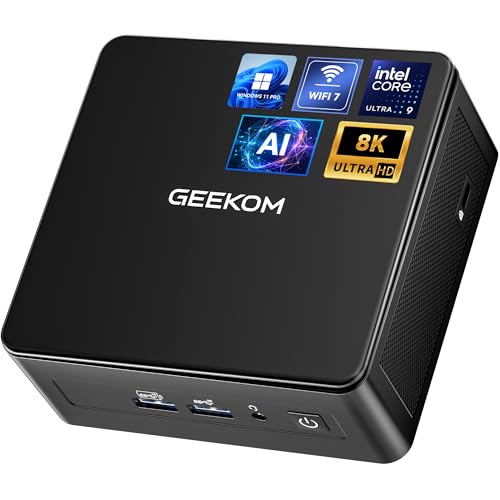
GEEKOM IT15 AI Mini PC, Intel Ultra 9 285H, 32GB DDR5, 1TB SSD

HP ProDesk 600 G4 Mini Desktop PC, i5-8500T, 16GB DDR4, 512GB SSD
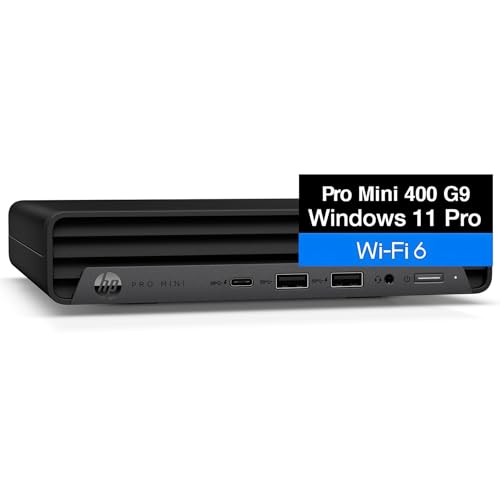
HP 2026 Mini PC, i5-12400T, 16GB RAM, 256GB SSD

HP Desktop Tower PC, i5-12500, 8GB RAM, 512GB SSD
HP ProDesk 600 G6 SFF Desktop, i5-10400F, 16GB RAM, 256GB SSD
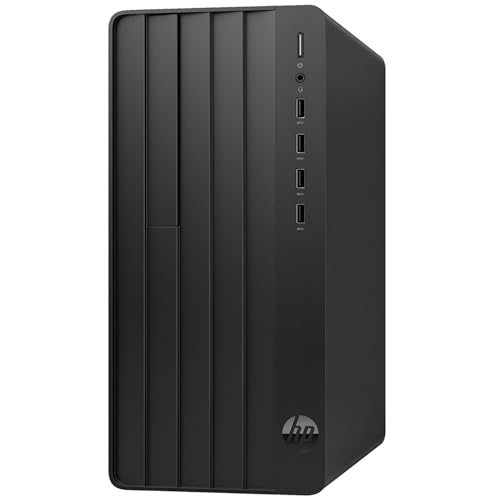
HP 2026 Desktop, i5-12500, 16GB RAM, 1TB SSD
GEEKOM AX8 Max Silent Mini PC, Ryzen 7 8745HS, 16GB DDR5, 1TB SSD
GEEKOM Mini PC IT13 MAX, Ultra 9 185H, 24GB RAM, 500GB SSD

GEEKOM IT13 MAX AI Mini PC 2026, Ultra 9 185H, 24GB LPDDR5, 500GB SSD
Taking A Closer Look At The Options
The IT15 sits at the top of the GEEKOM mini lineup, and that distinction shows up in everything from the Intel Core Ultra 9 285H processor to the generous 32GB of DDR5 memory. For a writer working with two or three monitors side by side, the quad-display support turns a cramped desk into something closer to a newsroom spread, all without the fan roar of a traditional tower.
Storage is the other quiet win here: a 1TB SSD means an entire library of drafts, reference PDFs, and audio recordings can sit locally without anyone juggling external drives. Compared with the HP ProDesk 600 G4 covered next, the IT15 trades legacy ports for raw speed, which suits modern monitor setups better.
Notable Upsides
- The Ultra 9 285H processor handles dozens of browser tabs, a research app, and a writing tool running in parallel without feeling the pinch.
- Quad 8K and 4K display support makes reference-heavy writing sessions far easier on the eyes.
- WiFi 7 keeps wireless transfers quick when backing up finished manuscripts.
- 1TB onboard storage swallows years of drafts and source material locally.
Trade Offs
- Power users may find sustained loads push the compact cooling system harder than a full tower would.
- Users with VGA projectors or older office monitors will likely need an adapter.
Whose Desk This Belongs On
Writers running four screens for research, drafts, and reference material at once, especially those who want flagship compute in a small case.
A Better Fit Elsewhere
The HP ProDesk 600 G4 is a calmer, more office-friendly fit for writers who only need two displays and value legacy VGA connectivity.
The ProDesk 600 G4 Mini leans hard into office sensibility, and that is exactly the point. The Intel Core i5-8500T runs six cores at an efficient TDP (thermal design power, meaning how much heat the chip is rated to dissipate), which keeps the chassis cool enough to tuck behind a monitor arm without cooking the surrounding wood desk.
Dual DisplayPort and a VGA output sit side by side, so a writer migrating from an old office setup can keep an aging projector or secondary panel working without hunting for adapters. Compared with the flagship GEEKOM IT15 above, this HP trades raw clock speed for steadier, quieter operation and a more traditional office feel.
A Strong Showing
- Six-core i5-8500T handles simultaneous writing, research, and chat apps without noticeable lag.
- Dual DisplayPort plus VGA lets legacy monitors stay in the mix.
- 512GB PCIe SSD boots Windows 11 Pro in seconds and keeps project files snappy.
- WiFi and Bluetooth come built in, cutting down on dongle clutter.
Minor Gripes
- 16GB of DDR4 is fine for word processing, though heavy editorial workflows may push it.
- The 8th-gen processor sits behind the newer 12th-gen chips found elsewhere in this list.
Quick Facts
Made For
Writers settling into a small home or hybrid office who want a quiet, office-grade box that fits behind a monitor.
Skip It When
The HP 2026 Mini PC is a smarter pick for anyone wanting a newer 12th-gen processor and slightly more modern wireless performance.
For most freelance writers, the HP 2026 Mini PC strikes a fair balance between modern silicon and a friendly footprint. The 12th-gen Core i5-12400T brings efficiency cores (low-power cores that handle background tasks) into play, which matters when Slack, a research browser, and a manuscript are all running at once.
At 256GB, the SSD is on the leaner side, but pairing the box with cloud sync keeps a typical writing workflow humming. Against the older ProDesk 600 G4 above, this 2026 model brings newer architecture in a similarly small chassis, which is a meaningful upgrade for someone whose laptop has started wheezing under browser weight.
Where It Excels
- 12th-gen i5-12400T keeps everyday writing software and dozens of browser tabs responsive.
- 16GB of RAM is comfortable for current Scrivener, Notion, or browser-based workflows.
- The compact case disappears behind most monitors and stays cool on a wooden shelf.
Worth Noting
- Local SSD fills quickly for writers who keep audio interviews or large image libraries on disk.
- Some users may find wireless range modest in larger homes with thick walls.
Feature Snapshot
Best Suited To
Freelancers and remote staff who want a current-gen compact box for daily writing, calls, and research.
Look Elsewhere When
The HP 2026 Desktop with 1TB SSD suits writers who archive large audio, video, or research libraries locally.
Not every writing setup needs to hide behind a monitor, and the HP Desktop Tower PC makes that case clearly. The full-size chassis runs an i5-12500, ships with a keyboard and mouse, and arrives ready to plug into a monitor and power outlet.
For first-time desktop shoppers moving from a laptop-only life, the included peripherals remove one of the more annoying setup hurdles. The 8GB of RAM is the obvious compromise, but for writers who live in a single word processor and a few browser tabs, it is workable, and the 512GB SSD keeps everything snappy.
A Few Strong Suits
- Keyboard and mouse ship in the box, so the setup is genuinely turnkey.
- Tower design leaves room for future storage or memory upgrades.
- The i5-12500 handles mainstream writing software without breaking stride.
Points To Note
- 8GB of RAM is on the thin side for users running many browser tabs at once.
- The tower footprint is larger than any of the mini PCs in this guide.
Right Fit For
Writers assembling a first desktop setup from scratch and wanting peripherals bundled in.
Reach For A Different Pick When
The HP ProDesk 600 G6 SFF is a better call for anyone needing a smaller footprint and more memory out of the box.
The ProDesk 600 G6 SFF is a small-form-factor tower that quietly earns its keep in traditional offices. The 10th-gen i5-10400F has no integrated graphics (the F suffix means a discrete GPU is required for display output), which is unusual for a writing box, but HP pairs it with enough muscle elsewhere that word processing and research remain smooth.
At 256GB, the SSD keeps the build responsive, though heavy media archives will demand external storage. Against the larger HP Desktop Tower PC reviewed just above, this SFF trades bundled peripherals for a smaller case and more modern connectivity.
Useful Strengths
- Six-core, twelve-thread CPU handles everyday office software comfortably.
- 16GB of RAM is generous for a writing workflow.
- Small-form-factor chassis fits under a monitor stand or beside a printer.
Trade Offs
- No integrated graphics means a discrete GPU is mandatory for any video or display work.
- 256GB of local storage is on the lighter side for media-heavy writers.
At A Glance
Who It Suits Best
Writers in a traditional office nook who want steady performance and a smaller tower footprint than a full-size case.
Not Your Match When
The GEEKOM IT15 is the more compelling pick for anyone wanting modern integrated graphics and a richer port selection in a mini case.
Where this HP 2026 Desktop truly earns its place is on the storage side. A 1TB SSD is rare at this tier, and for writers sitting on years of interviews, manuscripts, and reference libraries, it removes the need to shuffle files to external drives.
The i5-12500 paired with 16GB of RAM is a measured combination, and the tower form factor leaves breathing room for cooling. Compared with the GEEKOM IT13 MAX reviewed later, this HP leans office-class rather than creator-grade, which matters for shoppers who want reliability over headline specs.
Strong Points
- 1TB SSD holds extensive drafts, recorded interviews, and PDF libraries locally.
- Six-core i5-12500 with Turbo Boost up to 4.6 GHz keeps the system responsive during heavy research sessions.
- 16GB of RAM suits mainstream writing workflows without strain.
Softer Spots
- Tower size means more desk real estate than any of the mini PCs above.
- Lacks the discrete graphics needed for video or 3D work.
Perfect Match For
Research-heavy writers who archive audio interviews, scanned documents, and large writing projects on the same machine.
Where Another Pick Suits Better
The GEEKOM AX8 Max Silent Mini PC is the stronger choice for writers who prioritize silent operation over sheer capacity.
The AX8 Max is the box I would recommend to a writer working in a shared apartment or a home with thin walls. The “Silent” in its name is not marketing fluff, the cooling profile is tuned for low noise even when the Ryzen 7 8745HS is working through a long compile or video call.
DDR5 memory and a 1TB SSD round out a modern spec sheet, and the eight-core AMD chip handles everything from word processing to light video editing. Compared with the HP 2026 Desktop covered just before, this GEEKOM trades tower expandability for a much quieter, smaller case.
Everyday Perks
- Tuned-for-silence cooling keeps fan noise near a whisper during long writing sessions.
- Ryzen 7 8745HS offers strong multi-thread performance for background tasks.
- 1TB SSD supports substantial local archives without external drives.
- DDR5 memory future-proofs the system for upcoming software updates.
A Few Limitations
- AMD platform support for some niche writing software can vary, so checking compatibility up front helps.
- Compact case limits internal expansion compared with a tower.
Feature Card
Who Will Love This
Writers working in shared apartments, libraries, or home offices where fan noise is a real distraction.
Consider Something Else When
The GEEKOM IT15 is a stronger fit for users who need more memory and Thunderbolt-class display expansion.
The IT13 MAX is the kind of mini PC that quietly disappears into a writing setup while still feeling overqualified for the job. The Intel Core Ultra 9 185H pairs performance cores (high-power cores for demanding tasks) with efficiency cores and an NPU (neural processing unit, a chip dedicated to AI workloads), which makes it forward-compatible with the AI features starting to appear in writing and research tools.
Memory is upgradeable, so a writer who starts with 24GB can grow into 32GB or more without buying a new machine. Against the GEEKOM AX8 Max reviewed above, this IT13 MAX is heavier on compute and lighter on storage, a fair trade for users who live in cloud-based writing apps.
Real-World Strengths
- Ultra 9 185H with NPU accelerates on-device AI writing and transcription tools.
- Upgradeable memory extends the useful life of the system.
- Compact chassis fits neatly next to a vertical monitor stand.
Honest Caveats
- 500GB of storage is modest for users archiving large media locally.
- Premium silicon means the price sits higher than the HP ProDesk towers in this list.
Built With In Mind
Writers curious about on-device AI helpers, transcription, and future-facing productivity software who want a small box that ages well.
Swap It Out When
The HP 2026 Desktop with 1TB SSD is a more grounded choice for traditionalists who prioritize local storage over AI headroom.
The 2026 refresh of the IT13 MAX leans further into the AI side of the lineup, and for a writer already experimenting with local language models or transcription, the dedicated NPU makes a tangible difference in speed. LPDDR5 memory (low-power double data rate 5, soldered to the board) trades upgradability for tighter power efficiency, which keeps the chassis cool during long sessions.
At 500GB, storage is similar to its sibling above, so cloud-first workflows will feel right at home. Compared with the AX8 Max reviewed earlier, this IT13 MAX is a quieter, more AI-focused evolution of the same mini-PC formula.
Well-Handled Touches
- NPU acceleration helps local AI writing and transcription tools respond quickly.
- LPDDR5 memory reduces power draw and heat during sustained work.
- Compact form factor works in writing nooks where space is at a premium.
Practical Considerations
- Soldered LPDDR5 limits future memory expansion compared with the IT13 MAX covered just above.
- 500GB SSD fills up fast for users storing raw audio or video locally.
Who Should Grab It
Tech-curious writers who want on-device AI features and a quiet, modern mini PC without stepping up to the IT15.
A Better Fit Elsewhere
The GEEKOM IT15 is a stronger pick for users who want quad-display support and more memory headroom out of the box.
What Matters Most When Picking A Writing Desktop
Writing work looks easy on hardware until a long research session exposes the seams. The right box keeps the fans quiet, the screen responsive, and the storage roomy enough that nothing has to be deleted mid-project.
Processing Power For More Than Word Processing
A modern six-core processor is the sweet spot for writers who keep browsers, research apps, and chat tools running at once. The Intel Core i5-12500 in the HP 2026 Desktop and the Ryzen 7 8745HS in the GEEKOM AX8 Max both fit that bill without generating excess heat.
Memory Headroom And Storage Space
16GB of RAM handles nearly every writing workflow comfortably, and 24GB or more is worth the step up for anyone working with very large documents or transcription tools. Storage is the easier call: a 256GB SSD is workable with cloud sync, but a 512GB or 1TB drive removes the constant juggling.
Ports, Displays, And Noise
Dual display support is a quiet productivity win, and ports like USB-C and DisplayPort matter for modern monitor setups. For writers sharing a room with family or recording audio nearby, low fan noise should rank higher than peak benchmark numbers.
Smart Shopping Notes For This Category
Common Buying Traps
The most common mistake is buying a tower when a mini PC would do, or underestimating how quickly 256GB of storage disappears under interview audio. Another is chasing the highest-clocked processor on the page when modern efficiency cores handle writing work just as well while staying quiet.
Where The Extra Money Goes
Stepping up to a Core Ultra or Ryzen 7 chip brings a dedicated NPU, which accelerates on-device AI helpers and transcription. Higher memory tiers (24GB or 32GB) and 1TB SSDs also tend to outlast their smaller siblings, which is why flagship GEEKOM models charge a premium.
Frequently Asked Questions
How much RAM do writers really need?
For most writing, 16GB is plenty, but 24GB or more helps when running browsers, transcription tools, and large manuscripts at once.
Are mini PCs powerful enough for writing work?
Yes, modern mini PCs handle everyday writing and research comfortably, and some support multiple 4K or 8K displays without breaking a sweat.
Should writers care about an NPU?
An NPU speeds up on-device AI tools like transcription and local language models, so writers using those features benefit noticeably.
Is a tower or a mini PC better?
A tower offers easier internal expansion, while a mini PC saves desk space and runs quieter for most writing workloads.
How important is fan noise?
Very important for writers who record audio or share a room. A silent-tuned system like the GEEKOM AX8 Max pays off in those situations.
Bottom Line
For most writers, a quiet mini PC with a current-gen six-core processor, 16GB or more of RAM, and at least 512GB of SSD storage will feel like a real upgrade over an aging laptop. The picks above cover everything from budget-friendly office boxes to AI-ready flagships, so the right match comes down to how many screens, how much storage, and how much silence the desk really needs.