A dead laptop battery can derail a workday fast, especially when the original pack is long out of warranty. I’ve spent a lot of time sorting through replacement batteries for older Dell Latitudes, Inspirons, and a few MacBooks, and the differences between a six-cell economy pack and a higher-capacity nine-cell build matter more than most shoppers realize. This roundup pulls together ten solid replacement options across several Dell generations and one MacBook Pro, so you can match the right cell count, voltage, and connector to the laptop you actually own.
A Quick View Of The Lineup

GHU T54F3 T54FJ 60Wh Dell Latitude E5420-E6530 Battery

LeFix CMOS Battery with Wire Leads for Dell Latitude

GHU 9-Cell 87Wh J1KND Dell Inspiron Battery
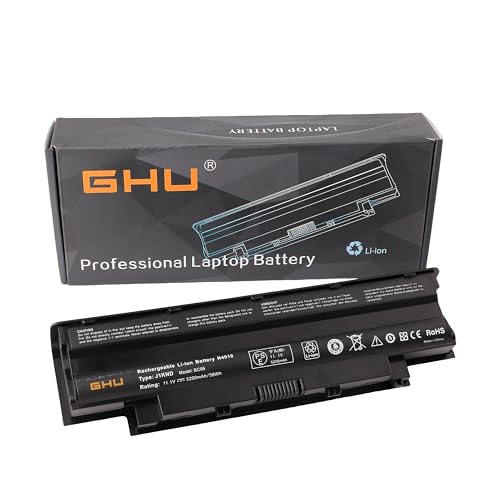
GHU J1KND 58Wh Dell Inspiron N5010 Battery

GHU 87Wh J1KND Replacement for Inspiron N5010 M5110

VANPIR 54Wh V6W33 Dell Latitude 3520 Inspiron 5310 Battery

GHU 58Wh T54FJ Dell Latitude E5420-E6540 Battery

GHU NH6K9 60Wh Dell Latitude E6420 E6430 ATG Battery

Egoway A1989 A1964 MacBook Pro 13″ Battery

HASESS F3YGT 60Wh Dell Latitude 7280-7490 Battery
More Details On Our Top Picks
GHU’s 60Wh T54FJ pack is the kind of replacement that shows up on shortlists for a reason, and it covers a long stretch of the Latitude E-family. Anyone still running an E5420, E5520, E6420, or the matching E5430, E5530, E6430, E6520, E6530 generations can drop this in without much fuss. Watt-hour capacity lands in that sweet spot where you get meaningful extra runtime over a tired original, but the cell still sits flush in the chassis.
The cross-generation support is genuinely useful. Plenty of small offices and home setups still rely on older Latitudes, and matching part numbers like M5Y0X, HCJWT, and 312-1163 covers a lot of those machines at once. Compared with the smaller CMOS cell coming up next, this is a full primary battery, not a coin-style backup.
Useful Strengths
- 60Wh capacity, a noticeable step up from many aging six-cell packs in older Latitudes.
- Broad model support across E5420 through E6530, which simplifies sourcing for mixed laptop fleets.
- Matches several common Dell part numbers, making cross-referencing the original label easier.
- Standard form factor, so it should sit cleanly in the original battery bay without modification.
Worth Noting
- Not a fit for the newer Latitude 7000 series, so anyone on a 7280 or 7490 will need the later option in this roundup.
- Like most third-party lithium packs, the cells gradually lose capacity over a few years of daily charge cycles.
Key Specs
Built For Mid-2010s Latitudes
Small offices, remote workers, and IT refurbishers still running E-series Latitudes will get the most out of this pack.
Try The 7000-Series Pack Instead
Owners of newer Latitude 7280, 7380, 7480, and 7490 machines should look at the HASESS F3YGT 60Wh Dell Latitude 7280-7490 Battery instead.
LeFix’s CMOS cell isn’t a primary laptop battery, it’s the tiny coin-style backup that keeps the BIOS clock and settings alive when the main pack is disconnected. If a Latitude keeps losing the time and date or throwing a “CMOS battery failure” warning, this is the part that solves it. The 1.25mm pitch connector and wire leads are built to slot into a specific internal header, so it isn’t a general-purpose part.
It covers a wide Latitude spread, including E5440, E5450, E6440, E6420, E6230, E6520, E7440, E7240, plus the Alienware 17 R3. Anyone who has opened a Latitude to swap a main battery has probably seen the small yellow cable that powers the real-time clock, and this is meant to replace that.
Well-Handled Touches
- Wire-lead design with a 1.25mm pitch connector, matching what the motherboard expects on supported Latitudes.
- Long enough cable to reach the internal header without stretching or rerouting other components.
- Backed by a major Japanese cell producer, which is a positive sign for a coin-style lithium part.
- Each unit is tested before shipping, reducing the chance of receiving a dead cell.
Trade Offs
- Installation requires opening the chassis and disconnecting the main battery, so it’s not for casual shoppers.
- Not a primary runtime battery, so picking this up will not help with short unplugged hours.
Right Fit For Tinkerers
IT technicians and DIY owners dealing with BIOS clock resets on supported Latitudes will find this an easy, inexpensive fix.
Pick The GHU Pack For Runtime
Anyone needing longer unplugged hours rather than a BIOS fix should turn to the GHU T54F3 T54FJ 60Wh Dell Latitude E5420-E6530 Battery.
This GHU 9-cell pack is built around the J1KND family that powers a long list of older Dell Inspiron 14R, 15R, and 17R models. Cell count translates directly to runtime, and nine cells here means roughly 87Wh of capacity, which is a meaningful step up from the six-cell version elsewhere in this list. Travelers and field workers who can’t always reach an outlet will appreciate the extra runway.
It also covers part numbers like YXVK2, 04YRJH, 07XFJJ, and 0GK2X6, which is helpful because Dell’s labelling shifts across submodels. Where the smaller LeFix CMOS cell earlier targets a clock-drain issue, this one is the workhorse replacement that keeps the laptop alive through long meetings.
Real-World Strengths
- 9-cell, 87Wh capacity, noticeably longer runtime than typical 6-cell replacements in this Inspiron family.
- Compatible with N5010, M5110, M5010, N7010, N7110, and other 14R/15R/17R variants across several years.
- Matches multiple Dell part numbers, easing the cross-check against the original label.
- Higher capacity makes it useful for road warriors and students away from power for long stretches.
Points To Keep In Mind
- The 9-cell design protrudes slightly from the chassis on some Inspiron models, so the laptop will not sit quite as flat.
- Adds a small amount of weight compared with the 6-cell GHU J1KND option further down.
Best Suited To Road Warriors
Frequent travelers, students, and field staff running older Inspiron 15R or 17R machines will appreciate the extra capacity.
Reach For A Different Pick When
Users who want a slimmer profile should look at the GHU J1KND 58Wh Dell Inspiron N5010 Battery, which keeps a standard 6-cell footprint.
GHU’s 58Wh J1KND pack is the sensible middle ground for Inspiron N3010, N4010, N4110, N5010, N5110, N7010, and M4110 owners. The 6-cell form factor keeps the laptop’s profile unchanged, while the 58Wh capacity delivers a healthier runtime than a worn-out original. It’s the kind of part that fits how most people actually use these older Inspirons: plugged in at a desk, occasionally unplugged for a few hours.
Compared with the 9-cell J1KND option above, this one trades a chunk of capacity for a slimmer battery bay. The 4T7JN, TKV2V, W7H3N, YXVK2, WT2P4, 383CW, and 312-1205 part number coverage also makes cross-referencing simple when the original label is hard to read.
Positive Points
- 58Wh capacity, a healthy replacement figure for the J1KND family without overbuilding the cell count.
- Wide coverage across N4010, N5010, N5110, and other common Inspiron 14R/15R/17R variants.
- 6-cell design preserves the original chassis profile and weight balance.
- Matches several frequently used part numbers, which lowers the risk of an order mistake.
Honest Caveats
- Capacity is lower than the 9-cell GHU J1KND pack, so heavy travelers may want more runway.
- Long-term capacity fade is normal for any third-party lithium pack used daily.
Made For Everyday Inspiron Owners
Home users, students, and small offices with mid-2010s Inspiron 15R or 14R laptops will find this a practical, balanced replacement.
Another Choice May Suit
Anyone running the same machines but needing the longest possible runtime should consider the GHU 9-Cell 87Wh J1KND Dell Inspiron Battery instead.
GHU’s second 87Wh J1KND pack lands at roughly 7800mAh on the higher-capacity side, giving shoppers a second sourcing path if one listing is out of stock. It targets the same Inspiron N5010, M5110, M5010, M5030, M5040, N5030, N5040, and N7110 territory as the other 9-cell option. The choice between this and the previous 87Wh battery often comes down to listing availability and current stock on the retailer.
The 11.1V chemistry (operating at 10.8V nominal, the way lithium-ion packs are commonly labeled) is the standard voltage for this Inspiron generation. Where the smaller LeFix CMOS cell solves a clock-reset headache, this one is the marathon runner.
What Earns Its Place
- 87Wh capacity at the high end for the J1KND family, ideal for long sessions away from outlets.
- Supports 14R, 15R, and 17R Inspiron variants plus selected Vostro models in the same generation.
- Matches a long list of common part numbers including 04YRJH, 07XFJJ, 9T48V, and 9TCXN.
- Useful for backup laptop fleets where consistent runtime is more important than a thin battery bay.
Potential Drawbacks
- 9-cell build adds a small amount of rear bulk and weight compared with 6-cell options.
- Premium capacity in this form factor usually carries a higher per-pack cost than slimmer 6-cell replacements.
Feature Snapshot
Whose Shelf It Belongs On
Anyone with an older Inspiron who routinely works unplugged for half a day or more will appreciate the extra capacity.
Skip It When
Users who rarely leave a desk and prefer a low-profile battery should consider the GHU J1KND 58Wh Dell Inspiron N5010 Battery.
VANPIR’s V6W33 pack steps into a more modern corner of Dell’s lineup, covering the Latitude 15 3520, Inspiron 13 5310/5320/5330, Vostro 13 5320, and 14 3425 series. The 54Wh capacity at 15V is a different voltage class from the older 11.1V Latitudes earlier in this roundup, so cross-shopping between the two families is not safe. Anyone with a recent Inspiron 14 2-in-1 or 16 5630/5635 should still verify the exact model number on the underside.
The 3420mAh rating sits comfortably for a thin-and-light replacement, and the part number spread (0WV3K8, 0VKYJX, PG8YJ, 927N5, FH3K2) is the right place to start any compatibility check.
Notable Gains
- 54Wh at 15V suits the newer Latitude 3520 and Inspiron 5310/5320 family, where older 11.1V packs won’t fit.
- Compatible with a useful mix of 2-in-1, traditional laptop, and Vostro 13/14 models.
- Internal lithium-ion build keeps weight reasonable for a thin-and-light chassis.
Some Limits To Know
- The 15V chemistry is not interchangeable with the 11.1V packs earlier in this list, so model match matters.
- Two slightly different physical sizes (about 4.13 x 2.48 x 0.39 inches and 4.28 x 2.51 x 0.54 inches) mean careful comparison with the original is wise.
Best Suited To Recent Dell Owners
Anyone still using a 2020-or-newer Inspiron 13, 14 2-in-1, or Latitude 3520 who needs a fresh primary pack will find this a sensible match.
Look Elsewhere When
Owners of mid-2010s Latitudes and Inspirons in the J1KND family will be better served by the GHU T54F3 or GHU 9-Cell 87Wh J1KND packs above.
GHU’s 58Wh T54FJ pack stretches the Latitude E-family coverage a bit further than the 60Wh option earlier, adding the E6440 and E6540 to the supported list while keeping the 8858X-style form factor. It’s a useful secondary source if the higher-capacity GHU T54FJ is unavailable or if you specifically need one of the slightly later E-series models. Cell count here is the standard 6-cell, so the chassis profile stays close to original.
The part number coverage (T54FJ, M5Y0X, 312-1163, HCJWT, NHXVW, PRRRF, 04NW9, X57F1, P8TC7, T54F3, N3X1D) overlaps heavily with the earlier 60Wh pack. Honestly, the choice between them is mostly about whether you want a touch more capacity (60Wh) or a slightly wider model list (this 58Wh option including E6440 and E6540).
Reasons It Performs
- 58Wh capacity, a standard but healthy figure for a 6-cell Latitude E-series replacement.
- Extends support to E6440 and E6540, in addition to the E5420-E6530 range the 60Wh GHU covers.
- 6-cell form factor, so the battery sits flush with the chassis without rear protrusion.
- Matches an unusually long list of Dell part numbers, simplifying cross-reference work.
Points To Note
- Slightly less capacity than the 60Wh GHU T54F3, so for the highest runtime within this family the earlier pick wins.
- Useful for IT environments where multiple part numbers need to map back to a single SKU.
Quick Facts
Who Should Grab It
Refurbishers and IT staff with mixed E5420 through E6540 fleets will appreciate the broad single-SKU coverage.
Swap It Out When
Users prioritizing maximum runtime in the same E-series should pick the GHU T54F3 T54FJ 60Wh Dell Latitude E5420-E6530 Battery instead.
The NH6K9 pack from GHU focuses on a specific niche: Latitude E5430, E5530, E6420, E6430 ATG, and E6530 owners. The “ATG” designation matters because ruggedized Latitudes tend to use slightly different battery housings than their standard siblings, and a pack explicitly listing ATG compatibility reduces guesswork. 60Wh is the same capacity tier as the broader GHU T54F3, so runtime expectations are similar.
It also covers the 312-1242 part number family, which shows up frequently on this generation. Anyone cross-referencing an existing battery label should see NH6K9 or 312-1242 printed somewhere on the original.
Standout Benefits
- Explicit E6430 ATG support, which is rarer than generic E6430 listings on third-party batteries.
- 60Wh capacity, in line with the higher end of the E-series 6-cell options in this roundup.
- Matches the 312-1242 part number commonly printed on original packs from this generation.
- Useful for field technicians who specifically need a battery that fits a semi-rugged chassis.
Where It May Fall Short
- Narrower model list than the broader T54FJ options, so it’s not the right pick for non-ATG Latitudes outside the E5430-E6530 range.
- Availability for this specific ATG-focused listing can be patchy on the retailer.
Made For ATG Users
Field service technicians, public safety workers, and outdoor users running semi-rugged E6430 ATG Latitudes will value the explicit fit.
Not Your Match When
Anyone with a standard non-ATG Latitude across the E5420-E6530 range will get better coverage from the GHU T54F3 T54FJ 60Wh Dell Latitude E5420-E6530 Battery.
Egoway’s A1989 A2251 pack is the only Apple option in this roundup, aimed at the 13-inch MacBook Pro with Touch Bar from mid-2018 through 2019. The 11.41V chemistry and A1964 internal model designation sit in a different universe from any of the Dell packs here, so the usual Dell part-number logic does not apply. Before ordering, the listing explicitly tells shoppers to confirm the exact model and year, and that is genuinely the most important step.
The 58Wh / 5100mAh figure matches what Apple originally shipped in this generation, so capacity expectations should track the original. Installation is more involved than a typical Dell slide-out battery, which is worth keeping in mind.
Good Reasons To Consider
- 11.41V, 58Wh / 5100mAh capacity, matching the original spec for the 13-inch MacBook Pro Touch Bar from 2018-2019.
- Targets the A1989 and A2251 EMC identifiers, which covers a clear range of mid-2018 through 2019 machines.
- Brand-new condition at the cell level, which matters for any lithium pack that’s been sitting in a box.
Things To Weigh
- Replacing a MacBook Pro battery is more involved than a slide-out Dell pack and may not be for first-time DIYers.
- The listing requires manual model and year confirmation, since a wrong match in this A1964 family will not charge properly.
At A Glance
Right Fit For Tinkerers
DIY owners and repair shops comfortable opening a MacBook Pro will find this a reasonable replacement for an aging 2018-2019 13-inch Touch Bar machine.
Consider Something Else When
Owners of any Dell Latitude or Inspiron should skip this entirely and look back at the GHU T54F3 or GHU 9-Cell 87Wh J1KND options above.
HASESS’s F3YGT pack rounds out the roundup with coverage for the Latitude 7000 series: 12-inch 7280 and 7290, 13-inch 7380 and 7390, and 14-inch 7480 and 7490. These are the thin-and-light business machines that took over from the older E-series, and they use a flat Li-Polymer (lithium-polymer, a pouch-style chemistry) cell rather than the cylindrical cells in the older Latitudes. The 7.6V / 60Wh / 4-cell spec is what the 7000 series expects.
Part number coverage spans F3YGT, DM6WC, DM3WC, 0DM3WC, 0F3YGT, KG7VF, MYJ96, P28S, 2X39G, 451-BBYE, and 453-BBCF, which matches the underside of most original 7000-series batteries. The claim of up to 1000 charging cycles over the pack’s life is a positive longevity signal, though real-world cycle counts vary with heat and depth of discharge.
Everyday Advantages
- 60Wh capacity with a 4-cell Li-Polymer build, the right chemistry for Latitude 7280-7490 chassis.
- Covers the full 12-inch, 13-inch, and 14-inch 7000-series spread from this generation.
- Long list of supported part numbers including 451-BBYE and 453-BBCF, which are the most commonly printed identifiers.
- Up to roughly 1000 charge cycles over the pack’s life, a healthy figure for daily-use laptops.
Practical Considerations
- Li-Polymer packs tend to be more sensitive to heat than older cylindrical cells, so using the laptop on a hard surface helps longevity.
- Specific to the 7000-series form factor, so older E-series and Inspiron shoppers will need a different pick.
Key Attributes
Perfect Match For
Business travelers and commuters running Latitude 7280, 7380, 7480, or their 7290/7390/7490 refreshes will get a clean fit here.
Where A Sibling Pick Shines
Owners of older Latitude E-series or Inspiron 15R/17R machines should look back at the GHU T54F3 60Wh or the GHU 9-Cell 87Wh J1KND options.
What Matters Most When Choosing Laptop Battery Replacements
A replacement battery lives or dies by compatibility, and that is the first filter every shopper should apply. The safest approach is to open the laptop, find the part number printed on the existing pack (something like T54FJ, J1KND, or F3YGT), and match it directly to the listing. Voltage is the second filter: an 11.1V E-series pack will not work in a 7.6V 7000-series chassis, and a 15V modern Inspiron pack will not fit the older Latitudes, even if the connector looks similar.
Capacity, measured in watt-hours (Wh) or milliamp-hours (mAh), is the runtime number, but the trade-off is real. Higher-capacity 9-cell packs deliver more unplugged hours, yet they add a small amount of bulk and weight to the rear of the laptop. A 6-cell pack keeps the chassis profile closer to the original, which matters if the laptop lives in a sleeve or a tight docking-station cubby.
Cell chemistry also deserves a quick look. Most of the older Dell packs in this roundup use cylindrical lithium-ion cells (the same form factor as 18650-style cells), while the Latitude 7000 series switched to flat lithium-polymer pouches. Li-Polymer packs tend to be thinner and lighter, but they are also more sensitive to sustained heat, so they benefit from a hard desk surface rather than a soft blanket.
Finally, the difference between a primary battery and a CMOS cell is worth understanding. A CMOS (complementary metal-oxide-semiconductor) backup is the small coin-style part that keeps the BIOS clock and settings alive when the main battery is removed or fully drained. The LeFix option in this roundup is a CMOS cell, not a runtime pack, and confusing the two is a common ordering mistake.
Picking The Right Pack For Your Setup
Common Shopping Slip Ups
The most common mistake is trusting the model family alone. “Latitude E6430” and “Latitude E6430 ATG” are close, but the ATG ruggedized chassis has a slightly different battery housing, which is why a dedicated ATG listing like the GHU NH6K9 60Wh Dell Latitude E6420 E6430 ATG Battery is worth choosing over a generic E6430 pack.
Another trap is mixing voltage classes. A 7.6V 7000-series pack and an 11.1V E-series pack can look superficially similar in photos, but the charging circuit and protection board are not interchangeable. Reading the original label first saves both money and frustration.
Finally, don’t conflate a CMOS backup with a primary battery. If the laptop runs fine on AC power but loses the date and time whenever it shuts down, the right fix is a tiny CMOS cell like the LeFix Replacement CMOS Battery, not a full main pack.
Why Top Tier Costs More
Higher-capacity 9-cell packs cost more because they pack more cells, more complex protection circuitry, and a more demanding assembly process. The honest case for paying up is straightforward: more watt-hours directly translate to more unplugged hours, and that matters most for travelers, students between classes, and field workers without reliable outlets.
For most desk-based users, though, a balanced 6-cell option like the GHU J1KND 58Wh Dell Inspiron N5010 Battery covers the typical “move from desk to meeting” workflow without the rear protrusion of a 9-cell. The upgrade only earns its keep when those extra hours are genuinely needed.
Frequently Asked Questions
How do I find the right replacement battery for my laptop? Open the battery bay or the back panel and read the part number printed on the original pack. Match that part number directly to the replacement listing, and confirm the voltage before ordering.
Is a higher watt-hour rating always better? Higher watt-hours mean longer runtime, but the trade-off is size and weight. A 9-cell pack sticks out slightly from the chassis on some laptops, so check whether your model supports the larger form factor.
What is a CMOS battery and do I need one? A CMOS battery is a small backup cell that keeps the BIOS clock and settings alive when the main battery is disconnected. You need one only if the laptop keeps losing the time and date or shows a CMOS battery warning at boot.
How long do third-party replacement batteries typically last? Most quality third-party lithium packs deliver several years of daily use, often rated for 500 to 1000 full charge cycles. Real-world lifespan depends on heat exposure and how deeply the pack is discharged each day.
Are higher-capacity 9-cell batteries safe to use? Yes, as long as the voltage and connector match the laptop. The 9-cell designation refers to internal cell count, not an electrical mismatch, and the laptop’s charging circuit regulates input the same way.
Closing Remarks
The best replacement battery is the one that matches your laptop’s part number, voltage, and form factor exactly, then layers on whatever extra capacity your routine actually demands. For most owners of older Dell Latitudes and Inspirons, the GHU T54F3 60Wh pack or the GHU 9-Cell 87Wh J1KND are the easiest places to start. Newer Latitude 7000-series owners will want the HASESS F3YGT instead, and MacBook Pro shoppers should match the A1989 A2251 spec carefully before ordering.