Buying a gaming PC used to mean choosing components one at a time, hoping they played nicely together. Prebuilts have changed that equation. Today’s factory-assembled systems ship ready to plug in, often with warranties and support that DIY builders can’t match, and they cover an enormous spread of price points, performance tiers, and use cases.
For anyone who would rather game than troubleshoot, this is the easier on-ramp. The picks below cover entry-level 1080p rigs, mid-range 1440p workhorses, top-tier 4K flagships, and a few chassis options for people who already have parts and just want a sharp-looking home for them.
The Shortlist At A Glance
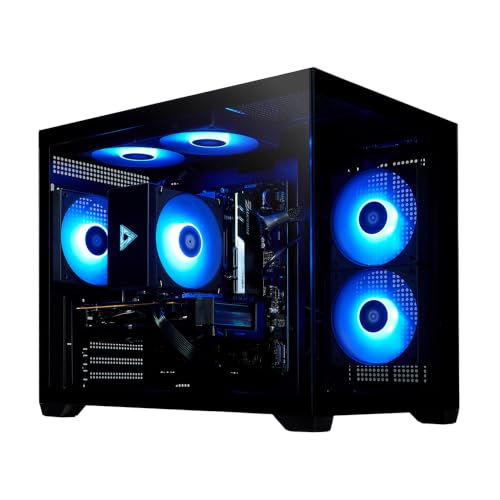
STORMCRAFT Sirius AI Gaming Desktop i5 14400F Arc B570

Andromeda Insights Ultra 50 V3 RTX 5080 Ryzen 7 9800X3D
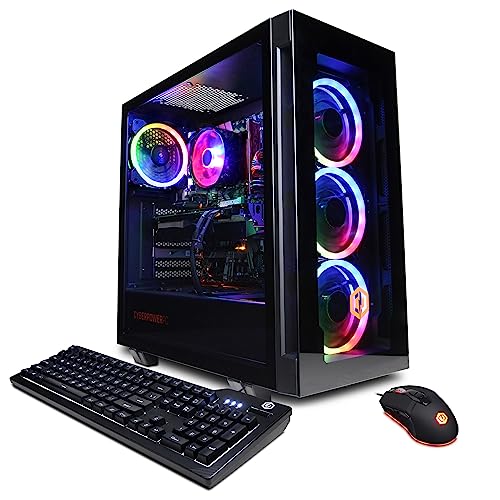
CYBERPOWERPC Gamer Master Gaming PC Ryzen 5 7600 RTX 4060
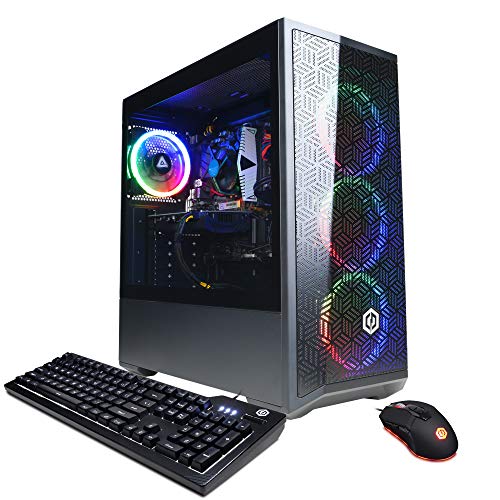
CyberpowerPC Gamer Xtreme VR i5-10400F GTX 1660 Super

Lenovo Legion Tower 5i Core Ultra 7 265F RTX 5070 Ti

Geometric Future M5 Tempered Glass Mid Tower White

Geometric Future M5 Tempered Glass Mid Tower Black/Yellow

Geometric Future M5 Tempered Glass Mid Tower Black/Blue

ASUS ROG G700 Gaming Desktop Core Ultra 7 265F RTX 5070
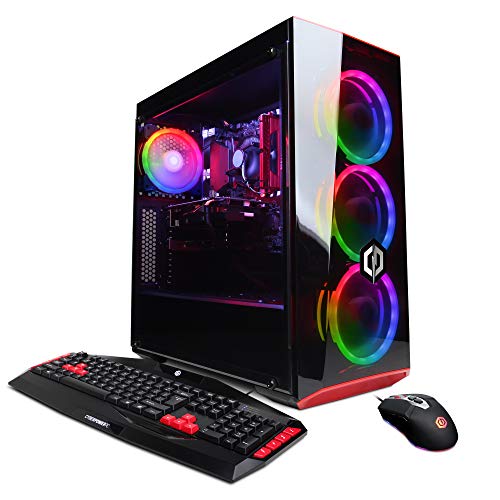
CyberpowerPC Gamer Xtreme VR i5-9400F GTX 1660
Inside Each Recommended Option
The STORMCRAFT Sirius sits in the comfortable middle of the current PC prebuilt market, pairing an Intel Core i5-14400F processor with the Arc B570 graphics card. That pairing targets 1440p gaming, where the GPU holds up well in modern titles at medium-to-high settings.
For shoppers stepping up from a console or an older office tower, this is a logical first real gaming PC. The 1TB NVMe SSD gives plenty of room for a starter library, while the RGB-lit DDR4 memory adds a touch of personality without pushing the cost into enthusiast territory. Depending on the games in your rotation, you may find a few demanding AAA titles want settings dialed back to stay smooth at 1440p.
Real Benefits
- Sixteen threads across ten cores handle gaming plus a streaming or recording app running alongside without choking.
- Arc B570 ships with 10GB of GDDR6 VRAM, which keeps textures from tanking at 1440p in current releases.
- A full 1TB NVMe boot drive means shorter load times and enough space for a healthy Steam library out of the box.
- VR-ready branding covers headset compatibility for anyone exploring Half-Life: Alyx or newer VR titles.
Worth Noting
- Arc B570 driver maturity has historically been uneven in the first months after launch, so early adopters may see rougher patches before stability catches up.
- RGB memory and case lighting tend to require manual software tuning to behave consistently across reboots.
Who It Suits Best
Mainstream 1440p gamers who want a balanced system without paying flagship money.
Look Elsewhere When
Hardcore 4K enthusiasts should reach for the Andromeda Insights Ultra 50 V3 instead, since the RTX 5080 inside it leaves the Arc B570 behind at higher resolutions.
The Ultra 50 V3 is the system to shortlist for anyone chasing frame rates at 1440p ultra or dipping into 4K. The RTX 5080 with 16GB of GDDR7 video memory is the headline, but the Ryzen 7 9800X3D deserves equal credit; that extra cache helps games run noticeably smoother than the standard Ryzen 7 chips.
It is also the most polished build here in terms of supporting hardware. Thirty-two gigabytes of DDR5 at 6000MHz, a 2TB Gen4 NVMe SSD, an 850W Gold-rated power supply, and ARGB fans all signal a system engineered to keep up with what gets thrown at it. For streamers, the high-clocked CPU and beefy GPU mean encoding work and game rendering can happen in parallel without one starving the other.
Practical Advantages
- The RTX 5080 is current-generation hardware, so DLSS 4 and frame generation features are available from day one.
- The 9800X3D’s 3D V-Cache delivers real-world gaming gains over standard Ryzen 7 chips in CPU-bound scenarios.
- A 2TB Gen4 SSD comfortably holds modern game installs, which now routinely cross 100GB each.
- An 850W Gold PSU leaves thermal and wattage headroom for future GPU swaps.
- Windows 11 is preinstalled, so the system is plug-and-play for anyone avoiding a fresh OS setup.
Trade Offs
- This is flagship-tier hardware, so the cost scales accordingly and puts it out of reach for casual shoppers.
- The ARGB fan cluster usually needs software configuration to settle on a single static color, otherwise it cycles through the rainbow at boot.
Made For
Enthusiast 4K gamers and streamers who want headroom for several years.
Consider Something Else When
Light 1080p players on tighter budgets will find the Lenovo Legion Tower 5i a more proportionate match for their needs.
The CYBERPOWERPC Gamer Master targets the sweet spot where most PC prebuilt shoppers actually land: solid 1080p gaming without crossing into painful spending territory. The Ryzen 5 7600 is a six-core, twelve-thread AM5 chip that should age well for several years, and the RTX 4060 8GB comfortably drives modern games at high settings in 1080p.
It comes dressed for the part too. A tempered glass side panel shows off the internals, custom RGB lighting glows through the front, and the included seven-color gaming mouse means there is one less peripheral on the shopping list. Wi-Fi and Bluetooth are baked in via the motherboard, and the 500GB NVMe boot drive keeps load screens brief. Owners commonly find the storage fills up faster than expected once a few big releases land.
Everyday Wins
- DLSS 3 support on the RTX 4060 boosts frame rates noticeably in supported games.
- Sixteen gigabytes of DDR5 is enough headroom for current games plus a browser full of tabs.
- Tempered glass plus RGB lighting gives a desktop presence that older office-style towers cannot.
- AM5 socket leaves a clear upgrade path to future Ryzen chips without a motherboard swap.
Points To Keep In Mind
- 500GB of NVMe storage is tight for anyone with a deep library; an external drive or internal upgrade is likely within a year.
- Included peripherals are functional rather than premium, so enthusiasts often swap the mouse early on.
Right Fit For
First-time prebuilt shoppers who want a reliable 1080p rig with room to upgrade later.
A Better Fit Elsewhere
Showcase-build enthusiasts should pick the Geometric Future M5 White case instead, since it focuses purely on aesthetics for custom projects.
The Gamer Xtreme VR with the i5-10400F and GTX 1660 Super is an entry-level gateway into PC prebuilts. It targets 1080p gaming on lighter titles and esports staples like Valorant, League of Legends, and CS2. The 500GB NVMe SSD boots Windows and games quickly, even if storage runs out fast once a few modern titles are installed.
This is also one of the older picks on the list, and it shows. The GTX 1660 Super is a Turing-era card without hardware ray tracing or DLSS support, which limits longevity as new releases lean more heavily on those features. For shoppers who just need a working gaming PC and plan to upgrade components later, it remains a sensible starting point.
Where It Delivers
- Six-core Intel CPU handles gaming plus background apps like Discord without breaking a sweat.
- Wi-Fi is built in, so there is no extra adapter to buy for wireless networking.
- 500GB of fast NVMe storage beats older HDD-equipped prebuilts on boot and load times.
A Few Limitations
- The GTX 1660 Super lacks ray tracing cores, so newer AAA titles will need settings dialed down significantly.
- 8GB of DDR4 RAM is on the low side for modern multitasking and may need an upgrade within the first year.
- Being an older generation, parts inside tend to age out faster than AM5 or current-gen Intel platforms.
Best Suited To
Light 1080p gamers and esports players who want a no-frills starter system.
Skip It When
Anyone planning to keep their system for several years will find the CYBERPOWERPC Gamer Master a more future-proof starting point.
The Legion Tower 5i is Lenovo’s mainstream flagship, and it carries itself accordingly. The Intel Core Ultra 7 265F brings the newer Arrow Lake architecture with strong multi-thread performance, while the RTX 5070 Ti delivers excellent 1440p frame rates plus access to DLSS 4 and Multi Frame Generation. For shoppers who want premium hardware without going full enthusiast, this lands in the right zone.
The 32GB of memory and 1TB storage combo is generous for the tier, and Lenovo’s Coldfront cooling is designed to keep things quiet during long sessions. Three months of PC Game Pass comes included, which softens the entry cost for anyone with a backlog of unplayed titles. Owners commonly report that the case runs cool and quiet, even under sustained load.
What Stands Out
- The RTX 5070 Ti is a current-generation card with full DLSS 4 support, which extends its useful lifespan significantly.
- 32GB of RAM handles streaming, recording, and gaming in parallel without slowdown.
- Coldfront cooling keeps internal temperatures in check during marathon sessions, preserving component longevity.
- Three months of PC Game Pass adds real value for anyone without an existing game library.
Soft Spots
- The case design is more restrained than some RGB-heavy competitors, which may disappoint flash-focused shoppers.
- Storage tops out at 1TB, so heavy game collectors will need to plan for an additional drive.
Who Should Grab It
Premium mainstream 1440p gamers who value quiet operation and long service life.
Another Choice May Suit
Gamers who prefer bold RGB aesthetics should look at the ASUS ROG G700, which trades the Legion’s restraint for sharper visual flair.
The Geometric Future M5 White is a chassis for builders who care as much about the look of the rig as what runs inside it. The 1.2mm steel frame gives it a sturdy feel, while the tempered glass side panel puts the build on full display. Five preinstalled 140mm ARGB PWM fans mean airflow is sorted from day one.
This is a case-only item, which is worth flagging clearly. Shoppers need to bring their own motherboard, GPU, and CPU. The case supports E-ATX and ATX boards, accommodates 420mm or 360mm radiators, and includes tool-free side panels for fast upgrades. Front-mounted USB Type-C rounds out the modern conveniences.
The Value In It
- Five ARGB PWM fans are included, saving a meaningful chunk versus buying them separately.
- Tool-free tempered glass panels make component swaps quicker and friendlier to first-time builders.
- 1.2mm steel construction resists flex and feels sturdier than thinner budget cases.
- 420mm radiator support gives ample cooling headroom for high-TDP CPUs.
Things To Consider
- This is a case only; the price does not include any of the internal hardware.
- The white finish shows dust and fingerprints more readily than darker colorways.
Whose Shelf It Belongs On
Display-focused PC builders putting together a clean, white-themed showcase build.
Reach For A Different Pick When
Anyone wanting a stealthy, low-visibility build should look at the Geometric Future M5 Black/Blue instead, which reads as more understated.
The M5 Black/Yellow variant shares every technical specification with its white sibling, but the colorway makes it stand out in a different way. Yellow accents against a black chassis create a high-contrast, almost industrial look that fits neatly into themed setups.
Like the other Geometric Future cases here, this is a chassis only; the GPU, CPU, motherboard, and storage all need to be sourced separately. It supports E-ATX and ATX boards, fits 420mm or 360mm radiators, and ships with five 140mm ARGB PWM fans preinstalled. Tool-free tempered glass panels keep maintenance simple.
The Upside
- The black-and-yellow palette gives the build a distinctive identity without going overboard.
- Five preinstalled ARGB fans handle airflow immediately, with no extra purchase required.
- Type-C front-panel connectivity supports modern peripherals and phones.
Potential Drawbacks
- Like the other M5 cases, internal hardware is not included, so this is purely a foundation purchase.
- The bold colorway is harder to coordinate with standard RGB or motherboard lighting schemes.
Perfect Match For
Builders with a specific high-contrast or industrial theme in mind for their setup.
Swap It Out When
Minimalist-themed builders will find the Geometric Future M5 White a cleaner canvas for their parts.
The Black/Blue M5 leans into a stealth, cool-toned aesthetic that pairs well with understated RGB themes. It carries the same tool-free tempered glass construction, 1.2mm steel frame, and 420mm radiator support as the other M5 variants, just dressed in different colors.
This is, like its Geometric Future siblings, a chassis-only purchase. Bring your own motherboard, GPU, CPU, and storage to fill it out. The five preinstalled 140mm ARGB PWM fans are a real saving versus sourcing them separately, and the front USB Type-C port keeps modern peripherals happy.
The Practical Payoff
- The black-and-blue theme coordinates naturally with cool-toned RGB lighting.
- Five preinstalled fans save roughly $100 versus sourcing them individually.
- Tool-free side panels simplify routine dust cleaning and component swaps.
Worth Bearing In Mind
- Internal components are not included, so this is a foundation piece only.
- Blue accents can clash with warm-toned RGB builds, which may not suit everyone’s preference.
Built With In Mind
Cool-themed PC builders who want a sleek, low-noise visual identity.
Not Your Match When
Bold-color enthusiasts will prefer the Geometric Future M5 Black/Yellow for its more striking contrast.
The ASUS ROG G700 leans hard into the brand’s gaming identity. The dual-glass panel chassis shows off the internals and the Aura Sync RGB lighting, with the iconic ROG Slash and Fearless Eye logo etched into the panel. Underneath, an Intel Core Ultra 7 265F and an RTX 5070 deliver solid 1440p performance with current-generation features.
The 1TB PCIe 4.0 NVMe SSD is fast and capacious, and 32GB of DDR5 RAM gives the CPU plenty of headroom for multitasking. The G700 lands in the same general performance tier as the Lenovo Legion Tower 5i, but with a louder visual personality. It ships with Windows 11 Home preinstalled. The honest read is that for shoppers prioritizing aesthetics alongside performance, this is a credible alternative to the more restrained Lenovo.
Positive Points
- Aura Sync RGB ties the case lighting to compatible ASUS peripherals for a unified look.
- The dual-glass design showcases the build more dramatically than solid-side alternatives.
- RTX 5070 brings DLSS 4 and frame generation to the table for current and future games.
- 32GB of DDR5 is generous for the tier and supports streaming or content creation workflows.
Where It May Fall Short
- The bold ROG styling may feel excessive for shoppers wanting a more understated desktop presence.
- Glass panels tend to show dust buildup faster than solid metal sides, requiring more frequent cleaning.
Who Will Love This
Style-forward 1440p players who want the gaming brand identity baked into the hardware.
Where A Sibling Pick Shines
Quiet-operation enthusiasts will be happier with the Lenovo Legion Tower 5i, which prioritizes thermal restraint over visual flair.
The CyberpowerPC Gamer Xtreme VR with the i5-9400F and GTX 1660 is one of the older prebuilt designs still floating around. Its standout feature is dual storage: a 120GB SSD for Windows and a few key apps, plus a 1TB HDD for everything from photos to game installs. That split is uncommon in this tier and gives casual households room for media libraries without an immediate upgrade.
This is clearly a budget-and-portability-of-mind system, and its limits should be respected. The GTX 1660 is a few generations behind current cards, so newer AAA titles will run but require serious settings compromises. For older esports titles, indie games, and general productivity, it does the job reliably.
Useful Touches
- Dual-drive storage means speed and capacity from day one, with no upgrade needed for casual users.
- Wi-Fi is included, so no extra adapter is required for wireless networking.
- The Gamer Xtreme case design is restrained enough to fit a living room or office without dominating the space.
Honest Caveats
- The GTX 1660 lacks ray tracing and DLSS, which limits performance in newer AAA releases.
- The 120GB SSD is small by modern standards and fills quickly with Windows updates alone.
- This is an older platform, so component upgrade paths are narrower than current-generation prebuilts.
Who Should Grab It
Casual gaming households and first-time PC shoppers with light performance demands.
Look Elsewhere When
Long-term shoppers should pick the CYBERPOWERPC Gamer Master instead, since its AM5 platform has a clearer upgrade path.
What To Weigh Before Picking Your Next PC Prebuilt
GPU generation matters more than raw model numbers. The RTX 5070, 5070 Ti, and 5080 listed across several picks all support DLSS 4 and Multi Frame Generation. Cards two generations older, like the GTX 1660 Super, lack both. For shoppers planning to keep a system for four or more years, current-generation GPUs buy meaningful extra lifespan.
CPU platform dictates the upgrade path. AMD’s AM5 socket supports multiple future Ryzen chip generations, while older Intel LGA platforms become dead ends sooner. The Ryzen 5 7600 and Ryzen 7 9800X3D systems here both run on AM5, which is a quiet but significant advantage for long-term owners.
Storage needs scale quickly. Modern games routinely exceed 100GB each. The 500GB SSDs in the Gamer Master and Gamer Xtreme fill up faster than most people expect. Shoppers with large libraries should prioritize either 1TB+ drives or plan on an internal add-on early.
RAM at 16GB is the current floor. Eight gigabytes is workable for office use but limiting for modern gaming plus multitasking. Thirty-two gigabytes is the comfortable ceiling for gaming and streaming simultaneously.
Cooling design varies more than people realize. Lenovo’s Coldfront system on the Legion Tower 5i and the five-fan setup on the Geometric Future cases both prioritize thermal headroom. Quieter systems generally run cooler and last longer, which is why premium cooling deserves attention even on mid-tier builds.
Case-only items need extra budget. The three Geometric Future M5 cases here are chassis only. The components to fill them will cost meaningfully more than the case itself, so plan accordingly.
Key Considerations Across These Picks
Mistakes Worth Dodging
Buying more GPU than the rest of the system can feed is a classic trap. A flagship graphics card paired with only 8GB of RAM creates a bottleneck that does not show up in spec sheets but does show up in frame rates. The Andromeda Insights Ultra 50 V3 avoids this by pairing RTX 5080 horsepower with 32GB of DDR5 and a high-clocked CPU.
Ignoring storage capacity until after purchase is another common slip. A 500GB SSD sounds like plenty until three big releases land. Shoppers who already own a deep library should look at 1TB+ configurations, like the Ultra 50 V3 or the Legion Tower 5i, or budget for an additional drive.
Picking the wrong case for a custom build also trips up first-time builders. The Geometric Future M5 variants are excellent foundations but require bringing all internal hardware. Shoppers expecting a complete system should look at the CYBERPOWERPC or Lenovo entries instead.
What The Higher Tier Buys
Moving from the Gamer Xtreme VR tier to the Legion Tower 5i or Ultra 50 V3 buys current-generation GPU features, larger SSDs, and significantly more RAM. DLSS 4 and frame generation are the most visible upgrades, but quieter cooling and longer component lifespans matter just as much for daily use.
For shoppers planning to keep their prebuilt for four-plus years, the upgrade math usually works out. Higher-tier systems age more gracefully because their hardware headroom absorbs the increasing demands of new game releases. The Andromeda Insights Ultra 50 V3 in particular has the clearest case for spending up: flagship graphics, top-tier CPU cache, and a PSU that leaves room for future GPU swaps.
Frequently Asked Questions
Are PC prebuilts worth it in 2026?
Yes, for most people. Prebuilts ship with warranties, working operating systems, and components chosen for compatibility, which removes the steepest part of the DIY learning curve.
How much RAM do I need for a gaming prebuilt?
Sixteen gigabytes covers most current games comfortably. Thirty-two gigabytes is the better ceiling for streamers or anyone running multiple background apps alongside a game.
Do I need an SSD for gaming in 2026?
Yes. Modern games load noticeably faster from NVMe SSDs, and older HDD-only systems feel sluggish compared to even budget SSD-equipped builds. Every pick in this roundup includes SSD storage.
What GPU should I look for at 1080p?
An RTX 4060 or equivalent handles modern 1080p gaming at high settings. For 1440p, an RTX 5070 or higher is a more comfortable fit, while 4K gaming generally wants an RTX 5070 Ti or above.
How long should a gaming prebuilt last?
Most prebuilts remain viable for four to five years at their target resolution. Higher-tier systems age more gracefully because their hardware headroom absorbs the demands of new releases.
The Takeaway
The right PC prebuilt depends less on absolute specs and more on which games matter most and how long the system needs to last. Entry-level shoppers get reliable 1080p performance from the CYBERPOWERPC Gamer Master or Gamer Xtreme VR. Mainstream 1440p players find a balanced fit in the STORMCRAFT Sirius or Lenovo Legion Tower 5i. Enthusiasts chasing 4K should look at the Andromeda Insights Ultra 50 V3. Builders with their own parts have three clean Geometric Future M5 cases to choose from.