I’ve spent years soldering through-hole components on everything from Arduino clones to LED matrices, so I know that the right prototyping board can mean the difference between a clean layout and a wire-rats’ nightmare. Finding solid DIY PCB boards for hobby work, repair jobs, or product prototyping shouldn’t require a degree in electrical engineering, but the category is full of confusing jargon and inconsistent builds. This guide breaks down eight options I’ve researched carefully, covering everyone from first-time tinkerers to seasoned makers who need specific footprints for FFC ribbon cables.
Your Options, Compared

MTCELL FFC FPC PCB Converter Board 26 Pin

ELEGOO 32Pcs Double Sided PCB Board Prototype Kit
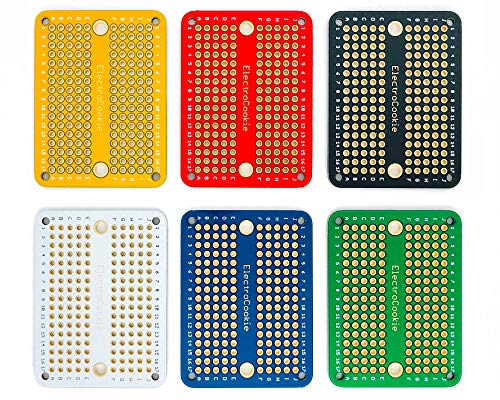
ElectroCookie Mini PCB Prototype Board (6 Pack)

Rindion 32 Pcs PCB Board 5 Sizes

ElectroCookie Prototype PCB (5 Pack + 1 Mini)

ElectroCookie PCB Prototype Board Large (3 Pack)

HEHIPLE 174-Piece PCB Prototype Kit with Headers

A1 FFCs Double Sided Universal PCB 15x20cm (4 Pack)
More On The Choices That Made The List
The MTCELL FFC FPC PCB Converter Board sits in a category of its own on this list, because it’s not a blank perf board at all. It bridges a 26-pin ribbon cable (FFC, or Flat Flexible Cable) on one side, with a 1.0 mm socket pitch, to a standard 2.54 mm DIP pad layout on the other. For anyone who has tried to tap into a laptop display, a DVD player’s internal board, or an LCD panel, that translation is gold.
Where most DIY PCB boards ask you to lay out a circuit from scratch, this one gives you a tested adapter that exposes ribbon signals to through-hole pins. The package includes two boards, so you can build a redundant connection or keep a spare. Hobbyists working on consumer-electronics repair or custom cable assemblies benefit most from this kind of conversion hardware.
Everyday Perks
- Converts awkward 1.0 mm ribbon pitch to standard 2.54 mm DIP spacing, which most soldered headers accept
- Includes two boards per pack, handy for prototyping a cable on one and finalizing on the other
- Soldering points on both sides make wiring harnesses more flexible
- Useful for repairing display ribbons inside laptops, monitors, and consumer electronics
- Saves the cost and lead time of ordering a custom breakout PCB for a one-off cable job
Things To Consider
- This isn’t a general-purpose perf board, so beginners may find it confusing without prior ribbon-cable experience
- The 26-pin count is fixed, limiting it to cables and devices that match that exact pinout
Who It Suits Best
Repair-focused tinkerers and engineers adapting ribbon cables for breadboard-style prototyping or signal probing.
Where Another Pick Suits Better
For blank board layouts that accept a wider range of components, the ElectroCookie Prototype PCB (5 Pack + 1 Mini) is a more versatile daily driver.
The ELEGOO 32-piece kit leans into accessibility, which is exactly what someone soldering their first circuit wants. Five board sizes ship together, so beginners can pick the footprint that matches a project without buying multiple packs. The boards are double-sided, meaning copper pads and traces exist on both faces, giving more wiring flexibility when one side fills up.
Mounting holes at each corner make these boards easy to secure inside an enclosure, and the pre-tinned plated holes help solder flow cleanly onto the pads. For first-time tinkerers working through tutorials, that combination reduces frustration. The included plastic tray also keeps the boards organized on a crowded desk.
The Practical Payoff
- Five board sizes cover small sensors up to mid-sized controller builds in a single pack
- Corner mounting holes integrate cleanly with standoffs and project boxes
- Pre-tinned pads help newcomers get solid solder joints on the first try
- Plastic tray keeps the kit tidy and easy to transport to a class or workshop
Worth Noting
- The mixed sizes mean fewer large boards than dedicated single-size kits
- Trace density is moderate, so complex layouts may require jumper wires between pads
- No headers or components included, so expect to source those separately
Key Specs
Made For
First-time hobbyists and students who need a forgiving assortment of blank boards for class projects or kit builds.
Consider Something Else When
For tiny, color-coded boards that fit inside compact gadgets, the ElectroCookie Mini PCB Prototype Board (6 Pack) is a stronger match.
At roughly 2 by 1.5 inches, the ElectroCookie Mini board earns its name by fitting where larger boards can’t. Each piece is gold-plated, which resists oxidation far better than bare copper in humid environments like a garage or basement workshop. The multicolor pack helps with visual organization: assign colors to different projects or voltage rails at a glance.
The hole spacing aligns with standard 0.1 inch (2.54 mm) headers, so Arduino shields, breakout boards, and most through-hole parts drop right in. For anyone building wearables, tiny remote controls, or sensor pods, this footprint is a sweet spot. It’s also a great way to graduate from solderless breadboards to permanent circuits.
Where It Excels
- Gold plating slows oxidation in humid or long-term storage conditions
- Multicolor pack aids quick visual identification on a busy workbench
- Standard 0.1 inch pitch matches most Arduino and through-hole parts
- Compact footprint fits wearables, mini robots, and tight enclosures
Minor Gripes
- Six small boards won’t accommodate wider microcontroller layouts without chaining them together
Feature Snapshot
The Right Fit
Makers building compact gadgets, mini Arduino projects, and portable sensor circuits who need a permanent replacement for solderless breadboards.
Skip It When
For longer layouts that require more horizontal real estate, the ElectroCookie PCB Prototype Board Large (3 Pack) makes more sense.
The Rindion kit splits 32 boards across five usable sizes, with the smallest at 2 by 8 cm and the largest at 7 by 9 cm. That spread covers sensor breakouts, small amplifier stages, and modest controller builds. The classic green solder-mask color is familiar to anyone who’s worked with commercial PCBs, which makes hand-soldering and trace inspection easier on the eyes.
Standard 0.1 inch (2.54 mm) hole spacing matches nearly every through-hole component, and corner mounting holes help secure the boards in a fixture. The boards ship in a compact bag rather than a rigid tray, which keeps them flat for storage but can lead to minor scuffing during shipping. Compared with the ELEGOO kit reviewed earlier, this one leans toward quantity over packing neatness.
The Helpful Details
- Five sizes split across 32 pieces, with multiple copies of the smaller dimensions for iteration
- Standard 0.1 inch hole pitch fits common through-hole parts
- Double-sided pads support more wiring density than single-sided alternatives
Trade Offs
- Bag packaging is space-saving but offers less physical protection than a plastic tray
- Green solder mask is functional but less visually distinct than multicolor packs
Best Suited To
Budget-conscious hobbyists and classroom settings where lots of practice boards matter more than premium packaging.
Look Elsewhere When
For tighter tolerance and gold plating on smaller boards, the ElectroCookie Mini PCB Prototype Board (6 Pack) is a smarter pick.
At about 3.5 by 2 inches, this ElectroCookie board mirrors the layout of a standard 400-tie solderless breadboard. That means circuits prototyped on a plug-in board can transfer directly to a permanent PCB with minimal re-layout. The matte black solder mask looks sleek and reduces glare under a bench lamp, which is a small but welcome ergonomic win during long soldering sessions.
The pack includes five standard boards plus a single mini board for tight spots, covering both everyday builds and small additions. Gold plating protects pads from oxidation, especially when projects sit on a shelf for months. Through-hole diameters around 0.047 inches accept most common component leads with a little breathing room.
Useful Strengths
- Breadboard-aligned layout simplifies transferring solderless prototypes to permanent circuits
- Gold-plated pads resist oxidation for long-term project storage
- Matte black finish reduces glare and looks clean on a workbench
- Mounting holes sized for both M2 and M3 hardware
Points To Note
- Fixed mid-size footprint won’t suit projects needing a much larger or smaller board
- The mini board addition is a single piece, so spares for tiny projects are limited
Whose Shelf It Belongs On
Arduino enthusiasts and intermediate makers who frequently move circuits from solderless breadboards to permanent soldered versions.
A Better Fit Elsewhere
For projects that need much wider boards, the ElectroCookie PCB Prototype Board Large (3 Pack) stretches the available space considerably.
The Large ElectroCookie board stretches to about 6.8 by 2 inches, roughly double the length of the standard version reviewed above. That extra room matters when a build needs multiple sensors, an Arduino Nano or Micro, supporting components, and a power section all on one board. The matte black solder mask and gold-plated pads remain consistent across the ElectroCookie lineup.
The strip-shaped form factor is useful for layouts that flow logically from input to output, like a signal-conditioning chain. Three boards per pack give enough headroom for one or two prototypes plus a final revision. Hobbyists who find themselves constantly chaining smaller boards together will appreciate having one wide canvas instead.
Where It Delivers
- Long footprint fits multi-stage circuits on a single board, reducing jumper wires
- Gold plating and matte finish match the rest of the ElectroCookie line
- Standard 0.1 inch pitch keeps compatibility with through-hole parts
- Three boards per pack leave room for iteration before committing
Room For Improvement
- The narrow 2-inch height can feel cramped when stacking tall components like electrolytic capacitors
- Three boards may not be enough for big classroom use
Quick Facts
Who Should Grab It
Intermediate makers assembling sensor arrays, multi-stage amplifiers, or controller boards that need more horizontal real estate.
Reach For A Different Pick When
For beginners needing a mixed assortment of sizes for varied small projects, the ELEGOO 32Pcs Double Sided PCB Board Prototype Kit is a better starting point.
The HEHIPLE 174-piece kit is the most ambitious bundle on this list. It spreads boards across six sizes, ranging from 3.5 by 5.9 inches down to small utility strips, plus 40-pin male and female headers for soldering onto finished projects. That included header set is a real time saver, because most DIY PCB boards ship without them.
Active makers working through multiple concurrent projects benefit from the volume. One larger board, several medium, and plenty of small pieces covers nearly any bench task. The headers mean finished boards can plug into other modules or accept shields, bridging prototyping and integration.
Bright Spots
- Largest piece count on the list, supporting sustained workshop use
- Six sizes span from utility strips to roomy project canvases
- Included male and female 2.54 mm headers remove a separate purchase
- Double-sided construction supports flexible layouts on most boards
Honest Caveats
- Bulk packaging is efficient but doesn’t organize boards as neatly as a tray
- The variety means some sizes arrive in small quantities, limiting iteration on those footprints
Built With In Mind
Active workshop users and makers who cycle through multiple projects weekly and want headers included.
Where A Sibling Pick Shines
For a single large FR-4 substrate sheet, the A1 FFCs Double Sided Universal PCB 15x20cm (4 Pack) gives far more uninterrupted space.
The A1 FFCs boards come in at 15 by 20 cm each, which is essentially a full sheet of prototyping real estate. The substrate is FR-4 fiberglass, the same material used in many commercial PCBs, giving these boards genuine rigidity for larger builds. A 1.6 mm thickness is standard for through-hole plated work and provides solid mechanical support.
Four sheets per pack mean makers can cut, drill, and shape boards to fit custom enclosures without worrying about running out. The through-hole plating (where the inside of each hole is metal-coated for solder connections) supports both sides of the board, allowing traces to route top and bottom. Power-supply projects, motor controllers, and larger amplifier builds all benefit from this kind of open canvas.
Key Advantages
- FR-4 substrate offers commercial-grade rigidity and heat resistance
- 1.6 mm thickness supports heavy components and mechanical stress
- Plated through-holes enable traces on both sides for complex layouts
- Four sheets allow cutting and custom shaping for enclosures
Points To Keep In Mind
- Large sheets require cutting tools and a workspace large enough to handle them safely
- Without pre-printed hole guides, planning the layout takes more upfront time
- Bundled in shrink-wrap packaging, so plan to store them flat to avoid warping
Technical Highlights
Perfect Match For
Intermediate to advanced makers building power supplies, motor controllers, or larger amplifier circuits that need full-size board real estate.
Swap It Out When
For smaller, more portable projects, the ElectroCookie Mini PCB Prototype Board (6 Pack) is far easier to work with on a small desk.
Picking The Right DIY PCB Boards For Your Workbench
Understand The Role Of Pitch And Hole Size
The term “pitch” refers to the center-to-center distance between holes on a perf board or component pads. Most through-hole components use a 0.1 inch (2.54 mm) pitch, which has become the de facto standard. Boards that match that pitch accept virtually any common resistor, capacitor, header pin, or IC without forcing awkward lead bends. Boards with finer pitches, like the MTCELL converter’s 1.0 mm ribbon side, are purpose-built for specific cable types and require careful alignment.
Match The Footprint To The Project Size
Tiny wearables and sensor pods benefit from boards in the 2-by-1.5 inch range, like the ElectroCookie Mini. Mid-sized controller projects align well with breadboard-shaped 3.5-by-2 inch boards. Power supplies, motor drivers, and amplifier circuits often need full-sheet 15-by-20 cm substrates where multiple sub-circuits share real estate. Choosing the wrong size either wastes material or forces fragile jumper chains.
Consider Plating, Finish, And Material
Gold plating resists oxidation, which matters for projects stored for months in humid garages or basements. Bare copper pads work fine for short-term builds but can tarnish quickly. FR-4 fiberglass substrate offers the rigidity and heat tolerance of commercial boards, while thinner phenolic substrates are cheaper but more brittle. Plated through-holes let traces route on both sides of the board, expanding layout options significantly.
Factor In Headers And Accessories
A board without headers isn’t immediately usable with Arduino shields or modular components. Bundles like the HEHIPLE 174-piece kit include 40-pin male and female headers, saving a separate trip to the parts bin. For projects destined for permanent installation, plan to source mounting hardware that matches the board’s hole pattern, usually M2 or M3 standoffs.
Key Considerations Across These Picks
Pitfalls Shoppers Hit
A common mistake is assuming all blank boards are interchangeable. Pitch, hole diameter, and substrate material vary widely between kits. Picking a board with a non-standard pitch means components won’t fit, and returning to a mismatched kit wastes time. Another trap is overlooking plating: bare copper boards tarnish fast, so projects shelved for months can develop poor solder joints when revisited.
Where The Extra Money Goes
Paying a bit more for gold plating, FR-4 substrate, and plated through-holes delivers real longevity benefits. These features matter most for projects that will live inside enclosures, sit in storage, or carry meaningful current loads. For quick weekend experiments, budget boards work fine, but the upgrade is worth it for anything intended to stay on the bench long-term.
Frequently Asked Questions
What pitch should I look for in a DIY PCB board?
A 0.1 inch (2.54 mm) pitch is the standard for nearly all through-hole components and headers. Sticking with that pitch ensures your resistors, capacitors, and pin headers drop right in without modifications.
Can I cut a large PCB sheet to a smaller size?
Yes, larger sheets like 15 by 20 cm FR-4 boards can be scored and snapped, or cut with a fine-tooth saw. Just be sure to wear eye protection, since fiberglass dust is unpleasant to inhale.
Is gold plating really necessary?
It’s not mandatory for short-term builds, but gold plating resists oxidation, which matters for projects stored for months or used in humid environments. Bare copper pads tarnish over time and may need light cleaning before re-soldering.
What’s the difference between single-sided and double-sided boards?
Single-sided boards have copper pads on one face only, while double-sided boards have them on both. Double-sided construction allows more routing flexibility and is helpful when one side fills up with components.
How do plated through-holes help?
Plated through-holes are metal-coated inside the hole itself, so solder connections on the top and bottom faces of the board are electrically connected. This makes double-sided layouts far easier to wire without extra jumpers.
Wrap Up
The best DIY PCB boards are the ones that match your project’s footprint, support your favorite components, and survive the conditions they’ll live in. Beginners get a friendly on-ramp with mixed-size kits, intermediate makers benefit from breadboard-aligned footprints, and advanced builders can claim full sheets of FR-4 for serious work. Match the board to the build, and the soldering iron does the rest.