A reliable DJ computer setup depends on more than a controller alone. The right cables, case protection, and laptop stand can transform chaotic gig nights into smooth sessions. I’ve sorted through nine solid picks that cover controllers, accessories, and support gear, so anyone from first-timers to working DJs can find the right match for their workspace and budget.
The Lineup, Simplified

Hosa CMK-050AU Edge Microphone Cable 50 Foot

Rockville MB1313 DJ Gear Mixer Gig Bag
Lifelong Aluminum Adjustable Laptop Stand 20″

Pioneer DJ DDJ-FLX4 Bundle with Stand and Headphones

Pioneer DJ DDJ-FLX4 Bundle with Carrying Case

Pioneer DJ DDJ-FLX10 4-Channel Pro Bundle

Pioneer DJ DDJ-REV1 Scratch-Style Bundle

AlphaTheta DDJ-GRV6 4-Channel Bundle

Pioneer DJ DDJ-REV5 Scratch-Style Pro Bundle
The Details Behind The Selections
Every DJ rig needs dependable cabling, and the Hosa CMK-050AU handles one of the most overlooked jobs: a long-run XLR (the standard three-pin connector used for balanced audio signals) for MCs, vocalists, or announcers. At 50 feet, it gives plenty of slack for stage setups where the mixer sits across the room from the mic.
The cable uses 20 AWG conductors (American Wire Gauge, where lower numbers mean thicker wire and better signal flow) wrapped in a braided shield for roughly 95% coverage, which helps reject stage interference and radio-frequency hum. For working mobile DJs, that shielding matters more than people realize when running power cables parallel to audio runs.
Everyday Advantages
- Fifty feet covers most mid-sized venues and outdoor stages
- Braided shield reduces hum in electrically noisy environments
- Standard 3-pin XLR Male to Female fits virtually any mixer or powered speaker input
- Sturdy construction handles frequent coiling and transport between gigs
Honest Caveats
- 50 feet can be excessive for tight booth setups where shorter runs are tidier
- The cable’s thickness means it takes up more room in a cable bag than thinner consumer-grade options
Whose Setup It Belongs On
Mobile DJs and event hosts running longer stage distances where signal integrity matters.
Skip It When
The Rockville MB1313 gig bag is the better starting accessory for anyone still building out controller transport first.
Transport is where controllers get damaged, and the Rockville MB1313 addresses that with serious padding. Two foam layers, 8mm of high-density material plus 3mm of softer cushioning, sandwich the gear inside a rugged nylon shell. For bedroom DJs heading to their first house parties, that combination matters.
At 13″ x 13″ x 6″, the bag fits small mixers, pad controllers, or multi-FX units, plus there’s a front pocket for cables or a slim laptop. An adjustable padded shoulder strap and reinforced handles make it manageable on public transit or long walks from a parking spot.
Useful Strengths
- Dual foam layers protect against the kind of bumps that happen during car trips
- Rain-resistant flap covers zippers for outdoor event weather
- Hardened rubber feet on the bottom reduce wear from being set down hard
- Front pocket accommodates a laptop up to 13 inches for wireless cueing
Softer Spots
- 13-inch laptop pocket is tight for newer 14-inch ultrabooks
- Lockable zippers require buying a separate padlock for travel through checked luggage
The Right Fit For
Mobile DJs and bedroom producers moving a compact controller to small venues regularly.
Consider Something Else When
The Pioneer DJ DDJ-FLX4 with Carrying Case bundle suits someone who wants the controller and protection in one box rather than sourcing the bag separately.
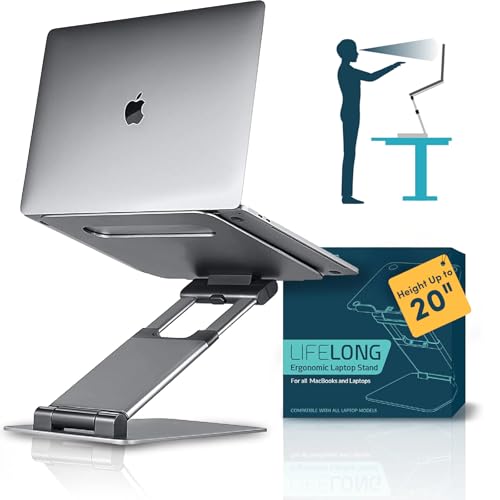
Long sessions at the DJ booth punish posture, which is where the Lifelong Aluminum Adjustable Laptop Stand earns its place. The 20-inch riser height is the standout spec: most stands top out shorter, but this one lifts the screen to standing-desk range for DJs who prefer to perform on their feet.
The aluminum build keeps weight low while staying rigid enough to hold a 17-inch laptop securely. For producers mixing for hours, that height range translates to less neck craning and fewer “I’m done for the night” moments after the second set.
Strengths Worth Knowing
- Extra-tall 20-inch riser supports standing-desk workflow
- Aluminum construction balances low weight with stable support for larger laptops
- Adjustable angles accommodate seated and standing positions
- Grey finish blends into most studio or bedroom setups
Trade Offs
- Aluminum edges can feel cold against wrists during cold-room sessions
- The taller height means less stability on uneven surfaces, so a flat table is important
Key Specs
Made For
Stand-up DJs and producers mixing long sets who need the laptop screen at eye level.
Look Elsewhere When
The Pioneer DJ DDJ-FLX4 with Laptop Stand bundle covers a shorter riser height but pairs the stand directly with a controller for beginners.
The Pioneer DJ DDJ-FLX4 is the controller most first-timers meet, and this bundle wraps it with a laptop stand, headphones, and a polishing cloth. The 2-channel layout keeps the surface uncluttered, which is the right call for people still learning what EQ (equalization, the bass/mid/treble knobs) and cueing actually feel like under the fingers.
A built-in sound card (an internal audio interface that converts digital signals to analog output) means the FLX4 connects to speakers or an amplifier with a single RCA cable, removing the external interface that complicates cheaper setups. Free compatibility with rekordbox, Serato DJ Lite, and Algoriddim’s djay covers nearly every new DJ’s first software choice.
A Favorable Mix
- All-in-one package removes the guesswork of matching a stand and headphones separately
- Built-in sound card simplifies speaker hookup to a single cable
- Two-deck layout suits beginners who haven’t tackled four-deck mixing yet
- Multi-software support means switching platforms doesn’t require new hardware
Things To Consider
- The bundled headphones are functional but most DJs upgrade them within a year
- No carrying case in this version, so transport protection must be sourced separately
Who Should Grab It
New DJs starting out who want a controller, monitoring solution, and screen riser in a single purchase.
A Better Fit Elsewhere When
The Pioneer DJ DDJ-FLX4 with Carrying Case bundle makes more sense for first-timers who plan to gig at friends’ houses from day one.
Same controller, different supporting cast. This Pioneer DJ DDJ-FLX4 bundle swaps the stand and headphones for a carrying case plus the polishing cloth, which is the smarter pickup for anyone already happy with their existing laptop perch and cueing setup. Bedroom DJs moving into mobile territory get the protection they need without doubling up on gear.
Connection convenience stays identical: the built-in sound card still drives speakers with one RCA cable, and the controller remains compatible with rekordbox, Serato DJ Lite, and djay on PC, Mac, iPhone, iPad, and Android via Bluetooth or USB through rekordbox.
What Helps Most
- Carrying case protects the controller during regular transport
- Wireless Bluetooth streaming via rekordbox cuts cable clutter for casual sets
- Compatible with iOS and Android devices for mobile-first workflows
- Polishing cloth keeps the jog wheel surfaces smudge-free for accurate scratching
Room For Improvement
- No bundled headphones means new DJs need to budget for monitoring separately
- Carrying case sizing is tight for anyone adding accessories alongside the controller
Built With In Mind
Mobile DJs and bedroom producers who already own monitoring gear but need reliable transport.
Reach For A Different Pick When
The Pioneer DJ DDJ-FLX4 with Stand and Headphones bundle covers newcomers who don’t yet own any peripheral gear.
The Pioneer DJ DDJ-FLX10 steps up to 4 channels and unlocks Stems, which is the technology that splits a track into vocals, drums, instruments, and bass for independent mixing. For working DJs performing mashups and live remixes, that’s the feature that justifies moving past the FLX4. The bundle adds a carrying case, HDJ-CUE1 headphones, and an XLR cable so the whole rig travels as a unit.
Color-coded pad controls make it clear which stem is being muted or soloed mid-transition, which reduces the mental load during busy sets. It’s noticeably heavier than the FLX4, so the case isn’t optional.
The Case For It
- Stem separation opens live mashup and remix possibilities on the fly
- 4 channels handle back-to-back sets and complex transitions
- HDJ-CUE1 headphones are a real upgrade over entry-level monitoring
- Bundle XLR cable covers the microphone run out of the box
A Few Limitations
- Stem features require compatible software and prepared tracks to deliver value
- Larger footprint demands more table space than a 2-channel controller
Feature Snapshot
Best Suited To
Club and event DJs who perform live remixes and need stem-level control over multiple decks.
Swap It Out When
The AlphaTheta DDJ-GRV6 bundle makes more sense for DJs prioritizing groove-based remixing over stem separation.
The Pioneer DJ DDJ-REV1 flips the standard layout: tempo sliders run horizontally along the bottom, mimicking the battle-style CDJ (a Pioneer’s industry-standard multi-player) and DJM-S mixer setup that turntablists (DJs specializing in needle-and-vinyl or controller-based scratching) actually use. For aspiring scratch DJs, that orientation feels right from day one instead of forcing a relearning stage.
It’s built around Serato DJ Lite, which means zero software cost for getting started. The bundle adds a custom-sized DJ case so the controller survives the learning curve of crossfader scratches and baby scratches without scuff damage.
What Earns Its Place
- Battle-style layout trains proper scratching technique from the start
- Horizontal 60mm tempo sliders allow smoother pitch bending than vertical layouts
- Free Serato DJ Lite removes the entry-friction of paid software
- Custom-fit case absorbs the inevitable bumps of a learning scratch DJ
Points To Note
- Layout feels unusual to anyone trained on traditional mixer-style controllers
- 2-channel design limits complex four-deck mashups compared to higher-tier picks
Perfect Match For
Aspiring scratch DJs who want a turntablist-inspired layout without jumping to a full club controller.
Where A Sibling Pick Shines
The Pioneer DJ DDJ-REV5 Scratch-Style Pro Bundle is the upgrade path once basic cuts feel comfortable.
AlphaTheta, the Pioneer DJ parent company’s performance-focused brand, ships the DDJ-GRV6 with the Groove Circuit, which lets DJs swap drum parts between decks and stack loops in real time. That’s a fundamentally different workflow from the FLX10’s stem separation: instead of pulling vocals out of one track, you’re rebuilding the rhythm section live.
Large jog wheels and 8 performance pads per deck come standard, plus Beat FX inherited from the DJM-A9 club mixer. The bundle adds a protective case and headphones, giving performers a complete road rig.
Notable Gains
- Groove Circuit enables live drum-part swaps for high-energy remixes
- DJM-A9-derived Beat FX bring club-grade effects to a portable rig
- Large jog wheels support expressive scratching and nudging
- 4 channels accommodate complex transitions and collaborative sets
Less Ideal Details
- Groove Circuit works best within rekordbox, so committed Serato users may feel boxed in
- Larger surface area than 2-channel options demands a wider table
Quick Facts
Who It Suits Best
Festival and club DJs who build energy through rhythm swapping rather than stem separation.
Where Another Pick Suits Better
The Pioneer DJ DDJ-FLX10 is a better fit for DJs whose sets revolve around vocal and instrument stems.
The Pioneer DJ DDJ-REV5 takes the REV1’s battle-style layout and adds professional-grade hardware. The Magvel Fader, a magnetic crossfader designed for tight, responsive cuts, gives scratch DJs the kind of precise control they expect from club gear. Large jog wheels feel closer to CDJ-sized platters than consumer controllers.
The bundle is the most complete on this list: case, headphones, XLR cable, TRS-to-RCA breakout cable (a connector cable that converts balanced 1/4-inch output to RCA input for connecting to consumer-grade speakers), and polishing cloth. That last cable matters for scratch DJs who want to plug into a wider range of speaker systems without adapters.
Positive Takeaways
- Magvel Fader delivers tight, responsive cuts for serious scratching
- Large jog wheels replicate classic CDJ feel for muscle memory training
- TRS-to-RCA breakout cable simplifies connections to consumer audio gear
- Stem control buttons enable live remixing within the scratch workflow
- Pro-grade bundle reduces the need to source accessories separately
What To Weigh
- Premium positioning makes it overkill for DJs not committed to scratching
- 2-channel layout caps creative flexibility compared to 4-channel flagships
Feature Card
Right Fit For
Committed scratch DJs who want club-grade fader response and a complete accessory kit.
Not Your Match When
The Pioneer DJ DDJ-REV1 is a more budget-aware entry into the same battle-style layout for casual practice.
Choosing the Right DJ Computer Setup Without Overbuying
A “DJ computer” setup works best when the controller, software, and accessories fit together from the start. For bedroom producers, a 2-channel controller like the Pioneer DJ DDJ-FLX4 paired with a free software tier handles the learning curve without overspending. Mobile DJs benefit from 4-channel boards like the DDJ-FLX10 or DDJ-GRV6 because sets get more layered away from home. Don’t forget the supporting cast: a padded gig bag protects hardware, a laptop stand saves posture, and a quality XLR microphone cable keeps vocal runs noise-free across long stage distances.
Software Compatibility Counts
Every controller on this list pairs with a specific software ecosystem, and switching platforms later usually means a new learning curve. The FLX4 works across rekordbox, Serato DJ Lite, and Algoriddim djay, which makes it flexible. The DDJ-REV1 and DDJ-REV5 lock into Serato, while the AlphaTheta DDJ-GRV6 leans heavily on rekordbox for its Groove Circuit features. Match the controller to the software community you want to learn from, since tutorials and communities vary by platform.
Channel Count and Workflow
2-channel controllers are simpler but limit mashup creativity. 4-channel options like the FLX10 and GRV6 let you stack loops, blend acapellas (vocal-only tracks) over instrumentals, and run back-to-back sets with another DJ. For first-timers, a 2-channel board teaches the fundamentals without overwhelming button layouts. Working club DJs almost always need 4 channels.
Accessories That Prevent Costly Mistakes
A carrying case isn’t optional for anyone transporting gear. XLR cables fail at the worst moments, so a backup matters more than people expect. Laptop stands become essential once sets pass the two-hour mark, since laptop screens at table level cause neck strain that compounds over years. The Lifelong 20-inch riser handles standing-desk workflows better than shorter stands.
Key Considerations Across These Picks
Pitfalls Shoppers Hit
First-timers often grab the most expensive controller and skip the accessories, then damage the gear in transit within months. Others pair a premium controller with cheap cables that introduce hum during live shows. A common mismatch is buying a 4-channel flagship without software capable of using the extra decks, leaving features idle. Beginners also tend to overlook their laptop’s processing power; older machines struggle with stem separation and four-deck mixing in real time.
Where The Extra Money Goes
Higher-tier controllers like the DDJ-FLX10 and DDJ-REV5 invest in better faders, jog wheels, and build quality that survive years of gigging. The stem and Groove Circuit features require more onboard processing, which raises the price. Pro bundles include real monitoring headphones and properly shielded cables that outperform the generic accessories bundled with entry kits. The upgrade pays off for anyone performing regularly, while casual home DJs rarely feel the difference.
Frequently Asked Questions
What software works with Pioneer DJ controllers?
Most Pioneer DJ controllers support rekordbox and Serato DJ Lite for free, with options to upgrade to Serato DJ Pro on compatible models. The DDJ-FLX4 also works with Algoriddim djay for mobile-first setups, while the DDJ-REV series is built specifically around Serato for scratch workflows.
Do I need a laptop for these DJ controllers?
Yes, every controller on this list needs a computer or mobile device running the compatible software. Some controllers like the DDJ-FLX4 support iPhone, iPad, and Android through Bluetooth, while pro-tier options typically require a laptop for full feature access.
How many channels do beginner DJs need?
A 2-channel setup handles most beginner learning paths, including basic mixing, EQ control, and simple transitions. 4-channel controllers become useful once DJs start layering acapellas, running back-to-back sets, or performing live remixes with stems.
What accessories should I buy with a controller?
A carrying case, quality monitoring headphones, and a reliable XLR cable cover the basics for mobile use. A laptop stand improves posture during long sessions, and a backup USB cable prevents show-stopping failures mid-gig.
Are DJ controllers worth the bundle price?
Bundles save money compared to buying accessories separately, and they ensure compatibility out of the box. First-timers benefit most because the included case and headphones remove the guesswork from matching gear.