The hunt for a capable gaming desktop on a realistic budget used to mean painful compromises: middling GPUs, 8GB of RAM, and cases that ran loud and hot. That’s no longer true. New mid-range graphics cards, faster DDR5 memory (the latest generation of system RAM, offering higher bandwidth and lower power draw than DDR4), and efficient Ryzen and Core Ultra CPUs have shifted the line. For gaming, streaming, and daily work, a desktop around the $1,500 mark now delivers frames that hold up at 1440p (a sharper resolution between standard 1080p HD and 4K) without throttling.
I put this list together for shoppers who want modern parts in a real tower, not a refurbished gamble. You’ll find full-size builds with discrete graphics next to compact mini PCs that punch well above their size, plus a couple of options that lean toward creator workloads and streaming. Each pick below is evaluated against real use cases: 1440p gaming, AAA titles at high settings, esports at high refresh, video editing, and living-room-friendly living spaces.
The Main Contenders

The Horizon Autherium Dragon RGB I9 RTX Gaming PC (RTX 5070 OC, 64GB)
CyberPowerPC Gamer Xtreme VR Gaming PC (RTX 4060, i5-13400F)

GMKtec Gaming Mini PC (Ryzen 7 H 255, 32GB DDR5, 1TB)
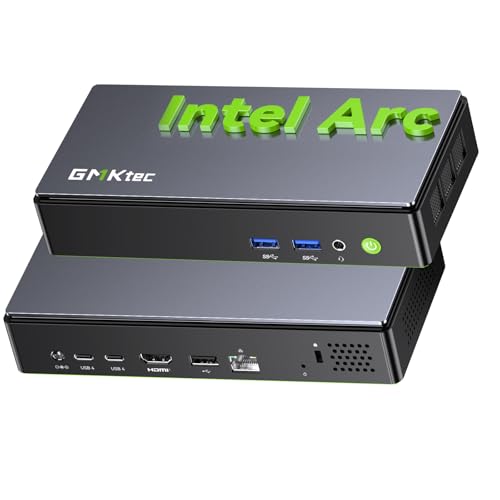
GMKtec K13 Mini PC (Intel Ultra 7 256V, LPDDR5)
GMKtec K11 Mini PC (Ryzen 9 8945HS, 32GB DDR5, 2TB)

CyberPowerPC Gamer Xtreme VR (RTX 5060, i5-13400F)

GMKtec K8 Plus Gaming Mini PC (Ryzen 7 8845HS, 32GB)

ASUS ROG G700 (2025) Gaming Desktop (RTX 5070, Ultra 7 265F)

GMKtec M8 Mini PC (Ryzen 5 PRO 6650H, 16GB LPDDR5)
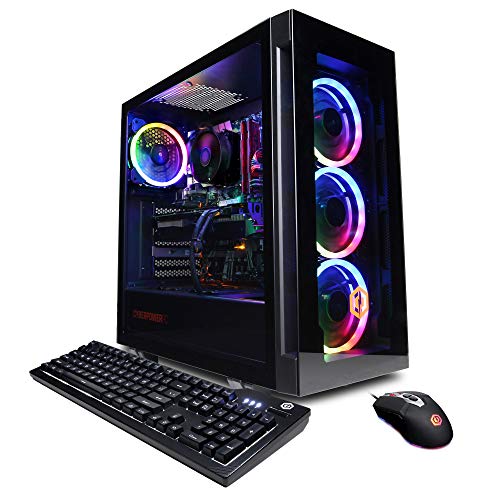
CyberPowerPC Gamer Xtreme VR (i7-12700F, RTX 3060 12GB)
More Details On Our Top Picks
The Horizon Autherium Dragon RGB is built for shoppers who refuse to compromise on the CPU side. Inside sits an unlocked Core i9 pushing to 5.4GHz, paired with a factory-overclocked RTX 5070 OC graphics card and 64GB of system memory. That memory figure matters more than people realize: it’s twice what most prebuilts in this range ship with, which means Chrome, Discord, OBS, and a AAA game can all coexist without the system tapping the page file (a fallback that uses storage as overflow RAM when memory runs out).
Storage is layered the way enthusiasts build: a 1TB NVMe boot drive (a tiny, fast solid-state drive plugged directly into the motherboard) for the OS and current games, a 4TB 7200RPM mechanical drive for long-term library storage, and open M.2 slots for expansion later. The 360mm AIO liquid cooler (an all-in-one closed-loop liquid cooler with a 360mm radiator) keeps thermals honest under sustained loads, which matters when you’re running Cyberpunk with path tracing enabled. Windows 11 Pro is preinstalled, so BitLocker and Remote Desktop are ready out of the box.
Benefits That Matter
- 64GB RAM means modern games, browser tabs, and streaming tools can run together without slowdowns from memory pressure.
- Core i9 with 5.4GHz boost headroom holds strong frame times during CPU-bound scenes in simulation and strategy games.
- Dual storage setup separates hot, fast assets from cold bulk saves, which keeps load times snappy.
- 360mm AIO cooling helps the overclocked RTX 5070 OC sustain boost clocks longer in marathon sessions.
- Open M.2 and HDD bays let you expand storage without replacing anything you’ve already paid for.
Things To Consider
- Large tower size demands dedicated floor or desk space, so it isn’t ideal for tight media centers.
- RGB lighting adds visual flair but requires the bundled software to configure, which adds an install step.
Feature Snapshot
Built With In Mind
Hardcore gamers who stream, run heavily modded titles, or multitask with creator software while playing.
Where Another Pick Suits Better
The ASUS ROG G700 (2025) Gaming Desktop is a quieter, more refined alternative for shoppers who want the same RTX 5070 tier inside a tighter, more polished case.
The CyberPowerPC Gamer Xtreme VR lands as the mainstream sweet spot of the list. Its Intel Core i5-13400F is a 10-core chip (6 performance cores, 4 efficiency cores) without integrated graphics, which trims cost and lets the RTX 4060 8GB stretch further. That combination drives modern AAA games at 1080p high settings comfortably and pushes esports titles like Valorant and Counter-Strike well past 144 frames per second on a 144Hz monitor.
16GB of DDR5 is the current default for smooth gameplay, and the 1TB PCIe Gen4 NVMe keeps load times short. Windows 11 Home is preinstalled, and Wi-Fi comes ready out of the box. For most shoppers who play at 1080p on a high-refresh display and don’t need to stream at the same time, this is the most balanced tower on the list.
Useful Highlights
- RTX 4060 with DLSS 3 frame generation lets demanding games hold higher frame rates at 1080p.
- DDR5 memory at 16GB is the modern baseline, so multitasking feels snappy.
- 1TB PCIe Gen4 SSD keeps load times low and provides room for several large installs.
- Compact mid-tower footprint fits under most desks without dominating the room.
Honest Caveats
- 16GB RAM is enough today but may feel tight in two to three years as games demand more.
- The 1080p focus means 1440p high-refresh gaming will push this card to its limits.
- Bundled peripherals are functional, but enthusiasts tend to swap the included mouse and keyboard quickly.
Right Fit For
Mainstream 1080p and esports players who want a tuned out-of-the-box experience without paying for headroom they won’t use.
Skip It When
The CyberPowerPC Gamer Xtreme VR with the RTX 5060 is a better match for shoppers who plan to move up to a 1440p display within a year.
The GMKtec Gaming Mini PC is the first of three small-footprint picks on this list, and it makes a strong opening argument. Inside the compact chassis sits the AMD Ryzen 7 H 255, an upgraded spin of the 8745HS with 8 cores, 16 threads, and a 4.9GHz boost clock. Pair that with Radeon 780M integrated graphics (a CPU-built-in GPU capable of light gaming without a separate graphics card) and 32GB of DDR5, and you’ve got a small box that handles esports titles and lighter indie work without breaking a sweat.
The 1TB SSD keeps the system responsive, and the Zen 4 architecture (AMD’s modern CPU design with improved instructions-per-cycle performance and efficiency over Zen 3) brings AVX-512 support for accelerated compute tasks. It’s not a true AAA 1440p machine, but for apartment dwellers, students in tight dorms, or anyone mounting a PC behind a monitor, the size advantage is real.
Key Advantages
- Eight-core Ryzen with strong single-thread speed handles esports and indie games smoothly.
- 32GB DDR5 future-proofs the system for browser-heavy multitasking and lighter creator work.
- Mini-PC footprint slips behind a monitor or onto a small shelf without taking over the desk.
- AVX-512 instruction support benefits emulators, code compilation, and select productivity apps.
Points To Note
- Integrated Radeon graphics cap AAA performance at lower resolutions and detail settings.
- Compact cooling means sustained all-core loads run warmer than a full tower would.
- No dedicated GPU slot means external GPU enclosures are the only upgrade path for heavier gaming.
Quick Facts
Perfect Match For
Apartment gamers, students, and minimalists who play esports and indie titles and care more about desk space than maxed-out settings.
Reach For A Different Pick When
The ASUS ROG G700 (2025) Gaming Desktop is a stronger match for shoppers who want a real discrete GPU in a tower that still looks clean.
The GMKtec K13 takes a different lane than the Ryzen-based mini PCs on this list. It’s built around Intel’s Core Ultra 7 256V, a chip with a dedicated NPU (neural processing unit, a specialized accelerator that handles AI workloads like on-device language models and image generation without taxing the main CPU). That NPU, plus the GPU portion, totals 115 TOPS (trillions of operations per second, the standard measure of AI compute throughput), which is meaningful if you plan to run local AI tools or AI-assisted workflows in apps that support them.
The 8533 MT/s LPDDR5 memory is the standout detail. That kind of bandwidth helps the integrated GPU and the NPU share data efficiently, so the box feels responsive even when juggling multiple AI or browser tasks. It’s a forward-leaning choice for early adopters who want a small, quiet PC that handles productivity and AI experimentation now.
Strengths Worth Knowing
- Dedicated NPU offloads AI tasks like background blur, transcription, and on-device assistants from the CPU.
- 8533 MT/s LPDDR5 keeps memory-bound workloads moving without bottlenecks.
- Compact chassis fits behind a monitor or inside an entertainment center.
- Intel’s latest architecture delivers strong single-core speed for everyday responsiveness.
Where It Is Less Suited
- No discrete GPU means AAA gaming performance is limited to lighter titles at lower settings.
- LPDDR5 is soldered, so memory can’t be upgraded later, locking in the current configuration.
- AI feature advantages depend on software that supports the NPU, which isn’t universal yet.
Whose Shelf It Belongs On
Productivity users, AI tinkerers, and small-office workers who want modern connectivity and silent operation over raw gaming muscle.
A Better Fit Elsewhere
The GMKtec Gaming Mini PC is the better pick for shoppers in this size class who care more about gaming frame rates than AI throughput.
The GMKtec K11 packs a Ryzen 9 8945HS into the same small form factor as its siblings, which is the headline feature. Eight cores, 16 threads, and a 5.4GHz boost clock make it the most CPU-potent mini PC on this list. The 35W TDP (thermal design profile, the maximum sustained heat output the cooler is rated to handle) keeps power draw modest, and it can be tuned upward for heavier sustained workloads.
With 32GB of dual-channel DDR5 and a 2TB PCIe 4.0 SSD, the storage and memory story is unusually generous for the form factor. That’s why this pick leans creator: video editors running 1080p timelines, photo editors with massive RAW libraries, and developers compiling large projects all benefit from the headroom. Gaming is supported through integrated Radeon graphics, but the real value sits in the compute power.
A Few Strong Suits
- Eight-core Ryzen 9 with 5.4GHz boost handles demanding creator workloads and large compiles with room to spare.
- 2TB PCIe 4.0 SSD accommodates sizable project files and game libraries without external drives.
- 32GB dual-channel DDR5 boosts both CPU and integrated GPU throughput in bandwidth-heavy tasks.
- TDP headroom lets power users tune performance up for sustained loads when cooling allows.
Softer Spots
- Integrated graphics cap gaming at modest settings, so it’s not a substitute for a real GPU.
- Compact cooling means longer all-core workloads may throttle in warm rooms.
- Smaller chassis limits internal expansion compared to a mid-tower build.
Spec Overview
Best Suited To
Creators, developers, and power users who want full-tower CPU performance in a chassis small enough to mount behind a display.
Where A Sibling Pick Shines
The GMKtec K13 Mini PC is the smarter choice for shoppers who care more about AI acceleration than raw multi-core CPU output.
The CyberPowerPC Gamer Xtreme VR with the RTX 5060 sits one rung above its RTX 4060 sibling, and the gap matters if you plan to step up to a 1440p monitor. The RTX 5060 brings newer architecture, more efficient ray tracing, and access to the latest DLSS features, so modern games hold frame rates better at higher resolutions. The same Core i5-13400F keeps the price accessible while still handling current titles without CPU bottlenecks.
16GB of DDR5 and a 1TB PCIe 4.0 SSD round out the package. For shoppers who want one tower that can do 1080p high-refresh today and stretch into 1440p tomorrow, this is the more future-tolerant of the two CyberPower builds on this list. It still ships with Windows 11 Home and Wi-Fi, which keeps the out-of-box setup simple.
The Good Stuff
- RTX 5060 graphics deliver stronger 1440p performance and access to the newest DLSS features.
- 10-core i5-13400F handles modern games without holding the GPU back.
- 1TB PCIe 4.0 SSD reduces loading screens compared to older SATA drives.
- 16GB DDR5 keeps current titles running smoothly without bottlenecks.
Practical Considerations
- 16GB RAM is enough now but tightens up over time as new releases demand more memory.
- Bundled cooling is adequate but louder than aftermarket options under sustained load.
- Stock case airflow benefits from a periodic dust-out, especially in carpeted rooms.
Who It Suits Best
Gamers who play a mix of AAA and competitive titles on a 1080p high-refresh or entry-level 1440p display.
Look Elsewhere When
The Horizon Autherium Dragon RGB is the better fit for shoppers who want a tower that also handles heavy streaming and creator workloads.
The GMKtec K8 Plus slots between the Ryzen 7 H 255 and the Ryzen 9 8945HS in the GMKtec lineup. Its AMD Ryzen 7 8845HS has 8 cores, 16 threads, and a 5.1GHz boost, plus a dedicated NPU for on-device AI acceleration. That combination makes it a quiet multitasker that handles modern games at modest settings, plus productivity work that leans on background AI features.
32GB of dual-channel DDR5 keeps memory headroom healthy, and the 35 to 54W TDP range lets the system scale power based on workload. The 512GB SSD is the one concession: it’s enough for an OS and a small library, but heavy game collectors will likely add external storage. If your priorities are quiet operation, modest gaming, and a balanced productivity/AI mix, this box delivers.
What Makes Sense
- Ryzen 7 8845HS with NPU supports AI features in productivity apps without taxing the CPU.
- 32GB dual-channel DDR5 enables smooth multitasking and benefits integrated graphics throughput.
- Low-watt TDP keeps the system cool and quiet enough for living-room or bedroom placement.
- Compact chassis fits on a small desk or mounts behind a monitor.
Where It May Fall Short
- 512GB SSD fills up quickly with modern games; a secondary drive is almost required.
- Integrated graphics limit AAA settings at 1080p, let alone 1440p.
- No dedicated GPU means future gaming upgrades require an external enclosure.
Feature Card
Made For
Quiet-desk owners and mixed-use households who want modern CPU performance with AI capability in a compact shell.
Not Your Match When
The GMKtec Gaming Mini PC is the better option for shoppers who want a larger SSD and slightly higher boost clocks in the same mini-PC class.
The ASUS ROG G700 (2025) is the most polished build on this list. Its dual-glass-panel chassis shows off the internals through a tempered side panel, and Aura Sync RGB (ASUS’s unified lighting system that syncs colors and effects across compatible components and peripherals) ties the lighting to other ROG accessories if you own them. Beneath the surface, the G700 pairs an Intel Core Ultra 7 265F with an NVIDIA RTX 5070, both current-generation parts that handle 1440p gaming with ray tracing comfortably.
The 1TB M.2 NVMe PCIe 4.0 SSD keeps load times honest, and 32GB of DDR5 holds multitasking together. Windows 11 Home is preinstalled. For shoppers who want a tower that earns its place on the desk visually, the G700 makes a stronger aesthetic case than the CyberPower builds, while staying competitive on real-world performance.
The Value In It
- RTX 5070 handles current AAA releases at 1440p with ray tracing and DLSS 4.
- Dual-glass chassis and Aura Sync RGB create a clean, customizable showcase build.
- Core Ultra 7 265F brings modern efficiency and strong multi-thread throughput.
- 1TB PCIe 4.0 SSD delivers fast boot and quick load screens for modern titles.
Trade-Offs To Consider
- Glass panels show off internals but require occasional dusting to stay clean.
- ROG ecosystem software adds an extra setup layer for users who don’t want RGB customization.
- 32GB is comfortable now, though future AAA releases may push that boundary.
Who Should Grab It
Shoppers who care about both performance and presentation, especially anyone already invested in the ROG ecosystem.
Consider Something Else When
The Horizon Autherium Dragon RGB is the better match for users who want 64GB of RAM and more storage in a larger tower at a similar performance tier.
The GMKtec M8 is a different kind of mini PC. It’s built for desks that need more screens, not more power. The Ryzen 5 PRO 6650H inside has 6 cores and 12 threads with a 4.5GHz turbo, which is plenty for office workloads, browser-heavy multitasking, and lighter creative work. The integrated Radeon 660M graphics handle video playback and casual gaming without breaking a sweat.
Where the M8 stands out is connectivity: triple 8K display output via HDMI 2.1 and DisplayPort 2.1, dual 2.5G LAN for fast networking, USB-C 4.0, and an Oculink port for external GPU expansion. The metal case helps with thermals and durability. For trading floors, control rooms, or anyone running three or four monitors from a tiny box, this is one of the most capable mini PCs in its class.
Well-Handled Touches
- Triple 8K display support across HDMI 2.1 and DisplayPort 2.1 enables dense multi-monitor setups.
- Dual 2.5G LAN ports benefit network-heavy users and small office configurations.
- Oculink port allows external GPU expansion if gaming needs grow later.
- Metal chassis improves durability and heat dissipation over plastic enclosures.
Small Caveats
- 16GB LPDDR5 is soldered and not upgradeable, locking in the configuration at purchase.
- Integrated graphics limit gaming to casual titles and lower settings without an external GPU.
- USB-C 4.0 and Oculink accessories can add cost if you want to use those features fully.
Right Fit For
Multi-monitor offices, finance desks, and small-footprint workspaces that prioritize display count and connectivity over raw CPU power.
Another Choice May Suit
The GMKtec K11 Mini PC is the better match for shoppers who want more CPU cores and 2TB of storage in a similar compact shape.
The CyberPowerPC Gamer Xtreme VR with the RTX 3060 12GB is the most accessible tower on this list. Its Intel Core i7-12700F is a 12-core hybrid chip (8 performance cores plus 4 efficiency cores) that still handles modern gaming without strain, even though it sits a generation behind the i5-13400F in raw clock speed. Pair that with the RTX 3060’s generous 12GB of VRAM (video RAM, the dedicated memory on a graphics card used for textures and frame buffers), and the system punches above its weight in texture-heavy games.
The 16GB of DDR4, 1TB NVMe SSD, tempered-glass side panel, and customizable RGB lighting round out a build that feels familiar to anyone who’s shopped CyberPower towers before. It ships with Windows 11 Home, Wi-Fi, and a basic keyboard and mouse. For gamers on a tighter budget or anyone with a backlog of older titles, this remains a sensible value pick.
Useful Strengths
- RTX 3060 12GB offers generous VRAM for texture-heavy games at 1080p.
- 12-core i7-12700F keeps multitasking responsive and game streaming smooth.
- Tempered-glass side panel with RGB lighting gives the build a clean, classic look.
- 16GB DDR4 and 1TB NVMe SSD cover the current baseline for gaming.
Points To Keep In Mind
- DDR4 memory is slower than DDR5 and limits future upgradability without a motherboard swap.
- RTX 3060 trails newer RTX 4060 and 5060 cards in ray tracing and DLSS 3 features.
- Bundled peripherals are functional but tend to be replaced quickly by enthusiast gamers.
Made For
Budget-conscious gamers with a strong older-game library, or first-time desktop shoppers who want a balanced 1080p build.
Swap It Out When
The CyberPowerPC Gamer Xtreme VR with the RTX 4060 is the smarter pick for shoppers who want newer architecture and DDR5 at a small price step up.
What To Weigh Before Choosing A Gaming Desktop Around $1500
The GPU matters more than the CPU for most modern games. A mid-range RTX 4060 or RTX 5060 paired with a competent i5 or Ryzen 5 will outperform a flagship CPU with a weaker graphics card at 1080p and 1440p. Save CPU upgrades for streaming, simulation-heavy titles, or content creation work where the extra cores earn their keep.
DDR5 versus DDR4 is worth noting. DDR5 delivers higher bandwidth and is the standard going forward, but it doesn’t dramatically improve game frame rates today. The real benefit shows up over the next few years as games grow more memory-hungry. If you want to keep a tower relevant for four to five years, DDR5 is the safer long-term bet.
Storage tiers matter more than people expect. A 1TB NVMe boot drive handles the operating system and current titles comfortably, but a modern AAA install can eat 100GB on its own. Towers with dual storage configurations, like the Horizon Autherium Dragon RGB, give you breathing room without forcing you to micromanage installs.
Form factor changes the daily experience. A full-size tower offers better cooling, easier upgrades, and longer component lifespans. A mini PC sacrifices raw gaming power for desk space and quiet operation. Pick based on where the PC actually lives in your home.
Wi-Fi and Windows licensing sound minor until they aren’t. Verify the build ships with Wi-Fi ready and the correct Windows edition for your needs. Windows 11 Home covers gaming; Windows 11 Pro adds BitLocker and Remote Desktop if you work from the same machine.
Key Considerations Across These Picks
Pitfalls Shoppers Hit
A common mistake is chasing CPU specs while ignoring the GPU generation. A newer mid-range graphics card beats an older high-end card in most current titles, especially with ray tracing and DLSS features factored in. Another trap is underestimating RAM needs. 16GB handles today’s games, but creative work and heavy modded titles push past that limit quickly.
Overlooking case airflow is a quiet issue. Towers with restrictive front panels run hotter, which forces fans to ramp up under load and shortens component life. Look for cases with mesh fronts or multiple intake fans if you plan to push hardware.
When Paying More Pays Off
Spending up earns meaningful gains in three areas. A higher-tier GPU like the RTX 5070 delivers noticeably better 1440p performance with ray tracing, which matters for buyers planning to keep the tower through the next console generation. More memory, like the 64GB in the Horizon Autherium, removes memory pressure when streaming or editing video alongside gaming. Better cooling, like a 360mm AIO, lets components sustain boost clocks longer in marathon sessions.
The upgrade only pays off if you’ll actually use the headroom. Esports players running a 1080p 240Hz monitor will feel little difference between an RTX 4060 and an RTX 5070, while 4K simulation gamers will feel the gap immediately.
Frequently Asked Questions
Is $1500 enough for a real gaming PC in 2026?
Yes. The current generation of mid-range GPUs and CPUs delivers 1080p high-refresh and 1440p high-settings performance in towers around this price. You won’t get flagship 4K, but for the vast majority of modern games, $1500 covers it comfortably.
Do I need DDR5 or is DDR4 still fine?
DDR4 still works for current titles, but DDR5 is the standard going forward. Choosing DDR5 now means easier upgrades later, since most new motherboards will be DDR5-based. For a tower you want to keep for four or more years, DDR5 is the safer choice.
Are mini PCs actually good for gaming?
Mini PCs handle esports, indie titles, and older AAA games well using integrated Radeon or Intel Arc graphics. For modern AAA at high settings or 1440p gaming, a tower with a discrete GPU remains the better fit. Many mini PCs also support external GPUs through Oculink or USB-C, which closes the gap if you’re willing to spend more later.
How important is the CPU in a gaming desktop?
The CPU matters most when it’s the bottleneck. A balanced i5 or Ryzen 5 with a strong GPU handles the majority of modern games without issue. CPUs become more important for simulation games, city builders, heavily modded titles, and tasks like streaming and video editing that run alongside gameplay.
Should I buy a prebuilt or build my own?
Prebuilts offer warranty coverage and convenience, plus they sidestep parts compatibility headaches for first-time desktop owners. Building your own saves money and lets you choose every component, but it requires research and assembly time. Most shoppers on a $1500 budget will find prebuilts offer better value once Windows licensing and warranty are factored in.
Bottom Line
A $1500 gaming desktop in 2026 is a real performance machine, not a compromise. Full-size towers like the Horizon Autherium Dragon RGB and ASUS ROG G700 (2025) carry current-generation CPUs and RTX 5070 graphics that handle 1440p with ray tracing, while compact picks like the GMKtec K11 and K13 deliver strong CPU and AI performance in a fraction of the space. The right choice depends on where the PC lives and what you’ll actually run on it. Match the tower to your screen resolution, your game library, and your desk, and the rest tends to fall into place.