Sitting at a desk, you lean left to peek around a cockpit pillar, and the in-game camera mirrors the move. That’s the moment head tracking earns its keep. A good PC head tracker turns small head tilts into precise in-game camera control, lifting flight sims, racing titles, and combat games from flat screens into something closer to a window. These six options cover the spectrum, from the established 6DOF infrared standard to wear-free camera setups and a VR-friendly strap.
The Leading Options At A Glance

TrackIR 5 Head Tracking System – 6DOF USB Optical Motion Tracker for PC Gaming – Natural Head Movement Camera for Flight

MASIMEMDRY Head Tracking System for AimxyZ

Hurricanes HeadBand Fixing Strap Tracker for HTC Vive

TrackIR 5 Head Tracking System with TrackClip PRO Bundle
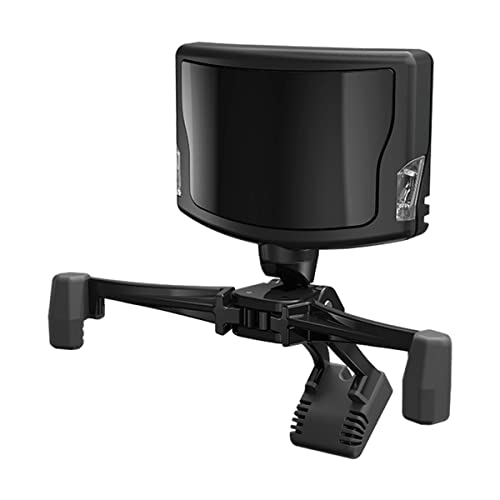
TrackIR 5 Professional Head Posture Infrared Tracking Bundle

JBL Quantum One Head-Tracking Gaming Headset
More On The Choices That Made The List
NaturalPoint’s TrackIR 5 has become the default reference in PC head tracking, and it’s easy to see why once you start using it. The setup pairs a wide-angle infrared sensor with a small reflective marker, so your real-world yaw (looking left-right), pitch (looking up-down), and roll (tilting your head) translate into in-game camera motion with low latency. It tracks six degrees of freedom (6DOF), meaning three rotation axes plus three positional axes (forward-back, up-down, left-right), which adds body lean to simple head turning.
For sim pilots and racers, the difference shows up in the first ten minutes: leaning toward the side window to spot traffic, ducking to read the lower instruments, or glancing over the shoulder in a combat sim. The optical sensor is reported to keep tracking accurately even in dim rooms, since infrared doesn’t depend on visible light. This base model ships without the TrackClip PRO, so you’ll want to pick up the clip separately or use a single reflective dot on a cap.
Everyday Wins
- True 6DOF tracking with smooth, low-latency response in supported titles
- Strong Windows compatibility across flight, racing, and combat sims
- Works in low-light rooms where visible-light cameras would struggle
- Established driver ecosystem with broad community profiles and presets
- Sensor mounts on top of a monitor and stays out of the way
Things To Consider
- Reflective marker is sold separately on this base listing
- Game support depends on individual developer integration
- Sensor placement needs a clean line of sight to the head marker
Feature Snapshot
Made For
Sim enthusiasts on Windows who already own a headset and stick setup and want the most established tracking pipeline available.
Consider Something Else When
The Hurricanes HeadBand Fixing Strap Tracker for HTC Vive suits VR owners who want head tracking tied to a Vive tracker rather than a monitor-mounted camera.
The MASIMEMDRY system takes a different angle from the TrackIR-style infrared rigs. Instead of clipping a sensor to your hat, this one mounts to the screen or monitor light bar, then watches your face with a small camera. Nothing touches your head, which is the headline feature for anyone who wears prescription glasses, sunglasses, or chunky headphones during long sessions.
Setup is reportedly a matter of attaching the unit, plugging it in, and launching the supporting software, with no calibration routine to memorize. Resource use is minimal too: the system is designed not to touch the GPU and to keep CPU usage low, so frame rates in demanding titles should remain unaffected. Privacy is handled locally, with no video files stored.
Real Benefits
- Wear-free design works with glasses, sunglasses, and headphones
- No calibration step, reducing setup friction for newcomers
- Minimal CPU and no GPU load keeps gaming performance intact
- Local processing avoids storing personal video data
Worth Noting
- Game support is tied to the AimxyZ ecosystem rather than the broader 6DOF standard
- Camera needs a clear view of the face from the screen
Right Fit For
Casual PC gamers who want head tracking without strapping hardware to their head or learning a calibration routine.
Look Elsewhere When
Sim pilots chasing deep 6DOF body lean should reach for the TrackIR 5 Head Tracking System with TrackClip PRO Bundle, which supports the wider TrackIR ecosystem.
The Hurricanes headband isn’t a tracker in the infrared-camera sense; it’s a mounting strap designed to hold an HTC Vive Tracker on your head for room-scale and seated VR setups. The contact surface uses elastic embossed leather, which grips the tracker body and resists sliding mid-session. The outer strap is a perforated non-woven fabric, chosen for breathability during longer play.
For Vive owners who’ve added extra trackers for full-body tracking, this is the missing piece that turns a hand or foot tracker into a stable head-mounted unit for games that expect a tracker-based rig. It’s worth noting that this strap only solves the mounting problem; the Vive Tracker and the supporting SteamVR setup come from elsewhere.
What It Does Well
- Embossed leather contact surface keeps the tracker from shifting
- Perforated fabric strap improves airflow during long VR sessions
- Lightweight enough for active movement-based games
- Adjustable fit for a range of head sizes
Room For Improvement
- Requires a separate HTC Vive Tracker and SteamVR base stations
- Limited to HTC Vive Tracker ecosystems
Who It Suits Best
Vive owners expanding a tracker-based full-body setup who want a stable head-mounted option.
A Better Fit Elsewhere
Flat-screen sim pilots should pick the TrackIR 5 Head Tracking System for PC Gaming instead, since it tracks directly with a monitor-mounted camera.
This is the TrackIR 5 package with the TrackClip PRO included, which removes the most common friction point of the base model. The clip attaches to a hat brim or visor and reflects infrared back to the sensor, so you get a stable, multi-point reflection pattern without sticking dots on a cap. For sim pilots who wear headsets anyway, the PRO clip tends to feel more secure than the single-point reflective marker.
Tracking itself is the same 6DOF system as the standard TrackIR 5: yaw, pitch, roll, and X/Y/Z positional movement. The PRO version reportedly holds accuracy well in low-light cockpits, which matters when running night flights or moody racing games. If you’re buying new and don’t already own reflective markers, this bundle is the more straightforward path.
What Works In Its Favor
- Bundle includes the TrackClip PRO, so no extra accessory purchase
- Multi-point reflection pattern for steadier tracking than a single dot
- Maintains accuracy in low-light environments
- Six full degrees of freedom for lean and position
Points To Note
- Clip relies on a hat or visor for mounting
- Higher total cost than the sensor-only listing
Quick Facts
Perfect Match For
Sim pilots and racers who want the full TrackIR experience out of one box without buying a separate clip.
Reach For A Different Pick When
Gamers who dislike head-mounted accessories should consider the MASIMEMDRY Head Tracking System for AimxyZ, which is wear-free.
DEESEN’s bundle targets the TrackIR 5 and NP5 ecosystems and leans hard into easy setup. The headline workflow is a one-key calibration: place the head sensor on the receiver, press F12, and the system centers itself. After that, a single head-mounted sensor reportedly drives full 6-axis tracking, so you only wear one piece of hardware rather than juggling a clip and a hat.
The pitch around 6DOF here is genuine rather than simulated: the vendor specifically calls out the Z-axis (body lean forward and back) being tied to current view direction rather than a castrated version that fakes it. Software updates are promised when new games are supported, which matters because head tracking lives or dies on game integration.
Reasons It Performs
- One-key calibration eliminates fiddly setup routines
- Single-sensor 6DOF keeps the head rig light
- True Z-axis lean adds natural body movement to head motion
- Software updates tied to new game support over time
Less Ideal Details
- Game compatibility still depends on developer support
- Single sensor design may pick up stray reflections in bright rooms
Best Suited To
Tinkerers and sim fans who want a streamlined TrackIR-style setup with minimal calibration steps.
Where Another Pick Suits Better
Competitive FPS players who care more about positional audio than visual camera tracking should look at the JBL Quantum One headset instead.
The JBL Quantum One is a different kind of head tracker. It uses built-in head-tracking sensors to power JBL’s QuantumSPHERE 360 spatial audio, so the soundstage rotates as you turn your head rather than the camera. That gives you a fixed in-game reference point while audio cues stay anchored to real-world directions, a pattern competitive FPS players tend to prefer over camera tracking.
The 50mm neodymium drivers are Hi-Res certified, and the active noise cancelling is tuned specifically for gaming environments, cutting background noise without crushing in-game audio cues. The lightweight headband and leather-wrapped memory foam earcups are built for long sessions, though the ANC feature only works through the USB cable on PC, PlayStation, and Mac.
The Good Stuff
- Head tracking drives spatial audio instead of camera movement
- Hi-Res certified 50mm drivers for detailed game sound
- Gaming-tuned active noise cancelling over USB
- Lightweight build with memory foam earcups
Softer Spots
- Wired USB connection only; no wireless tracking option
- Head tracking isn’t camera control, so it suits different game genres
- ANC limited to USB mode on supported platforms
Spec Overview
Who Will Love This
Competitive FPS and battle royale players who want spatial audio tracking more than visual camera tracking.
Swap It Out When
Sim pilots chasing camera-based head tracking should pick the TrackIR 5 Head Tracking System with TrackClip PRO Bundle for visual immersion.
What To Weigh Before Choosing Head Trackers For Pc
Tracking method shapes the whole experience. Infrared rigs, like the TrackIR 5 family, rely on a camera and reflective markers, giving full 6DOF motion but demanding a clean line of sight to your head. Camera-based systems that watch your face remove wearable hardware but depend on lighting and software support. Audio-based head tracking, like the JBL Quantum One, locks the soundstage to your real-world orientation, which is great for shooters but not a substitute for in-game camera control.
Game support is the practical gatekeeper. TrackIR has years of developer adoption across flight, racing, and combat sims, while newer ecosystems grow their compatibility list over time. Check whether the games you play actually integrate the tracking system before committing, since not every title recognizes every device.
Comfort and ergonomics matter during long sessions. Wear-free systems are friendlier to glasses and headphones, while a single clip or headband can feel intrusive after hours of VR. Mounting style also affects setup: a monitor-top sensor needs desk space, while a Vive tracker strap needs SteamVR base stations already in the room.
Common Ground Across These Picks
Pitfalls Shoppers Hit
A common slip is buying a head tracker without confirming game support: some titles expose raw mouse or joystick axes but not head-tracking APIs, leaving you with an inert sensor. Another trap is overlooking mounting. Infrared rigs need the sensor at roughly monitor-top height with a clear line to your head; bright backlighting or low ceilings can degrade tracking. Audio-based head tracking can also be confused with camera tracking, leading disappointed sim pilots who expect visual immersion but get spatial sound instead.
What Separates Premium From Basic
The jump from budget to premium in this category is less about raw sensor resolution and more about software and ecosystem. Premium bundles include the reflective clip, broader driver profiles, and reliable support across new titles. They also tend to offer smoother 6DOF transitions, especially on the Z-axis, which is where lean feels natural versus a faked approximation. For most newcomers, paying up means fewer calibration headaches and a longer useful lifespan across future game releases.
Frequently Asked Questions
What does 6DOF actually mean for head tracking?
Six degrees of freedom means the system tracks three rotational axes (yaw, pitch, roll) plus three positional axes (forward-back, left-right, up-down). The result is full head-and-body lean, not just turning.
Do head trackers work with every PC game?
No. Support depends on whether the developer integrated head-tracking APIs. Flight, racing, and combat sims tend to have the widest support, while many casual titles ignore head tracking entirely.
Can I wear glasses with a head tracker on?
Wear-free camera systems generally handle glasses and sunglasses fine. Infrared clip or band setups may interfere with frames depending on how the marker mounts, so check positioning before settling in.
Is a separate reflective clip really necessary?
For TrackIR 5, yes on the base model. The TrackClip PRO gives a more stable multi-point reflection than a single adhesive dot, especially in low light.
Will head tracking hurt gaming performance?
Infrared rigs use negligible resources. Camera-based systems vary, but several are designed to leave the GPU untouched and keep CPU usage low, so frame rates typically remain stable.