Chemistry class turns ugly the moment a calculator can’t keep up. Stoichiometry, pH calculations, unit conversions, and equilibrium constants all pile on at once, and a stripped-down four-function model simply can’t handle them. I picked nine solid scientific calculators that cover the range from first-year chem through upper-division coursework, with options for graphing, budget builds, and exam-day workhorses.
A Snapshot Of The Selections

Texas Instruments TI-30XS MultiView Scientific Calculator
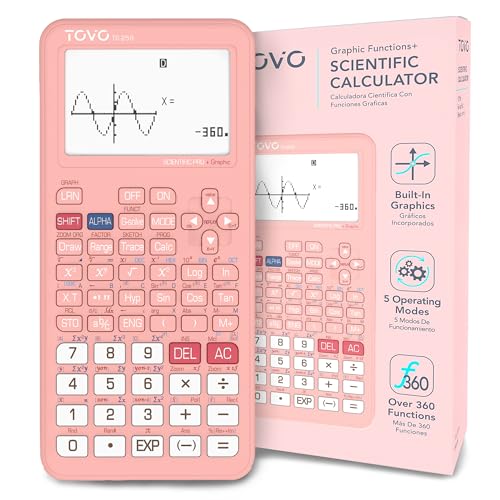
TOVO Scientific Calculator with Graphic Functions TS-259

Texas Instruments TI-36X Pro Engineering/Scientific Calculator (Black)

Casio fx-115ES Plus 2nd Ed Advanced Scientific Calculator

IPEROT Pink Solar Scientific Calculator (417 Functions)

CATIGA CS-229 Scientific Calculator with Graphic Functions

CATIGA CS-121 Scientific Calculator with Graphic Functions

IPEROT Solar Blue Scientific Calculator (417 Functions)

IPEROT 10-Mode Graphing Scientific Calculator
More Details On Our Top Picks
The TI-30XS MultiView is the calculator most chemistry students end up holding by midterm. Its four-line display shows the calculation exactly as it appears in a textbook, with stacked fractions and proper symbols rather than a coded string. That alone removes a lot of mid-problem guesswork when balancing equations or working through Henderson-Hasselbalch setups.
For a general chemistry course, this model covers the daily grind: fraction handling, scientific notation, basic statistics for lab reports, and a handful of conversions. Compared to the CATIGA entries below, it’s lighter on modes but heavier on the kinds of keystrokes that show up on AP and intro college exams. The trade-off is that graphing is absent, so anyone moving into physical chemistry may need to level up.
The Practical Payoff
- Four-line MultiView display mirrors textbook notation, which speeds up equation checking during timed work.
- Common chemistry functions (fractions, exponents, scientific notation) live on the main keypad rather than buried in menus.
- Solid battery life means a semester of lectures and lab sections on a single set of cells.
- Compact enough to slip into a lab coat pocket alongside a periodic table reference card.
Things To Consider
- No graphing means titration curves and Arrhenius plots stay paper-and-pencil exercises.
- The button labeling can feel cramped for students with larger hands.
Key Specs
Who It Suits Best
First-year chemistry students who want a reliable, exam-friendly calculator without paying for graphing features they won’t use in gen chem.
Look Elsewhere When
Anyone heading into physical chemistry or kinetics labs will get more mileage from the TI-36X Pro’s expanded math engine.
The TOVO TS-259 is built for students who want graphing muscle without paying the typical graphing-calculator premium. It pairs more than 360 built-in functions with a roomy 3-inch screen, which gives plot work room to breathe. The redesigned navigation pad feels less fussy than older graphing entries, especially when scrolling through long menus.
It sits in an interesting middle ground. The earlier Texas Instruments TI-30XS handles straightforward chemistry with less ceremony, but the TS-259 adds the plotting layer that pH titration curves and Beer-Lambert graphs benefit from. I find it best suited to students who take notes visually and tutors who want a single device to demo different problem types.
Practical Pluses
- Large display makes side-by-side graphs and formula entry easier on the eyes during long sessions.
- 360-plus functions cover everything from basic algebra through trigonometric identities common in physical chemistry.
- Ergonomic layout reduces finger fatigue during multi-hour study sessions.
Worth Noting
- Some instructors may not allow graphing calculators on standardized exams, so check the syllabus first.
- Carrying case is often sold separately, leaving the screen exposed in a crowded backpack.
Built With In Mind
Visual learners and STEM students who want one device that bridges scientific calculation and light graphing.
A Better Fit Elsewhere
Strict exam-only shoppers may prefer the simpler Texas Instruments TI-30XS MultiView for compliance with non-graphing rules.
The TI-36X Pro sits in a sweet spot for students who need more horsepower than a basic scientific offers but can’t bring a graphing calculator to class. Its MultiView display shows up to four lines at once, and the MathPrint mode renders fractions and stacked expressions the way your instructor writes them on the board. Conversion shortcuts for fractions, decimals, and pi reduce a lot of busywork.
This calculator covers the typical chemistry-through-calculus pipeline: algebra, geometry, trigonometry, statistics, calculus, and biology. For pre-med students juggling organic chemistry, the equation solver and unit conversions save real time. It’s also a quiet fit for curricula that ban graphing on exams but still demand higher-level math functions.
What Earns Its Place
- Equation solver handles systems and single-variable setups common in equilibrium problems.
- MathPrint notation makes homework checks less error-prone.
- Wide subject coverage supports a chemistry-major course load without a second device.
- 9.7-inch body gives the keypad breathing room despite the higher function count.
Trade Offs
- Heavier than the entry-level TI-30XS, so backpack space matters more.
- Menu-driven access to advanced functions means a learning curve for first-time users.
Made For
Pre-med and engineering-track students who need a non-graphing calculator with serious math capabilities.
Swap It Out When
Anyone who actually needs plotting for titration curves will get more value from the CATIGA CS-229’s graphing layer.
The Casio fx-115ES Plus 2nd Edition is the classic alternative to Texas Instruments for chemistry students who prefer a different keypad feel. Its Natural Textbook Display renders expressions in textbook form, and a 16-digit, 4-line LCD keeps both the entry and the result visible at once. That layout is genuinely useful when working through Hess’s law step by step.
Casio positions this model for general math, trigonometry, statistics, algebra, calculus, engineering, and physics, so the chemistry use case is comfortably in scope. Compared to the TI-30XS, the function count runs higher, though the layout assumes you don’t mind hunting through a few menus. For exam day, the slide-on hard cover is a small detail that protects the screen between locker and desk.
Strong Points
- Natural textbook display makes formula-heavy homework match what you see in lecture notes.
- Robust function set covers statistics work that gen-chem lab reports require.
- Hard cover protects the screen and buttons during backpack storage.
Minor Gripes
- No graphing, which limits its appeal for visual curve analysis.
- Menu-driven functions can take time to locate on first use.
Best Suited To
Students who want a well-rounded non-graphing calculator and don’t mind Casio’s menu style.
Another Choice May Suit
If graphing is on your must-have list, the CATIGA CS-121 brings plotting at a similar learning curve.
The IPEROT Pink Solar Scientific Calculator packs 417 functions into a slim, color-forward shell. Solar power keeps it running in well-lit classrooms without hunting for replacement batteries mid-semester. The function roster covers algebraic operations, fractions, derivatives, integrals, statistics, complex numbers, linear regression, standard deviation, and permutations, so most chemistry workflows fit comfortably inside.
The pink casing is a small aesthetic point, but the underlying layout is serious. Compared to the TI-30XS, this model runs heavier on function count and lighter on brand recognition, which can matter for instructors who standardize on one ecosystem. For high school and early-college chemistry students who want a non-graphing workhorse at a comfortable price, it’s a sensible pick.
Everyday Advantages
- Solar power removes the battery-replacement chore during a long semester.
- Function depth covers statistics and calculus needs that lab reports rely on.
- Lightweight shell fits easily into a pencil case or jacket pocket.
Softer Spots
- No graphing layer for students moving into physical chemistry.
- Less common brand may mean fewer tutorial videos available online.
Perfect Match For
High school and intro college students who want depth of functions without a bulky frame.
Where A Sibling Pick Shines
Anyone needing graphing should look at the IPEROT 10-Mode Graphing Scientific Calculator instead.
The CATIGA CS-229 folds graphing into a familiar scientific body, plotting curves while showing the underlying equation at the same time. That side-by-side view is genuinely useful for chemistry students checking how a quadratic behaves when adjusting variables, and the multiple operating modes cover algebra, calculus, and exam-prep workflows.
The 7-by-3.3-inch footprint gives the screen room without making the device feel oversized in a backpack. Compared to the older CS-121 covered below, the CS-229 layers in more advanced functions and a slightly more refined interface. For students moving from general chemistry into pre-calc or intro physics, it bridges the gap cleanly.
Useful Touches
- Side-by-side graph and equation display simplifies curve-checking.
- Multi-mode design supports cross-discipline coursework in one device.
- Compact footprint travels well between lecture hall and lab.
Points To Note
- Graphing calculators can be restricted on certain standardized chemistry exams.
- Button layout takes practice if you’re coming from a basic four-function device.
Right Fit For
Pre-calc and intro physics students who want scientific math and light graphing in one device.
Not Your Match When
Strict non-graphing exam requirements make the TI-36X Pro a safer bet.
The CATIGA CS-121 brings graphing capability into a body that feels closer to a scientific calculator than a full graphing unit. It plots functions, analyzes graphs, and solves equations while keeping both the plot and formula visible, which lets you sanity-check work on the spot. For high school chemistry students working through titration and equilibrium plots, that visibility is the main draw.
This is the entry point for shoppers who want graphing without committing to a top-tier model. Against the Casio fx-115ES covered earlier, the CS-121 adds plotting in exchange for a less established reputation. For algebra, trigonometry, calculus, and statistics coursework, it covers the typical undergraduate checklist.
What Works In Its Favor
- Graphing at a price point lower than premium graphing models.
- Side-by-side graph and equation display for quick visual checks.
- Solid subject coverage across algebra, trig, calculus, and statistics.
Honest Caveats
- Not all instructors allow graphing calculators on in-class exams.
- Less name recognition than Casio or Texas Instruments means fewer tutorial resources.
- Plastic shell can scratch with rough backpack storage.
Whose Shelf It Belongs On
High school chemistry students stepping into graphing without overspending on a premium model.
Where Another Pick Suits Better
Anyone locked into exam-only non-graphing rules should grab the TI-30XS MultiView instead.
The IPEROT Solar Blue shares the same 417-function backbone as its pink sibling, with a cooler color and the same solar-powered design. Solar charging removes the surprise of dead batteries during a lab practical or a long exam block, and the function list spans algebra, fractions, derivatives, integrals, statistics, complex numbers, linear regression, and standard deviation.
For students who care more about predictable performance than aesthetics, the blue finish reads as a quieter, more neutral choice. The trade-off is that it stays in the same non-graphing lane as the pink version, so physical chemistry students may eventually need an upgrade.
Noteworthy Benefits
- Solar power delivers consistent operation during marathon lecture days.
- Function depth covers statistics and calculus work tied to chemistry lab reports.
- Comfortable button spacing for extended use.
A Few Limitations
- No graphing layer for curve-based chemistry problems.
- Build quality leans toward everyday rather than heavy-duty use.
Who Should Grab It
Students who want a low-maintenance, no-battery calculator for daily chemistry coursework.
Reach For A Different Pick When
Anyone planning to plot titration curves will want the CATIGA CS-121’s graphing capability.
The IPEROT 10-Mode Graphing Calculator handles Calculate, Complex, Statistics, Base-N, Equation, Table, Matrix, Vector, Graphic, and G-Solve modes in one body. For chemistry students moving into physical chemistry, statistics-heavy lab courses, or engineering-adjacent electives, that mode list means a single device can serve multiple semesters without needing a swap.
It leans toward the shopper who treats a calculator as a multi-year tool. Compared to the simpler IPEROT 417-function solar models, this one adds matrix and vector handling, which makes it a stronger fit for quantum-chemistry-adjacent math or computational homework. The trade-off shows up in button complexity, so first-time users should expect a short orientation period.
The Good Stuff
- Ten built-in modes cover the typical STEM progression from algebra through engineering math.
- Matrix and vector modes support physical chemistry and computational homework.
- Multi-year usability avoids the need for a second device across changing courses.
Practical Considerations
- Menu navigation can feel dense for students new to graphing calculators.
- Screen size is smaller than the TOVO TS-259’s display, so longer equations need scrolling.
The Right Fit
STEM students who want one calculator that grows with them from intro chemistry into higher-level coursework.
Consider Something Else When
Exam-only chemistry courses that ban graphing point shoppers back to the TI-30XS MultiView.
Choosing A Scientific Calculator That Holds Up In Chemistry
Picking a calculator for chemistry comes down to matching the device to the level of math the course actually demands. Gen chem and AP chemistry lean on fractions, scientific notation, logs, and basic statistics. A standard non-graphing scientific like the TI-30XS or Casio fx-115ES covers those comfortably without risking an exam-policy violation.
Organic chemistry and physical chemistry raise the stakes with equilibrium calculations, kinetics integration, and statistical analysis of lab data. The TI-36X Pro adds equation-solving depth that makes short work of those workflows, while the CATIGA CS-229 and CS-121 add graphing for students who want to visualize reaction profiles. For chemistry majors heading toward quantum or computational coursework, the IPEROT 10-mode calculator brings matrix and vector handling into the same device.
Exam rules should drive the final decision before brand or features. Many standardized and in-class chemistry exams prohibit graphing calculators, so verifying the syllabus before buying saves the cost of an upgrade later. Solar power, hard covers, and battery backup each play different roles depending on how often the calculator leaves the backpack between sessions.
Quick Guidance Before You Click Buy
Where Shoppers Go Wrong
The most common slip is buying a graphing calculator for a course that bans them, then scrambling before the first exam. Check the syllabus and any standardized testing rules before settling on a model with plotting capability.
Another trap is chasing function count without thinking about keypad layout. A 400-function calculator only helps if you can find the right key during a timed problem, so menu-driven interfaces deserve a test drive before committing.
When Paying More Pays Off
Spending more usually buys graphing, larger screens, and faster processors that handle multi-step equations without lag. For chemistry students sticking to gen chem and o-chem, the upgrade rarely matters. For physical chemistry, statistics-heavy labs, or anyone keeping a calculator across multiple STEM semesters, the extra cost pays back in fewer replacements.
Frequently Asked Questions
Do chemistry students really need a graphing calculator?
For general and organic chemistry, a non-graphing scientific like the TI-30XS or Casio fx-115ES is usually enough. Graphing becomes useful once you reach physical chemistry or courses that ask for curve analysis.
Is the TI-30XS allowed on the AP Chemistry exam?
The TI-30XS is generally permitted on AP exams because it lacks graphing capability, but checking the latest calculator policy before test day is always smart.
What functions matter most for chemistry coursework?
Logarithms, scientific notation, fractions, exponents, and statistical functions like standard deviation show up most often in gen chem labs and homework.
How long does a typical scientific calculator battery last?
Solar-assisted models can run for years on ambient classroom light, while battery-only units usually stretch across a full academic year with normal use.
Are solar calculators reliable in dim lecture halls?
Solar models handle most lit classrooms fine, but a backup battery or a small reserve of disposable cells is helpful for early-morning exams or power-out scenarios.
Closing Remarks
A solid scientific calculator pays for itself the first time it saves a long evening of manual arithmetic. Match the device to the course level, confirm exam rules early, and the rest is just button familiarity.