A sudden blackout during a client call or a corrupted file from a flickering outlet is the kind of headache nobody plans for. For anyone running a home office, a NAS box, or a workstation that can’t tolerate abrupt shutdowns, a reliable UPS acts as an insurance policy against data loss and hardware strain. I pulled together nine solid options spanning compact standby units, sine wave workhorses, and replacement batteries to keep your setup running when the lights go out.
Your Options, Compared

CyberPower SL950U Standby UPS
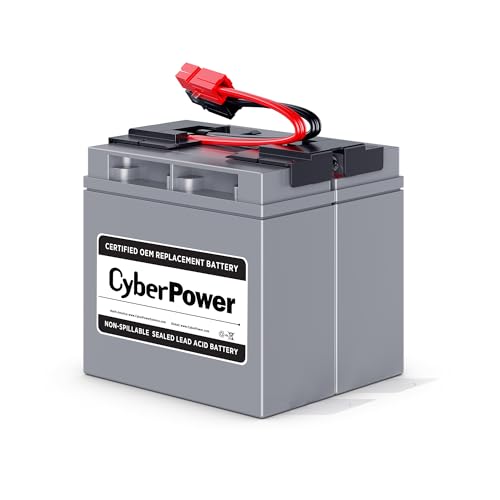
CyberPower RB12170X2A Replacement Battery

APC 850VA/450W UPS Battery Backup
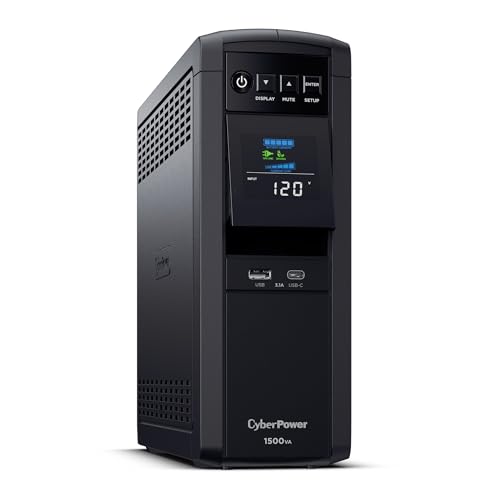
CyberPower CP1500PFCLCD PFC Sinewave UPS


APC APCRBC123 Replacement Battery

APC APCRBC160 Replacement Battery


More On The Choices That Made The List
The CyberPower SL950U is a standby UPS (a unit that switches to battery the instant it detects a power problem), and its narrow housing slips behind monitors or under desks where bulkier units simply won’t fit. With eight outlets total and a simulated sine wave output, it covers a small home office load without crowding the power strip behind your desk.
Two USB ports, one USB-A at 2.4 amps and one USB-C at 18W PD (Power Delivery, a fast-charging standard), let you top off a phone or tablet straight from the unit, which is handy during an outage when the wall charger is dead. UL safety certification and an LED wiring-fault indicator add peace of mind for first-time UPS owners.
A Favorable Mix
- Slim housing fits where tower UPS units cannot, ideal for tight media centers
- USB-C PD port charges modern phones and small tablets during outages
- Eight total outlets with two widely spaced for bulky plugs
- LED wiring-fault detection catches installation errors early
Worth Noting
- Simulated sine wave may not play nicely with active PFC (Power Factor Correction, a power-cleaning feature in modern PC power supplies) rigs; choose the CP1500PFCLCD instead
- Battery is sealed and not user-replaceable in the traditional sense, so the whole unit may need service after several years
Whose Desk It Belongs On
Home users running a single PC, a router, and a modem in a space-conscious setup where a thin profile matters.
Look Elsewhere When
Power users with active PFC power supplies should consider the CyberPower CP1500PFCLCD for cleaner sine wave output.
Sometimes the smartest play is reviving the UPS you already own, and the CyberPower RB12170X2A is a sealed lead-acid cartridge (a pre-assembled battery pack that drops into the UPS chassis) designed for exactly that job. It comes with two 12V/17Ah cells pre-wired, so swapping an old battery becomes a short project rather than a soldering chore.
Once installed, you can expect the connected CyberPower unit to behave like it did when new, with the usual runtime restored for graceful shutdowns during a brownout (a brief drop in voltage) or full outage. It’s a maintenance-free design, meaning no fluid top-ups, which keeps the install approachable for non-technical owners.
Good Reasons To Consider
- Pre-assembled cartridge cuts install time to roughly 10 minutes
- Sealed lead-acid design needs no fluid maintenance
- Restores runtime on compatible CyberPower units at a fraction of replacement cost
Trade Offs
- Only fits specific CyberPower models, so confirm your unit’s part number first
- Lead-acid chemistry means proper recycling of the spent cartridge at end of life
Quick Technical Notes
Who Will Love This
Existing CyberPower UPS owners whose battery has weakened after a few years of service and want a low-effort refresh.
Not Your Match When
APC UPS owners should pick the APC APCRBC123 or APCRBC160 instead, since cartridges are brand-specific.
The APC BE850G2 packs 850VA of capacity into a brick that lives happily next to a router or under a monitor arm. Seven NEMA 5-15R outlets (the standard North American three-prong receptacle) give you room for a desktop, a monitor, a NAS box, and still leave space for charging cables, which is exactly the mix most home offices need.
Five outlets run on battery, while the remaining two offer surge-only protection (they cut power spikes but don’t supply backup battery) for non-critical accessories like printers. The compact footprint is the real talking point for anyone dealing with cable clutter behind a desk.
What Earns Its Place
- Compact housing fits tight spots where tower UPS models feel intrusive
- Seven outlets with a healthy split between battery and surge-only
- APC brand has a strong replacement-battery ecosystem for the long haul
Points To Keep In Mind
- Simulated sine wave may cause issues with active PFC equipment, though most basic desktops handle it fine
- Higher-capacity workstations draw past 450W quickly, leaving little headroom
Best Suited To
Home networking enthusiasts running a router, modem, and a small NAS who want dependable battery backup without a bulky tower.
Skip It When
Gaming PCs or workstations over 450W should step up to the CyberPower CP1500PFCLCD for cleaner power and more capacity.
The CP1500PFCLCD is the unit to consider when sensitive electronics demand clean power. Pure sine wave output (a smooth, wall-outlet-quality waveform) means compatibility with active PFC power supplies found in modern gaming rigs, workstations, and certain audio interfaces. That alone makes it a different class from the simulated-wave units earlier in this list.
The mini-tower chassis includes a color LCD that surfaces runtime estimates, load, and battery health at a glance, so you stop guessing how much shutdown time you have left. For pros juggling deadlines and creative workloads, that visibility can be the difference between a saved file and a corrupt one.
What Helps Most
- Pure sine wave output supports active PFC hardware without complaint
- Color LCD panel surfaces real-time load and runtime estimates
- Higher VA (Volt-Ampere, a measure of how much load a UPS can handle) rating covers workstations with multiple drives and accessories
- Line-interactive topology (a design that adjusts voltage without draining the battery for minor fluctuations) handles minor voltage dips without switching to battery
A Few Limitations
- Tower footprint takes up meaningful desk or floor space
- Higher capacity brings a heavier unit, so plan placement before unboxing
Feature Snapshot
Built With In Mind
Power users, content creators, and gamers running active PFC hardware who can’t risk simulated sine wave quirks.
Swap It Out When
Basic home users with modest setups will find the APC 850VA simpler and more compact for their needs.
The APC BE600M1 and BE425M bundle is essentially two compact UPS units in one box, intended to be used separately. The BE600M1 is the larger of the pair with 600VA capacity, while the BE425M is the leaner 425VA unit, and APC explicitly states these should not be daisy-chained (plugged into each other in series).
The use case that justifies a bundle like this is covering two distinct rooms or zones, say, a router and modem in the living room plus a desktop in the home office, without buying two separate orders. It’s an unusual configuration but solves a real problem for multi-room setups.
Key Advantages
- Covers two separate areas with a single purchase
- Compact individual footprints suit entertainment centers and desks alike
- APC battery ecosystem makes future replacements straightforward
Honest Caveats
- Each unit runs at simulated sine wave, so active PFC rigs may misbehave
- Combined capacity is modest compared to a single larger UPS in the same price range
Right Fit For
Households where a router in one room and a PC in another both need backup, and running extension cords across the house isn’t practical.
Consider Something Else When
Single-room users save money by picking a single dedicated unit like the APC BE650G1 instead.
The APC APCRBC123 is the factory-spec replacement battery for SMT750RM2UC and BX1350M UPS units. Going with the genuine APC cartridge removes the guesswork around fit, voltage, and connector placement that third-party batteries sometimes introduce.
These are VRLA batteries (Valve-Regulated Lead-Acid, a sealed, spill-proof lead-acid design), which means no maintenance fluid and a leak-proof install. It’s the kind of part you order once every few years when the UPS starts chirping or runtime drops noticeably.
Everyday Perks
- Genuine APC cartridge guarantees fit on listed models
- VRLA sealed design requires no fluid top-ups
- Restores original runtime for graceful shutdowns
Less Ideal Details
- Limited to specific APC models; verify compatibility before ordering
Perfect Match For
APC SMT750RM2UC and BX1350M owners whose UPS is showing battery fatigue and needs a brand-matched refresh.
Where Another Pick Suits Better
Owners of different APC models should match the RBC number, such as the APCRBC160 for the BR1000MS.
Designed for the APC Back-UPS BR1000MS, the APCRBC160 is the drop-in cartridge that brings a tired UPS back to factory performance. Since the BR1000MS is a higher-capacity unit than the SMT750, the battery inside is correspondingly heavier, so set aside a sturdy surface for the swap.
APC tests these RBCs against original spec, so you can expect the same runtime and behavior as a new unit once installed. For anyone committed to the APC ecosystem, this is the maintenance part that extends the life of a significant investment.
Everyday Wins
- Factory-matched to the BR1000MS for plug-and-play replacement
- VRLA sealed construction avoids spills and fluid checks
- Restores runtime for reliable graceful shutdowns
- APC brand backing for warranty and support
Practical Considerations
- Heavier than smaller UPS cartridges, so handle with care during install
- Single-model compatibility means it won’t help a different APC unit
Who Should Grab It
Owners of the APC BR1000MS whose UPS is approaching the typical 3 to 5 year battery replacement window.
Reach For A Different Pick When
Users with SMT750-class units should pick the APCRBC123, which matches their hardware.
The BE650G1 has been a workhorse in APC’s line for years, and for good reason. Eight outlets split evenly between battery backup and surge-only give home users flexibility for PCs, monitors, and accessories without juggling power strips. It’s the kind of UPS you set up once and forget about until the lights flicker.
The 650VA rating sits in a sweet spot for a single desktop plus monitor, providing enough runtime to save work and shut down cleanly. For someone replacing an older BE650G1 that finally gave out, this remains a familiar and predictable choice.
The Value In It
- Eight total outlets give generous room for a typical desktop setup
- APC’s long-running model with widely available replacement batteries
- Compact brick form factor fits beneath a monitor or on a shelf
- Time-tested design with a large install base for community support
Possible Compromises
- Simulated sine wave, not ideal for active PFC power supplies
- 390W limit means high-end gaming PCs will exceed capacity quickly
Made For
Single-PC home offices and light workstations where a reliable APC unit with eight outlets is the goal.
A Better Fit Elsewhere
Higher-capacity workstations should consider the CyberPower CP1500PFCLCD for pure sine wave and more headroom.
The UGREEN US3000 is a purpose-built DC UPS, meaning it supplies battery power through a low-voltage DC cable rather than standard AC outlets, designed specifically for compatible UGREEN NAS units. With 120W output and a 12000mAh lithium-ion battery, it’s targeted at home users running 2-bay and 4-bay UGREEN models like the DXP2800 and DXP4800 series.
Because it connects directly via DC, there’s no bulky inverter (the component that would convert battery power into AC wall-outlet power) wasting energy as heat, and the unit runs quietly without fan noise. Compatibility is the catch; this won’t work with non-UGREEN NAS hardware or the DXP6800 and DXP8800 series.
Strengths Worth Knowing
- DC-direct connection means higher efficiency than AC UPS setups for NAS loads
- Quiet operation without fan noise suits living spaces
- Lithium-ion battery has a long cycle life compared to lead-acid alternatives
- Compact form factor pairs visually with UGREEN NAS chassis
- Built-in protections cover surge, over-charge, over-current, and short-circuit
Things To Weigh
- Compatibility is strict; only certain UGREEN NAS models are supported
- 120W ceiling limits use to lighter NAS loads, not multi-drive servers
Who It Suits Best
UGREEN NAS owners with compatible 2-bay or 4-bay units who want clean, quiet backup without a full-size UPS tower.
Swap It Out When
Anyone running a non-UGREEN NAS or larger server should pick a traditional AC UPS like the APC BE650G1 for broader compatibility.
What To Weigh Before Choosing A UPS
Capacity matters more than feature count. VA ratings indicate how much gear a UPS can carry, and undersizing leads to nuisance shutoffs within seconds of an outage. Match the VA figure to roughly 1.25 times the wattage of every device you plan to plug in, leaving comfortable headroom for startup surges.
Waveform shape is the second decision point. Simulated sine wave is fine for most desktops, monitors, and networking gear, but active PFC power supplies in modern workstations can behave unpredictably. Pure sine wave models like the CP1500PFCLCD remove that risk entirely.
Outlet layout and battery replacement deserve attention too. A UPS with two widely spaced outlets prevents bulky plugs from blocking neighbors, and units with documented replacement battery programs, like the CyberPower and APC options above, extend usable life well beyond the warranty window. NAS-specific DC UPS units offer quieter operation but lock you to a brand.
Key Considerations Across These Picks
Mistakes Worth Dodging
Picking by VA alone leads to frustration when the runtime turns out to be a few seconds. Add up the actual wattage of your gear before comparing numbers. Another common slip is ignoring waveform compatibility, where buyers plug a simulated sine wave UPS into a workstation with active PFC and end up with random reboots. Always confirm your PC’s power supply needs before choosing between simulated and pure sine wave.
Where The Extra Money Goes
Higher-tier models like the CP1500PFCLCD carry a price premium for pure sine wave output, larger VA capacity, and informative LCDs. For a basic router and modem setup, that premium is wasted. For a workstation running active PFC hardware or a NAS storing critical files, the upgrade is genuinely worth it in my view, since it removes the most common failure modes.
Frequently Asked Questions
How long will a UPS keep my computer running during an outage?
Runtime depends entirely on the load and the VA rating. A typical home office drawing 200W might get 10 to 20 minutes from a mid-range 850VA unit, enough to save work and shut down, but heavy workstations see much shorter runtimes.
Can I plug a laser printer into a UPS?
Laser printers draw sudden high current during warm-up that overwhelms most UPS units. Connect them to surge-only outlets or skip them entirely; the spike can trip the UPS or drain the battery in seconds.
How often should I replace the battery?
Sealed lead-acid UPS batteries typically last 3 to 5 years under normal use. Many UPS units chirp or display a replace-battery indicator when runtime drops, signaling it’s time to swap in a cartridge like the APC or CyberPower RBC options above.
Do I need pure sine wave for my PC?
Most modern PCs with active PFC power supplies benefit from pure sine wave, though many still tolerate simulated sine wave output. Pure sine wave eliminates any chance of PSU misbehavior during switchover, which is why it’s worth considering for higher-end builds.
Will a UPS protect against lightning strikes?
A UPS with surge protection handles small spikes and switching transients, but a direct or nearby lightning strike can overwhelm any consumer-grade protector. For areas with frequent electrical storms, layered surge protection at the panel adds another safety net.
Closing Remarks
The right UPS comes down to matching your gear, your space, and your tolerance for simulated versus pure sine wave output. Home offices with modest loads do well with the SL950U or APC BE850G2, while active PFC workstations earn the upgrade to the CP1500PFCLCD. If you already own a CyberPower or APC unit, the matching replacement battery is the easiest way to add a few more years of service. Pick the one that fits your setup, and the next blackout becomes a minor pause instead of a data loss event.