A home lab is only as reliable as the wall outlet feeding it. Brownouts, sudden blackouts, and surge spikes all take a toll on sensitive gear like routers, mini servers, NAS drives, and SBC clusters. A purpose-built uninterruptible power supply gives those devices a clean bridge through power trouble and a safe shutdown window when the grid fails entirely.
The Main Contenders

CyberPower SL950U Standby UPS System

CyberPower CST135UC2-R Line-Interactive UPS (Renewed)
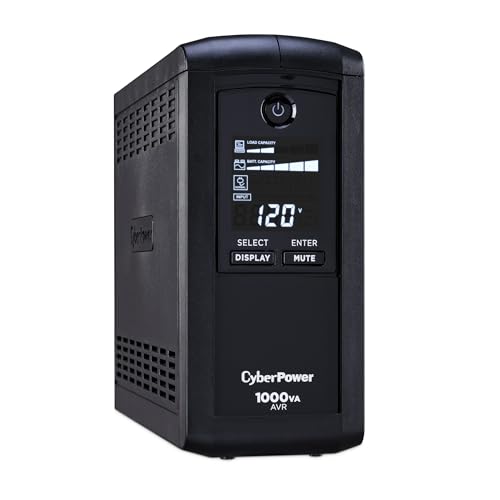
CyberPower CP1000AVRLCD Intelligent LCD UPS

CyberPower CP1500PFCLCD PFC Sinewave UPS

CyberPower PR750LCD3C Smart App Sinewave UPS

CyberPower SL750U PC Battery Backup
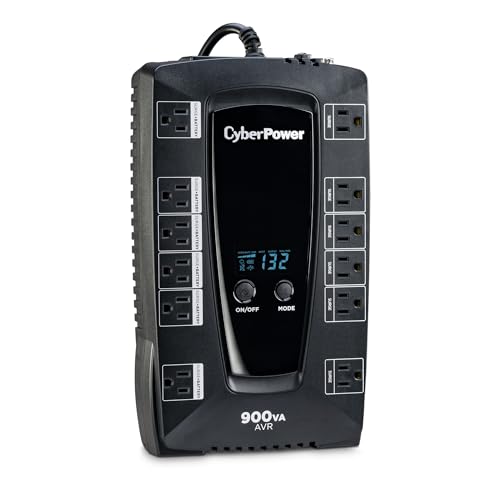
CyberPower AVRG900LCD Intelligent LCD UPS
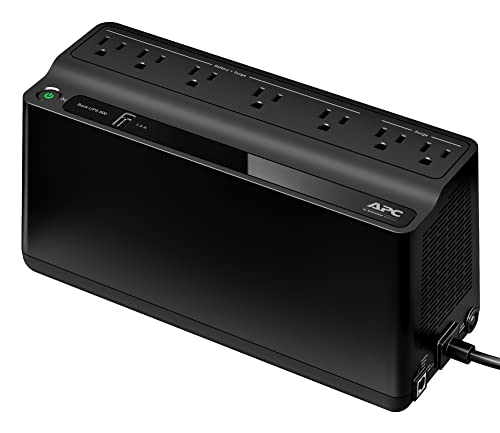
APC Back-UPS BE600M1 Battery Backup

CyberPower OR500LCDRM1U 1U Rackmount UPS
Inside Each Recommended Option
The CyberPower SL950U trades bulk for surface area, sliding under a desk or behind a monitor arm where a tower UPS would never fit. Its 950VA/510W rating suits a typical home lab cluster: a router, a small switch, a mini-tower server, and a Pi or two.
Eight NEMA 5-15R outlets are split between battery-backed and surge-only banks, and two of those receptacles are spaced wider to clear chunky wall warts. A USB-A port (2.4A) and a USB-C PD port (18W) handle phones and tablets without dragging an extra brick off the shelf.
Everyday Advantages
- Slim chassis tucks behind monitors or under floating desks where traditional towers refuse to fit.
- Eight outlets split between battery-backed and surge-only banks give flexibility for non-critical gear.
- Integrated USB-C PD port replaces a separate charging brick for phones and small tablets.
- Simulated sine wave output covers most networking gear and entry-level desktops without issue.
Things To Consider
- Standby topology means it does not actively correct minor voltage dips like the AVR-equipped picks later in this list.
- 510W ceiling is tight for power-hungry workstations with discrete GPUs; you may find the runtime window short when loading the unit near its limit.
Who It Suits Best
Anyone running a router, switch, and a couple of compact servers on a tight desk footprint where vertical clearance is at a premium.
Where Another Pick Suits Better
The CyberPower AVRG900LCD is a stronger match when your neighborhood grid sags regularly and you want voltage correction without stepping up to full sine wave.
The CST135UC2-R steps up to 1350VA/810W and adds automatic voltage regulation, which trims down the constant battery cycling you get on basic standby units. As a Renewed unit, it carries a tighter cosmetic tolerance but the internal cells are where the spec lives, and the spec here is generous for a home lab.
Ten outlets cover a rack shelf plus a few stray peripherals, while the LCD readout gives a quick glance at load and battery state without booting a management utility.
Noteworthy Benefits
- AVR corrects brownouts without tapping the battery, extending cell life in areas with chronic low voltage.
- 810W real-world capacity covers a full-size desktop plus networking gear on the same backup bank.
- Ten outlets keep a switch, NAS, router, and workstation all under one roof without extra strips.
Trade Offs
- Renewed condition means cosmetic wear is possible; some owners report minor scuffs on arrival, depending on the unit’s prior use.
- Line-interactive topology still uses simulated sine wave, so active-PFC workstations may want the CP1500PFCLCD below instead.
Made For
Homelab operators running a mid-sized rack with a real workstation attached, who want AVR but do not need pure sine wave.
Skip It When
The CyberPower CP1500PFCLCD earns the nod for shops with active-PFC power supplies that demand pure sine output for clean shutdowns.
The CP1000AVRLCD has earned a long stay on home benches thanks to its mini-tower stance and the readable LCD panel on the front face. Line-interactive topology with AVR means small sags get corrected without dipping into the battery, which matters when the grid in your area is moody.
It sits between the SL950U’s slimmer capacity and the CST135UC2-R’s heavier reserve, hitting a comfortable middle for a single tower plus peripherals.
The Good Stuff
- Front-mounted LCD shows load percentage, battery level, and voltage at a glance.
- AVR keeps the battery in reserve for true outages rather than frittering it away on small dips.
- 1000VA capacity handles a full desktop, monitor, and a small switch on one backup bank.
Honest Caveats
- The simulated sine wave output is not a fit for active-PFC workstations that need clean sine power for safe shutdown.
- Mini-tower footprint is taller than the SL950U, so it may not slide under low-clearance desks.
Feature Snapshot
Best Suited To
Single-tower home labs where someone wants a glanceable LCD readout without paying for sine wave output.
Not Your Match When
The CyberPower CP1500PFCLCD serves better when the workstation uses an active-PFC PSU that requires pure sine wave.
The CP1500PFCLCD is the unit to reach for when the workstation uses an active-PFC power supply. PFC (Power Factor Correction) supplies expect a clean sine wave input, and this UPS delivers exactly that. Skipping the simulated-waveform units avoids the random shutdowns some owners see with mismatched gear.
At 1500VA, it covers a full desktop plus a NAS and a switch, leaving headroom for the brief load spike when monitors and drives wake up together.
The Case For It
- Pure sine wave output pairs cleanly with active-PFC power supplies and avoids triggering spurious UPS self-tests.
- 1500VA rating supports a full workstation plus a multi-drive NAS on the same backup bank.
- AVR stabilizes brownouts without using battery cycles for small voltage dips.
- Multifunction color LCD surfaces detailed status without launching utility software.
Worth Noting
- Larger mini-tower footprint demands more floor or shelf space than the SL950U or BE600M1.
- Premium internal design carries a higher price point; depending on your load, the CP1000AVRLCD may already cover it.
Who Will Love This
Anyone running a modern workstation or NAS enclosure with an active-PFC PSU, where sine wave output is non-negotiable.
A Better Fit Elsewhere
The CyberPower SL950U is the smarter pick for ultra-compact benches that only need to keep a router and Pi cluster alive.
The PR750LCD3C sits in a different lane than the others on this list: it leans into network management. The smart-app capability lets you check battery health, load, and event logs from a remote console, which is exactly what someone running a homelab server wants.
Sine wave output covers active-PFC loads, while 750VA is sized for a server cluster and a switch rather than a full workstation plus peripherals.
A Few Strong Suits
- Remote management software surfaces load, battery age, and event history without a physical trip to the rack.
- Sine wave output supports active-PFC servers and NAS units cleanly.
- AVR handles voltage dips without leaning on the battery for minor grid wobble.
Points To Keep In Mind
- 750VA ceiling is tight for a full desktop workstation on top of the server load.
- Management software requires initial network setup that basic standby units skip entirely.
Whose Shelf It Belongs On
Homelab operators who want remote visibility into battery state and runtime, especially when the rack sits in a closet or garage.
Look Elsewhere When
The APC Back-UPS BE600M1 is a simpler choice for single-PC desktops that do not need network management at all.
The SL750U is the smaller sibling of the SL950U, sharing the same slim-profile chassis but at a more modest 750VA/450W capacity. For a homelab built around low-power SBCs, a router, and a small switch, that headroom is plenty.
It still earns its place by keeping the layout flat instead of tall, which matters more than raw VA when the bench is a shelf above a printer or under a window.
Practical Advantages
- Low-profile housing slides under low-clearance shelves where tower UPS units simply will not fit.
- 750VA covers a router, switch, and several low-wattage SBC nodes without breaking a sweat.
- Surge-protected outlets cover non-critical peripherals separately from battery-backed ones.
Room For Improvement
- Standby topology means no AVR, so chronic brownouts will cycle the battery more than line-interactive units.
- 450W ceiling is not enough for a full-size desktop PC with a discrete graphics card.
The Right Fit
Compact homelabs built on Raspberry Pi clusters, routers, and lightweight switches where slim clearance matters most.
Swap It Out When
The CyberPower CP1000AVRLCD is the better call for setups needing AVR and a glanceable LCD readout on a desktop tower.
The AVRG900LCD is purpose-built for the kind of home wiring where the lights dim when the fridge kicks on. Its automatic voltage regulation trims high and boosts low without dropping into battery, which preserves runtime for the brownouts that actually matter.
At 900VA, it sits a notch above the SL750U in capacity while still keeping the bench-friendly compact footprint. The front LCD keeps load and battery visible without booting software.
What Helps Most
- AVR corrects both undervoltage and overvoltage events without draining the battery for the small stuff.
- Front LCD surfaces voltage, load, and battery condition in plain text.
- Compact footprint fits on a desktop or shelf without dominating the workspace.
- Simulated sine wave covers most desktops and networking hardware in residential settings.
Possible Compromises
- Simulated sine output can still confuse some active-PFC workstations during the brief switchover moment, depending on the PSU design.
- 900VA ceiling is tight if the load creeps up after a few new devices join the rack.
Perfect Match For
Homes with older wiring or shared transformers where voltage regularly sags during peak hours.
Reach For A Different Pick When
The CyberPower CP1500PFCLCD earns the spot for active-PFC workstations that demand pure sine wave input.
The APC Back-UPS BE600M1 is the brand-name familiar face on the list. APC has been building consumer UPS units for decades, and the BE600M1 reflects that heritage with a small footprint, replaceable battery design, and a USB charging port on the front face for a phone or small tablet.
At 600VA/330W it is sized for a single desktop, monitor, and router combination rather than a full rack.
Positive Takeaways
- APC’s user-replaceable battery design extends the working life of the unit beyond the warranty window.
- Front-facing USB-A port charges a phone without tying up a backed-up outlet.
- Compact housing fits under a desk or beside a monitor without dominating the workspace.
Where It Is Less Suited
- 330W ceiling rules out anything heavier than a basic desktop and a single monitor.
- Standby topology means no AVR, so areas with chronic brownouts will see more battery cycling than AVR-equipped units.
Who Should Grab It
First-time UPS shoppers with a single PC and router who want a familiar brand name and simple plug-and-play setup.
Consider Something Else When
The CyberPower AVRG900LCD suits better when AVR is the priority and a glanceable LCD readout is welcome.
The OR500LCDRM1U is the only true rackmount unit in this roundup, and that one-rack-unit (1U) form factor changes where it can live. Shallow wall cabinets and half-depth racks have always struggled to fit tower UPS units; this one slides into a rack shelf the same way a switch would.
500VA/300W is modest, but it is enough to cover a switch, router, and a single mini-server for a clean shutdown.
Strong Points
- 1U rackmount form factor integrates cleanly with shallow server racks and wall cabinets.
- AVR corrects minor voltage dips without dipping into battery reserves.
- LCD readout surfaces load and battery state without a separate management console.
Factors To Consider
- 300W ceiling is the lowest in this roundup, so load planning matters more than with the tower units.
- Rack ears add to installation complexity versus a tower UPS that just sits on the floor.
Built With In Mind
Home labs already living inside a real rack or wall cabinet where vertical space is reserved for switches and patch panels.
Where A Sibling Pick Shines
The CyberPower PR750LCD3C delivers more capacity and remote management for rack setups that need bigger runtime and remote visibility.
Matching The Right UPS To Your Home Lab Setup
Picking the right UPS for a home lab starts with the load. Add up the watts your router, switch, NAS, and any always-on server actually pull, then leave at least 25 percent headroom above that figure so the unit is not gasping at its limit every time a drive spins up. Capacity ratings like 750VA or 1500VA look similar on paper, but the real-world watt rating tells the honest story for runtime math.
Output waveform matters more than most shoppers realize. Simulated sine wave is fine for routers, switches, and older desktops, but any modern workstation with an active-PFC power supply wants a pure sine wave output to avoid nuisance shutdowns at the switchover moment. Brownout-prone neighborhoods benefit from AVR, which trims high and boosts low without draining the battery for the small stuff.
Form factor sets where the unit can live. Slim-profile standby units slide under desks and behind monitors; mini-towers sit on shelves; rackmount units belong inside an actual rack. Finally, look at management options. A smart-app UPS with network monitoring saves trips to a closet or garage and makes the difference between a controlled shutdown and a corrupt filesystem after a long blackout.
Key Considerations Across These Picks
Mistakes Worth Dodging
The most common mistake is sizing to the device count rather than the actual wattage. A router and switch look like a small load on paper, but adding a NAS and a Pi cluster can quietly double the draw. Skipping the headroom calculation means shorter runtime than the spec sheet suggests.
Another trap is choosing simulated sine wave for a workstation with active-PFC. The unit appears to work, then the PSU mysteriously shuts off during a brief switchover. Checking the PSU spec sheet before buying avoids that surprise entirely.
Where The Extra Money Goes
Higher-tier models pay for two things: pure sine wave output and longer battery runtime. The CP1500PFCLCD adds both, which is why it earns its place for active-PFC workstations. For low-power SBC clusters, those upgrades are overkill, and a slim standby unit handles the same workload at a friendlier price.
Frequently Asked Questions
How long will a UPS keep a home lab running during an outage? Runtime depends on the actual load. A typical home lab drawing 100 to 150 watts can expect 20 to 45 minutes on a 1000VA unit, enough time for a clean shutdown. Heavy loads eat runtime fast.
Do home labs really need pure sine wave? It depends on the equipment. Active-PFC workstations need pure sine to avoid nuisance shutdowns. Routers, switches, and most older desktops run fine on simulated sine wave output.
Can a UPS protect against lightning strikes? A UPS handles the small surges and brownouts that come from grid events. A direct lightning hit is a different category entirely and may require a dedicated surge protector at the service panel.
How often should UPS batteries be replaced? Sealed lead-acid UPS batteries typically last 3 to 5 years. Higher ambient temperatures shorten that window, so a closet install may need replacement sooner than a climate-controlled office.
Is a rackmount UPS necessary for a small home lab? A rackmount UPS only matters when the lab already lives inside a rack. For shelf or desk installations, a tower or slim-profile unit is usually the simpler choice.
Closing Remarks
The right UPS for a home lab comes down to the gear on the bench, the wattage behind it, and the shape of the local grid. Match capacity to load with a comfortable margin, choose the waveform the PSUs actually need, and pick the form factor that fits the space. Any of the units above will do the job well when the brief fits the build.